Artificial Strength, Real Weakness: China's Military Paradox

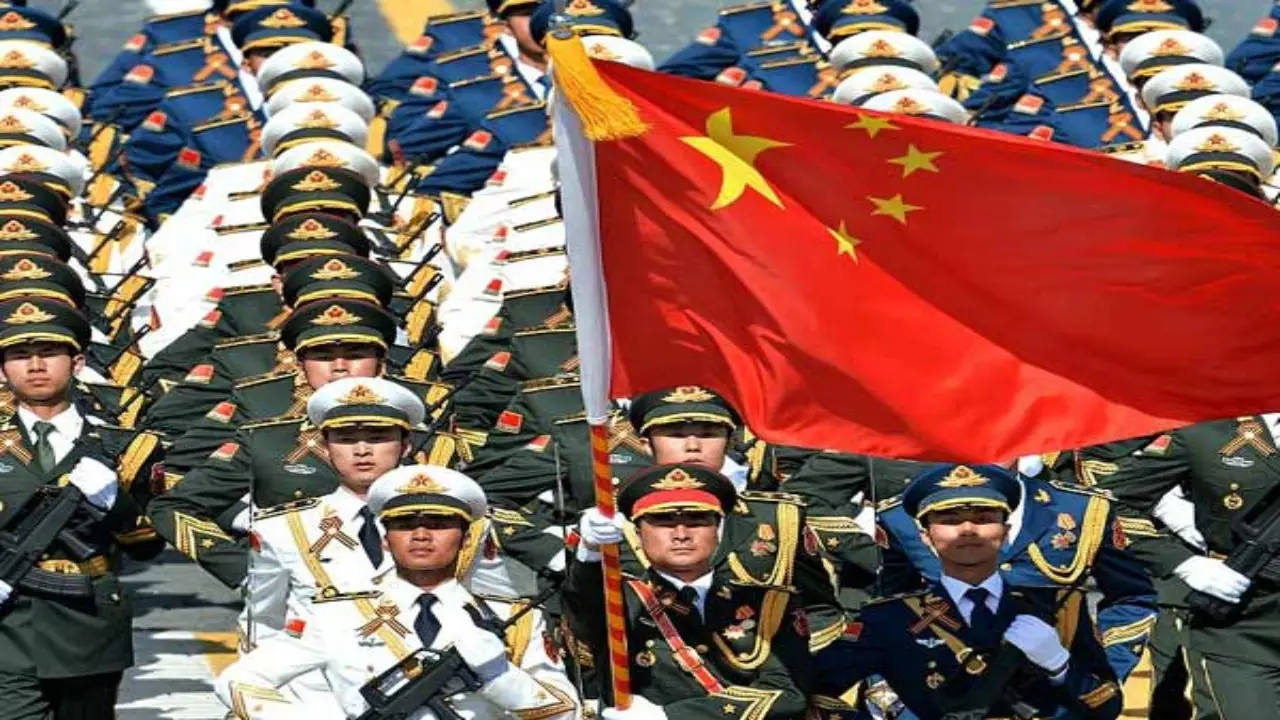
Despite the proliferation of technology in warfare, military strength cannot solely be measured by technological capability. The human dimension, combat ethos, leadership under fire, and adaptability in the fog of war remain irreplaceable.
In recent years, the People’s Liberation Army (PLA) of China has projected an image of formidable technological prowess, with artificial intelligence (AI), quantum computing, and unmanned systems forming the centrepiece of its military modernisation. Xi Jinping’s push for "Intelligentised Warfare" has captured headlines globally, portraying a near-futuristic war machine that blends digital dominance with kinetic might. Yet beneath this glittering surface lies a paradox: the PLA, for all its algorithms and automation, remains a force untested by real combat, overly reliant on synthetic battlefield constructs and hierarchical rigidity. The author argues that while ambitious on paper, China’s AI-driven military modernisation is structurally deficient in translating theoretical capability into warfighting effectiveness.
Despite the proliferation of technology in warfare, military strength cannot solely be measured by technological capability. The human dimension, combat ethos, leadership under fire, and adaptability in the fog of war remain irreplaceable. While AI can optimise decision loops, target acquisition, and logistics, it cannot replicate the judgment of a battle-hardened soldier. China’s overdependence on technology, combined with a lack of combat-tested troops and top-down command structures, severely limits its operational credibility.
PLA’s ‘Intelligentised Warfare’ Doctrine: A Top-Down Transformation
The 2019 China Defence White Paper reiterated the objective of building a “world-class military by 2049,” placing heavy emphasis on intelligent systems integration. In line with its ambition to achieve military dominance through technological superiority, the PLA has significantly expanded its investment in AI-enabled command systems, such as the “Fire Cloud” system, and increasingly deploys unmanned aerial and ground vehicles across multiple theatre commands. The Central Military Commission (CMC) has actively promoted the integration of big data analytics, virtual battlefield simulations, and decision-assist systems to create predictive combat environments and enhance operational planning. With the disbandment of the Strategic Support Force (SSF) in early 2024, a structural reform aimed at redistributing its space, cyber, and electronic warfare (EW) functions directly under newly reorganised theatre and service commands, the emphasis on intelligentised warfare has become more decentralised in theory, though not necessarily in practice.
Also Read: Trump’s Ukraine ‘peace’ plan isn’t about peace. It’s a PR stunt
However, despite these advancements, serious structural bottlenecks remain. The PLA continues to be constrained by a conscript-heavy composition and limited doctrinal flexibility. Operational commanders still depend heavily on top-down instructions, a persistent consequence of the Communist Party's tight political control over the military hierarchy. Such a centralised command culture is inherently mismatched with the demands of dynamic, decentralised, high-tech warfare, where artificial intelligence must serve as an enabler of human initiative rather than a substitute for it.
Trending Stories
)
)
)
)
)
)
)
)
)
)
)
)
)
)
)
)
)
)
)
)
)
)
)
)
)
)
)
)
)
)
)
)
)
)
&im=FitAndFill=(700,400))
)
)
)
)
No Substitute for Blooded Troops: The PLA’s Combat Deficit
Unlike the Indian Army, which has operated across diverse high-altitude terrains, insurgency environments, and peacekeeping missions, or the United States military, which has spent two decades in active theatres like Iraq, Syria, and Afghanistan, the PLA lacks recent combat experience. The last large-scale war China fought was the 1979 Sino-Vietnam War, a campaign widely regarded as a strategic blunder and operational failure. Even in the 2020 Galwan Valley clash, Chinese troops appeared ill-prepared for hand-to-hand, high-altitude conflict despite numerical superiority.
Combat experience informs decision-making, tactical flexibility, and leadership under pressure, traits no AI system can replicate. The Indian and U.S. forces continuously train for human-machine teaming, a concept that integrates AI as a tool under the soldier’s command, not as a replacement. The PLA, in contrast, trains in sanitised environments with scripted exercises often aimed at impressing the political leadership rather than preparing for combat realism.
Simulation vs Reality: The Illusion of Readiness
Chinese military exercises, such as the “Joint Sword 2024,” often feature elaborate AI-supported war games, but military analysts have noted their lack of tactical improvisation. The PLA’s training is characterised by ‘blue force always wins’ scenarios with minimal red teaming. Furthermore, China’s AI battlefield systems still rely on imported high-end semiconductor components, many of which are now under U.S.-led export controls. The 2024 export curbs on advanced AI chips by the Netherlands, Japan, and the United States have constrained China’s ability to field cutting-edge AI systems at scale. The domestic alternatives developed by Chinese firms such as Loongson and Hygon remain several generations behind their Western counterparts in computing efficiency and thermal stability, key parameters in battlefield electronics.
Command Centralisation: The PLA’s Weakest Link
Another significant drawback is China’s command structure. The Central Military Commission retains operational control through theatre commands, leaving little room for lower echelons to exercise tactical command. While India has progressed with Integrated Battle Groups (IBGs) and the U.S. employs a Mission Command philosophy, the PLA is constrained by its rigid political commissar system and loyalty-first promotion protocols. This command culture limits battlefield adaptability, especially in fast-evolving high-tech scenarios where AI systems can only function optimally when integrated into flexible command networks. In a real-world battlefield, where information is fragmented and decisions need real-time human judgment, the PLA’s ‘AI-first’ model could collapse under friction.
Strategic Implications for India and the Indo-Pacific
For India, the key takeaway is not to be overawed by China’s technological theatrics but to double down on enhancing human-machine integration, combat training, and decentralised decision-making. Moreover, the Indo-Pacific security matrix must critically assess the real effectiveness of the PLA. Beijing’s military deterrence is as much psychological as it is kinetic. By inflating its technological capabilities and masking internal weaknesses, China seeks to deter without fighting, a strategy rooted in Sun Tzu’s thought. However, such deterrence collapses when real warfighting is tested, as seen in the Galwan and the South China Sea stand-offs, where even the presence of advanced systems did not compensate for the lack of troop preparedness.
Last Word
AI and autonomous systems are undeniably reshaping military doctrines globally. But they are tools, not substitutes, or soldierly intuition, battlefield courage, and leadership. China’s AI-driven military is impressive in theory but brittle in practice. The PLA may field unmanned swarms and high-speed data networks, but it lacks the most critical element of warfighting: a battle-hardened human core. Until China rectifies this structural deficit by empowering field commanders, decentralising command, and inculcating a real combat ethos, its AI-heavy military will remain what Clausewitz would term a paper tiger. In the final analysis, it is not AI systems but disciplined, trained, and experienced soldiers who decide the outcome of war. In this arena, India and its partners still hold the strategic edge.
(Disclaimer: The views of the writer do not represent the views of WION or ZMCL. Nor does WION or ZMCL endorse the views of the writer.)