The bleak future of Hong Kong


Hong Kong
A recent development making the headlines is that the revered Mr. John Lee has been sworn in as the new Chief Executive of Hong Kong. Revered, I say, for fear of offending, for I doubt ‘scandalous’ would sit well with my pro-Beijing readers. However, his reputation precedes him. Known for being a Beijing stooge, he has played a pivotal role in taming the protests that the citizens of Hong Kong put up every now and then, necessitated by the harsh policies China apparently has a knack to introduce.
The Extradition Bill, 2019, which allowed for the trial of Hong Kong’s fugitive criminals in places Hong Kong does not have an extradition agreement with (including Taiwan and Mainland China), was met with protests on a massive scale. It was then that our Mr. Lee gained his fame. The police forces under him made use of water cannons and tear gas to control the ‘terrorists .‘ In 2020, when the National Security Law was passed, Lee was vociferous about his unequivocal support. His ardent implementation of the same ushered in him being sanctioned by the United Nations.
And now, he has been elected to lead Hong Kong. ‘Elected’, of course, falls short of the actual requirements of the word itself. The correct phrase would be ‘lamentably appointed,’ by the Chinese Communist Party. No wonder Confucius propagated the concept of zhengming. And now, Lee claims to embark on the path of ‘greater prosperity for all.’ Sounds much like a death knell. To quench any doubt, G7 leaders and European Union mourn already. But, with the Chinese President, Xi Jingping, making a rare public appearance in his ceremony, one is apprised, nay, notified, that the Chief Executive has the backing up of China. Given the circumstances, one cannot help but wonder about the future of Hong Kong as a Special Administrative Region of China.

Let’s delve into a little history to help illuminate our study even further. In 1841, given British victory in the Opium War, China lost its territory of Hong Kong to Britain for 99 years. At the end of the said period, China was to be reunited with its lost treasure. And on 1st July, 1997, the event of the great reunification took place as scheduled. A few conditions had, however, been underlined by Britain in regards with the handover, all enshrined in a mini-constitution, called the Hong Kong Basic Law. China, in its interactions with Hong Kong, was to observe the system of ‘One country, two systems.’ Capitalism was to thrive undisturbed in Hong Kong, governance was to be based on ‘universal suffrage,’ and, the fundamental rights, including that of speech, expression, and press, were to be respected with grave intensity, till at least 2047. In short, the autonomy of the individual inhabitant of Hong Kong was to be ensured, an idea conflicting with communist and repressive ideology of mainland China. The deal was concluded. Papers were signed. Handshakes were exchanged. Britain went to bed, content in its efforts towards ensuring civil liberties in Hong Kong. However, in this diplomatic exchange of niceties and simultaneous discreet disapproval, a detail was overlooked; the simple, ingestible truth that China has no concept of sovereignty. And to add to the misfortune of China’s lack of integrity, loopholes in the Basic Law of Hong Kong have tragically legitimatized most of China’s new policies. The Basic Law (Chapter VIII: Interpretation and Amendment of the Basic Law, Article 158) holds that its interpretation is majorly vested in the SCNPC or the Standing Committee of the National People’s Congress, the legislative body of mainland China, and that any interpretation done by the same will be binding on the courts of Hong Kong. The power of interpretation delegated to the courts in HKSAR (Hong Kong Special Administrative Region) is woefully limited, and in actual practice, undermined even further. The vague wording of the Basic Law allows the mainland to exercise more of its ‘objective’ understanding. As far as Amendments are concerned, the opening line of Article 159 perfectly sums up the degree of legislative autonomy given to Hong Kong, ‘The power of amendment of this Law shall be vested in the National People’s Congress.’ It seems, Mainland China seeks to envelop the world in a mist of deception, especially in its intentions for Hong Kong. Voices cry out in earnest, against the ‘unconstitutional appointment’ of John Lee. However, his appointment is well within the span of the constitution. After all, People’s Republic of China is empowered with the monopoly of determining this span. Preceding the elections of 2022, China amended the Basic Law so as to include 1,500 members in the Election Committee, and not so surprisingly, the composition of the same was changed to facilitate more ‘patriots’, or in other words, Beijing’s Yes-men. Sure, one can question China’s morality, but not the legality of its decisions. The twisted appointment of the twisted Mr. Lee only indicates the catastrophe brewing. Obliviation stares the autonomy of Hong Kong in its face. This is a mere silhouette of the control People’s Republic of China seeks to exert on Hong Kong. If China is successful in its endeavors, it could mean the total annihilation of the slightest trace of freedom Hong Kong so cherishes.
Further, to be able to fully grasp the power dynamics of this region in the Far East, we should be well versed with the US involvement in the region. Before the handover in 1997, USA struck a deal with Hong Kong, treating it as a ‘separate customs territory.’ This was of course in complete contradiction to Chinese resumption of ‘exercise of sovereignty over Hong Kong,’ as dutifully pointed out in the preamble of Basic Law. A little elaboration on the bilateral trade relations is required. In recognition of Hong Kong’s sovereignty by USA, USA would deal with Hong Kong directly in matters of trade, and that sensitive technologies would be exchanged subject to certain conditions, that intellectual property rights would be encouraged in Hong Kong, that bilateral investment would be negotiated, and that the US Dollar would be freely exchanged with the Hong Kong Dollar. Today, their trade relations prosper. A number of US companies remain well established in Hong Kong. US Foreign Direct Investment (FDI) in Hong Kong amounted to $92.5 billion in 2020, and they continue to trade with no tariffs on the export/import of goods. It is this bilateral trade agreement that has partially, if not mostly, pushed Hong Kong’s economy up some rungs, and made it the 3rd largest Financial Hub in the world. These blossoming trade relations are, however, in complete juxtaposition to the ongoing trade war between China and USA, two world powers that cannot help but share the sacred love-hate relationship. As they ply heavy tariffs on each other’s goods, Hong Kong remains the only connecting bridge. It is greatly speculated that it would be economically disadvantageous for China to somehow compromise the exceptional relation Hong Kong and USA share, as it had done not so long ago with the introduction of the National Security Law in Hong Kong. This law, that saw ‘secession, subversion, terrorism and collusion with foreign powers’ as an invitation of life imprisonment, was seen as another malevolent attempt by China to oppress the fair citizens of Hong Kong. Its implementation, thus, necessitated that Hong Kong was no longer a Special Reserve, but a deplorable addition to China itself. USA threatened to dishonor the treaty, for when Hong Kong is no longer administered like a special territory, how can USA continue to trade with it on similar lines? Indeed, USA must do what it did with China; declare a trade war. But USA’s threats proved to be hollow, for reasons that I shall explore at a later stage. What needs to be embedded in the mind of my readers is the fact that should China continue with its cracking down on the freedoms of its citizens and economic autonomy, Hong Kong does not merely risk losing USA as a vital trade partner, but also the flow of investments into the economy and the many multinational companies operating in it. All aforementioned variables shall seek another base in Asia that guarantees them a free market economy and freedom of operations. The question that arises now is whether a threat to Hong Kong’s economy might deter China to pursue a different course of action, one that ensures the continuance, or rather reparation, of the capitalist structure. While the stability of Hong Kong’s economy is of importance to China, the importance seems to be seeing a downward trend. In 2021, Hong Kong’s GDP comprised only 2.1% of China’s GDP, down from 16% in 1997. Not such an enticing figure, especially not when on the brink of being thrown out, stepsister. However, even China cannot turn a blind eye to the many benefits it reaps from the economy of Hong Kong. For starters, Hong Kong attracts more investment than mainland China, and these investments help fund a lot of Chinese companies, who find it a mammoth task to attract investment in the mainland, thanks to the many restrictions. China has also been able to promote the usage of its currency, Yuan, on a global scale, through Hong Kong, for it is there that trade in Yuan takes place other than in the mainland. And for investors wanting to trade in Yuan, Hong Kong can appear only too tantalizing. Further, more than 50% of the outflow of Chinese investment either passes through Hong Kong, whose relaxed policies are exploited by Chinese investors, or is recovered by China in the form of profits. From what it appears, it does not seem that China can afford to lose its golden egg. Given that, it seems highly improbable that China would be doing away with the recognition of Hong Kong as a Special Administrative Region, or would try to enforce its communist ideologies on Hong Kong. In any case, USA seems to possess no fervour either towards letting the magical bond slip between its otherwise buttery fingers. USA’s bloodthirsty inclination for promotion of democracy is no secret. And Hong Kong remains a stoic reservoir of the remnants of Democracy in the Far East. The ‘National Endowment for Democracy,’ US government’s proud initiative, has stated rather clearly that it is attempting to’ re-establish democratic norms’ in Hong Kong by providing professional support to opposition groups. This brings us to the second reason why USA will not abandon Hong Kong. By funding demonstrators, USA doesn’t merely project itself as the Messiah of Liberty and Democracy, but also strategically exerts its influence in Hong Kong to create a façade of power. Seems like USA has no grasp of the concept of sovereignty either. The final reason is the prosperous relation the concerned parties of Hong Kong and USA share, for doing away with the same would also inflict great harm upon the economic self-interest of USA. Tariffs would take a jump, increasing the prices of consumer goods, and thereby increasing the cost of living. It is worthy to note that Hong Kong had pegged its dollar to the US dollar in 1983, keeping the HKD anywhere between 7.75 to 7.85 USD. USA has in the past threatened to undermine the peg through refusal of American Banks to sell USD to the banks of Hong Kong. However, it is unlikely to act on its words, for doing so otherwise could have damaging effects on the US economy as well. And as long as Hong Kong has its separate currency pegged to the US Dollar, China can exert but limited influence.
Considering all circumstances, logic follows that China, and its flair for repression, will take a backseat in Hong Kong. Yes, it will try to curb autonomy in Hong Kong time and again, for the appetitive Communist Party seems to have developed a dislike for fair trials and tongues that rebuke. But initiation of Communism in Hong Kong does not seem imminent. In order to fully decipher her motives, we can only wait in anticipation of the Wicked Witch of the East to strike again.
(Disclaimer: The views of the writer do not represent the views of WION or ZMCL. Nor does WION or ZMCL endorse the views of the writer.)
)
'Now Trump is copying us': Shivakumar links US $5,000 plan to Congress guarantees
)
Iran, India agree to deepen humanitarian and political ties, President Pezeshkian says
)
Indian-origin woman, Nepali-American friend crushed to death by subway train in New York
)
Trump downplays China's alleged 'help' to Iran in strike on Jordan base | Gravitas
)
What is Hyrox, in news for athlete who soiled herself, but kept running and using common equipment?
)
'Definitely feel bad for yourself': Kuldeep Yadav opens up on India Test snubs
)
Who is Kalyan Bainsla, accused in the Gurugram hit-and-run case involving woman biker?
)
Legendary costume designer Bob Mackie dies at 87: A look back at his iconic legacy
)
UK man admits drugging, raping wife for 20 years in shocking abuse case
)
Extreme warming in Indian Ocean added 695 billion tons of ice to Antarctica ice sheet
)
Gurugram hit and run case: Police arrest car driver Kalyan Bainsla, book him for attempt to murder
)
Pakistan puts Pak Rs 70 lakh bounty on UN terrorist Masood Azhar; move draws skepticism in Delhi
)
Ex-CIA official David Rush nears plea deal in $40 million gold bar theft case
)
‘US ensuring global energy supplies’: Trump demands reimbursement for securing Strait of Hormuz
)
Ecstasy tablets are rage in 'drug haven' Libya | Gravitas
)
Emmys 2026: Michael J Fox honoured with Bob Hope Humanitarian Award for Parkinson’s advocacy
)
Sent home midway from UK tour, Pakistan's Salman Agha hits 300* in domestic return
)
Former Pak PM Imran Khan's ex-wife Jemima Goldsmith marries Australian financier: Who is Cameron O'Reilly
)
Nigerian Navy seizes 10,000 litres of suspected illegal fuel in Rivers State crackdown
)
Saudi Arabia discovers 110 million tonnes of Uranium-rich ore in Madinah region
&im=FitAndFill=(700,400))
Emmys 2026 Red Carpet: Zendaya, Nicole Kidman and Julia Garner lead the glamour peak
)
Emmy Awards 2026: Widow's Bay and The Pitt win in lead categories- check out the complete list of winners
)
UPI payments up to Rs 2,000 to stays free, but bigger transactions may soon cost you: Govt
)
Ukraine strikes Syzran Oil Refinery deep inside Russia, fires erupt
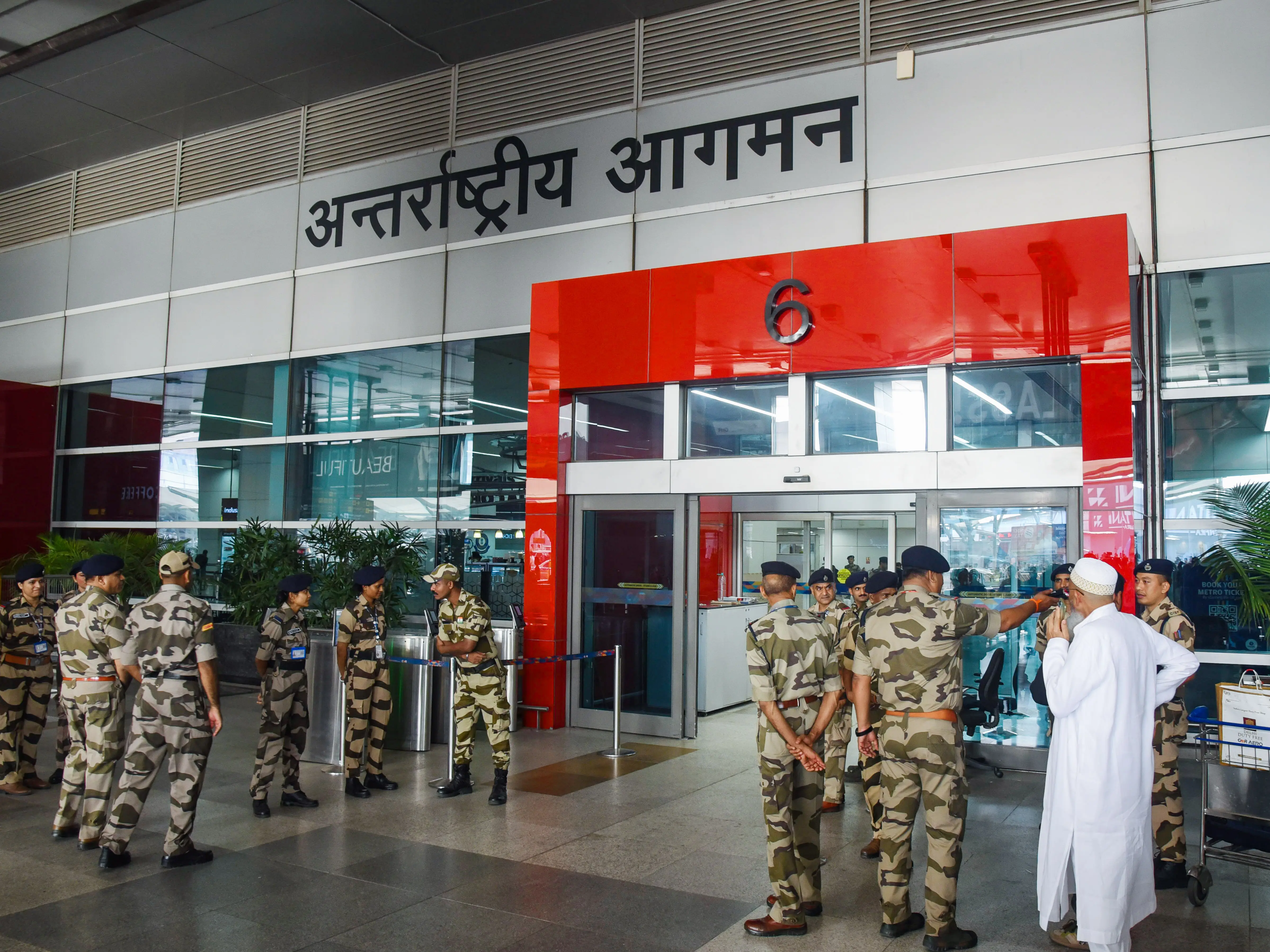)
3 Italians fly from Delhi to Munich without immigration clearance; Air India gets notice on major security lapse
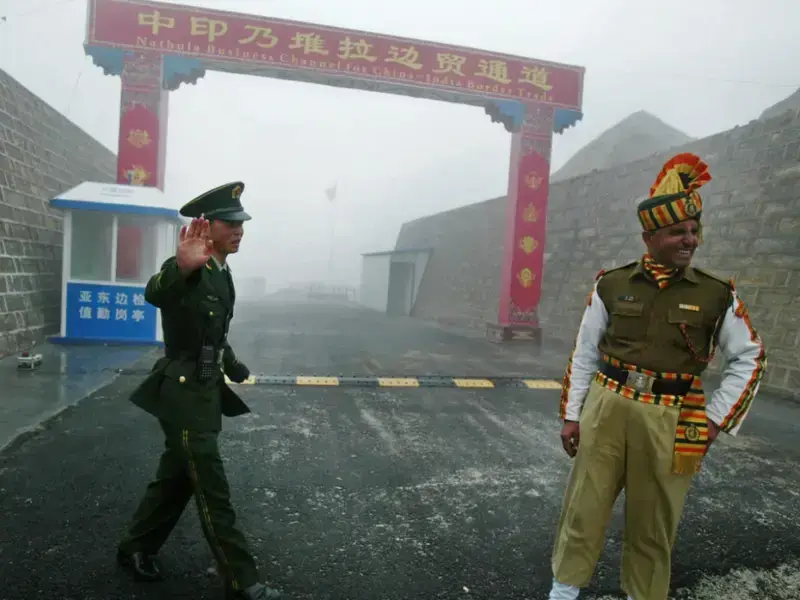)
China thinned Himalayan troop presence in 2025, India defence report says; terms border situation 'stable'
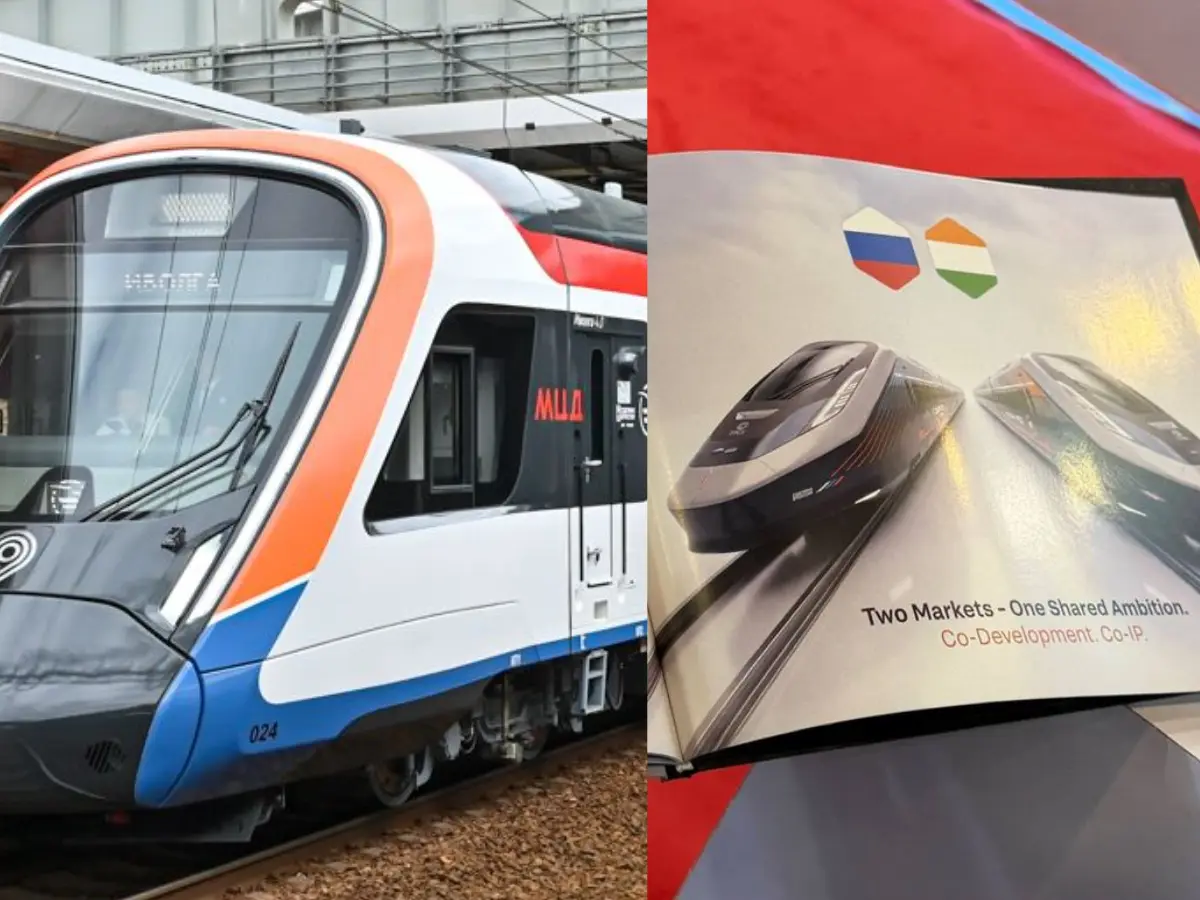)
Russia proposes to build 360 kmph Ivolga FG trains in India: What happened on sidelines of BRICS
)
Dodgers beat Reds for playoff berth in bid for third consecutive World Series
)
Turkish Airlines plane flies through a storm three times, triggering severe turbulence
)
Emmys 2026 In Memoriam: Catherine O’Hara honoured by on-screen children Macaulay Culkin, Annie Murphy, Dan Levy; Dolly Parton, Rob Reiner remembered
)
Emmys 2026: Matthew Rhys wins Best Actor twice, sets historic 78-year record
)
China's property crisis deepens as investment plunges nearly 20%
&im=FitAndFill=(700,400))
New OTT releases this week (September 14-20, 2026): Lust Stories 3, Waiting Hai, Irumudi- 5 new titles coming on Netflix, Prime Video and more
)
Trump loses Supreme Court battle over mail ballots ahead of US midterms: What happened?
)
Shah Rukh Khan confirms release date of his next KING, reveals makers working on the asset
)
Video of Pakistani lawmaker struggling to read English tribute to Jinnah goes viral - WATCH
)
'She married her brother': Ilhan Omar faces criminal probe over immigration fraud claims
)
800 million years old - Scientists discover 'fingerprints' of supercontinent Gondwana in ancient rocks
)
Delhi govt to roll out ₹13,820 crore development projects under Seva Sankalp Abhiyan: CM Rekha Gupta
)
BCCI VP Rajeev Shukla says Mohsin Naqvi 'did not object' India refusing trophy from ACC chief
WATCH WION LIVE HERE
You can now write for wionews.com and be a part of the community. Share your stories and opinions with us here.