Opinion| From 'Mandi' to 'Gangubai Kathiawadi', has Bollywood’s portrayal of a sex worker evolved?

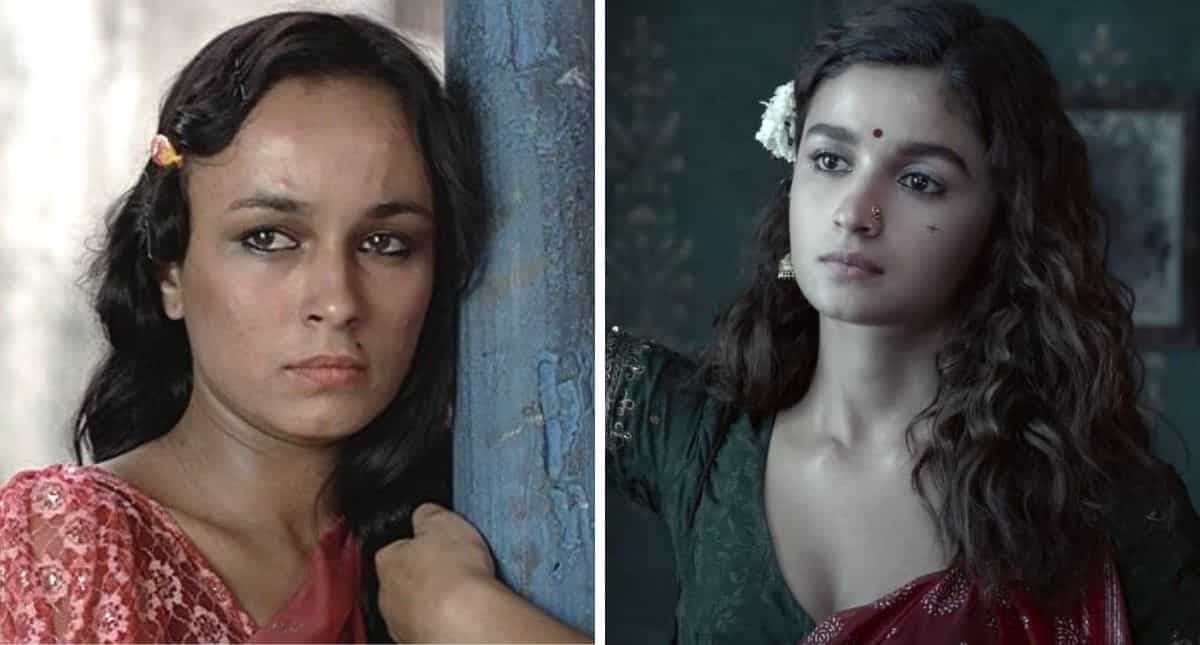
Soni Razdan in 'Mandi' and Alia Bhatt in 'Gangubai Kathiawadi'
In the year 1983, Shyam Benegal, a director par excellence made 'Mandi' - a film on the lives of the sex workers of Hyderabad. The film carried a trove of method actors including Soni Razdan, playing the role of a young sex worker named Nadira. Her character emanated confidence. Her firm gait and presence could not be missed. Most strikingly, the lascivious jokes she cracked on people. Thirty-nine years later, at a time when cars can drive themselves, Bollywood’s understanding of a sex worker remains the same — fierce, but uncouth.
Sure, Alia Bhatt’s portrayal of 'Gangubai Kathiawadi', a sex worker turned brothel madam is empowering. But there is a problematic element in this narrative. The movie tends to romanticise the lives of Kamathipura sex workers to such an extent that it runs the risk of distracting the audience from the real-life circumstances of these women. The current reality of this profession is different. The sex workers of Kamathipura have been pushed to the brink due to the COVID-19-induced lockdowns. The only help they received was from a few non-profit organisations who provided them with daily essentials. Many were neck-deep in debt.
The 2013 mega-hit item number - Ghagra from the movie 'Yeh Jawaani Hai Deewani', was another episode of the precarious portrayal of sex workers. Women of the brothel speak broken English for comic effect. They talk about not knowing the fathers of their kids in a jocular tone. They engage in flirtatious games with the hero of the movie. This sums up their role.

Shifting focus to Srijit Mukherjee’s 'Begum Jaan', Vidya Balan plays a brothel madam in the pre-partition era. She is not doing a five-minute cameo but is the protagonist all dolled - up in Sabyasachi assemble. She sits wide-legged, demanding respect from the audience. The brothel is her sanctum sanctorum.
No doubt, the movie breaks certain stereotypes and gives sex workers centre stage. But, the movie’s understanding of female autonomy is problematic. Towards the end, with no place to go, the sex workers allow themselves to be immolated by the fire inside their brothel. By branding this move as the face of female power, the movie falls into the vicious cycle of misrepresenting exploited communities.
In Benegal’s 'Mandi', the sex workers are pushed to the peripheries of the city. The same attempt is shown in Sanjay LeelaBansali’s 'Gangubai Kathiawadi', which the women overturn. This looks like a leap of social development on the big screen. But, is this really the case? Are women in Mumbai’s Kamathipura actually living in peace? Are they not wrongfully branded by society anymore?
&imwidth=180&imheight=135&format=webp&quality=medium)
'My name has always been Ilhan Omar': Congresswoman hits back at Trump, calls him a 'creep'
&imwidth=180&imheight=135&format=webp&quality=medium)
Gravitas | US attack could trigger WW III: Russian planes in Tehran, Israeli jets, US warships in action
&imwidth=180&imheight=135&format=webp&quality=medium)
Viral video shows cross falling on Colombia priest, no official confirmation | WATCH
&imwidth=180&imheight=135&format=webp&quality=medium)
'This is humiliation': Vijay Deverakonda under fire over controversial marriage proposal remark on Koffee With Karan 9
&imwidth=180&imheight=135&format=webp&quality=medium)
US Navy, Marine Corps boards defy Trump's transgender military ban, vote to retain troops
&imwidth=180&imheight=135&format=webp&quality=medium)
Will the US attack Iran this weekend? Trump's envoy says, 'absolutely'
&im=FitAndFill=(700,400)&imwidth=180&imheight=135&format=webp&quality=medium)
Why do army tanks have different types of armour?
&imwidth=180&imheight=135&format=webp&quality=medium)
India-China face-off continues near Arunachal’s Taksing, reveals ITBP chief in first official confirmation of tensions
&imwidth=180&imheight=135&format=webp&quality=medium)
Nairobi building collapse: Several feared trapped after 16-storey structure crumbles; rescue operation underway
&imwidth=180&imheight=135&format=webp&quality=medium)
Pakistan airline PIA unveils new crew uniforms, faces online criticism
&imwidth=180&imheight=135&format=webp&quality=medium)
Did Neha Bora call for Bangladesh-like GenZ protest, 'anarchy' in India? WION Fact-checks viral claim
&imwidth=180&imheight=135&format=webp&quality=medium)
Horrific video shows the moment 18-year-old fell to her death from Mexico amusement park ride
&imwidth=180&imheight=135&format=webp&quality=medium)
IND-W vs ZIM-W, 1st ODI: Rawal, Charani star in India’s nine-wicket win over Zimbabwe
&imwidth=180&imheight=135&format=webp&quality=medium)
Massive 7.2 magnitude quake off Vanuatu triggers tsunami warning for coasts within 300 km
&imwidth=180&imheight=135&format=webp&quality=medium)
Microsoft AI diagnoses complex medical cases more than twice as accurately as doctors, study finds
&imwidth=180&imheight=135&format=webp&quality=medium)
Google Fitbit Air’s new health guardian feature tracks trends: How it works
&imwidth=180&imheight=135&format=webp&quality=medium)
US midterms 2026: Trump revises Canada tariffs as Susan Collins faces tight re-election race in Maine
&imwidth=180&imheight=135&format=webp&quality=medium)
US midterms 2026: Viral video claims Lindsey Graham paid underage men for sex; clip released weeks before his sister's Senate race
&imwidth=180&imheight=135&format=webp&quality=medium)
IND vs NZ 2nd T20I: Shreyas Iyer on brink of breaking Rohit Sharma’s record
&imwidth=180&imheight=135&format=webp&quality=medium)
AI deepfakes are spreading online: Why is removing them so difficult?
&imwidth=180&imheight=135&format=webp&quality=medium)
China's dancing robot turns violent bodyguard, lifts cars and fights intruders - Watch
&imwidth=180&imheight=135&format=webp&quality=medium)
Global cybersecurity alert: PHP flaws trigger website shutdowns as hack attempts surge into millions
&imwidth=180&imheight=135&format=webp&quality=medium)
'You’re a horrible little reporter, aren’t you?': Trump snaps at NBC reporter questioning his support for Ramaswamy's campaign ad
&imwidth=180&imheight=135&format=webp&quality=medium)
US charges two former FBI officials with lying to Congress about Hunter Biden probes. 'Politically motivated' Trump grievance or something else?
&im=FitAndFill=(700,400)&imwidth=180&imheight=135&format=webp&quality=medium)
New Friday OTT releases (October 23, 2026): Gajab Raat, Dorothy, Chaar Yaar- Watch these 6 new movies and TV shows on Netflix, Prime Video and more
&imwidth=180&imheight=135&format=webp&quality=medium)
Anthropic security chief issues grim cyberattack warning: ‘It’s going to get a lot worse’
&imwidth=180&imheight=135&format=webp&quality=medium)
Tu Hai Meri Kiran film review: Sonakshi Sinha and Zaheer Iqbal's thriller gets tangled in its own twists
&imwidth=180&imheight=135&format=webp&quality=medium)
First Lady Melania Trump secures ceasefire between Russia, Ukraine in Oleshky: White House
&imwidth=180&imheight=135&format=webp&quality=medium)
One man, 8 months of work, and a river dirty again: Why Bittu Tabahi may quit
&imwidth=180&imheight=135&format=webp&quality=medium)
Jenna Ortega plans TV break after Wednesday: ‘I want to leave time for new things’
&imwidth=180&imheight=135&format=webp&quality=medium)
Five killed, several injured after explosion in Bihar's Siwan as firecrackers catch fire
&imwidth=180&imheight=135&format=webp&quality=medium)
Iran targeting US diplomats? Intelligence warns of 'advanced' assassination plots: Report
&imwidth=180&imheight=135&format=webp&quality=medium)
Emmanuel Macron calls Paris suburb shooting a 'racist terrorist attack' after one killed, several injured
Brothels are far from the regal affairs shown in item numbers. In 2020, The Delhi Commission for Women reported ‘inhumane conditions’ including zilch hygiene and a dearth of food in the red-light district of GB road in Delhi.
It is unfair to say that we haven't made any strides towards progressive cinema. 'Gangubai Kathiawadi' was a brave attempt. The only drawback was its myopic and somewhat utopian understanding of a sex worker. Fiction cannot exist in silos. It has to be in sync with material reality.
The COVID-19 pandemic makes it all the more crucial for cinema to be socially responsible, especially towards marginalised communities. We need to up our level of discourse.
(Disclaimer: The views of the writer do not represent the views of WION or ZMCL. Nor does WION or ZMCL endorse the views of the writer.)