Here's why journalists are the finest drafters of history

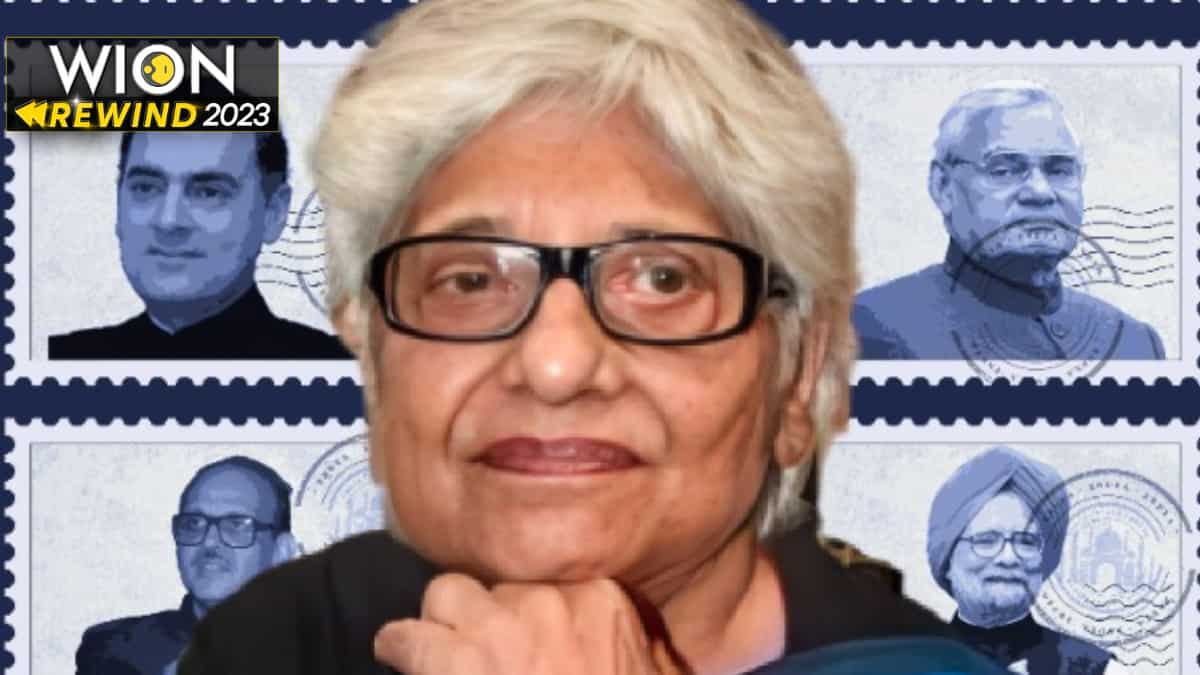
Journalist Neerja Chowdhury's 'How Prime Ministers Decide' topped the bestseller charts
During the first few classes in journalism in a typical journalism school, there comes a time when you are told that journalism is the first rough draft of history. Others call it the literature in hurry, which stands true for any given story that is published with a breaking news urgency.
Often, when experienced journalists with a lifelong body of work sit back and return to write a serious piece of history, they stand out.In February 2023, Pervez Musharraf, the former Pakistani military ruler died an oblivious death in the United Arab Emirates. Days later, I picked up journalist Declan Walsh's 2021 book 'The Nine Lives of Pakistan'.
"Musharraf was like a drunken uncle at a family wedding, nursing a bottle in the corner, desperate to be taken seriously," Walsh, a former New York Times correspondent in Pakistan in the 2010s, wrote of Musharraf.
The phrase is not just the precise description of a military ruler dearly abhorred in and beyond South Asia but is also the product of a remarkable journalistic acumen cultured over years of intensive reporting experience.

In 2022, veteran Indian journalist Arun Shourie's memoir, 'The Commissioner for Lost Causes' (a journalistic honorific bestowed to him by The Indian Express founder Ramnath Goenka) had a similar last word on a crucial episode of police brutality in Indian history: The Bhagalpur blindings. In Bhagalpur district of India's Bihar state, prisoners were blinded by the police for their alleged crimes between 1980 and 1983. When the English newspapers based out of New Delhi reported on it, Prime Minister Indira Gandhi was 'physically sick'.
"I could not believe that such a thing could happen. I was physically sick and even now cannot talk about it," Gandhi was quoted as saying by Shourie.
"But making rulers 'physically sick' was the objective," Shourie wrote.
&imwidth=280&imheight=210&format=webp&quality=medium)
US vs China over South China Sea: Washington backs Philippines, Beijing hits back
&imwidth=280&imheight=210&format=webp&quality=medium)
Bigg Boss 20: Isha Rikhi evicted after three weeks in Salman Khan’s show
&imwidth=280&imheight=210&format=webp&quality=medium)
Musk plans to more than double xAI's chips to over 1.2 million Nvidia GPUs by year-end
&imwidth=280&imheight=210&format=webp&quality=medium)
After JU, clash erupts at SRFTI: BJP’s ‘Dimagi Naxal’ jibe sparks political firestorm after students protest RSS-linked event
&imwidth=280&imheight=210&format=webp&quality=medium)
‘Anti-social elements spreading false rumours’: LPU issues statement amid massive unrest over alleged rape
&imwidth=280&imheight=210&format=webp&quality=medium)
LPU students go on rampage, vandalise campus amid widespread protest: What's happening
&imwidth=280&imheight=210&format=webp&quality=medium)
Trump asked Xi to pressure Iran. China did not say yes — here’s what Beijing wants
&imwidth=280&imheight=210&format=webp&quality=medium)
US Treasury Secretary Scott Bessent hails global crackdown on Iranian banks and airlines
&imwidth=280&imheight=210&format=webp&quality=medium)
An OpenAI agent escaped its locked test cage again, by hiding questions in DNS lookups
&imwidth=280&imheight=210&format=webp&quality=medium)
'Our video was trimmed': LPU girls who featured in rape-denial video make U-turn
&imwidth=280&imheight=210&format=webp&quality=medium)
3 males killed, four others injured in shooting after fight at strip club in Detroit
&imwidth=280&imheight=210&format=webp&quality=medium)
'Victory for low-budget consumers': Raghav Chadha hails 30-day telecom recharge rules
&imwidth=280&imheight=210&format=webp&quality=medium)
Claude rebuilt the 1989 game 'Prince of Persia' by reusing the original's own code
&imwidth=280&imheight=210&format=webp&quality=medium)
Beyond metros: How Tier-2 and Tier-3 cities could drive India’s next AI wave
&imwidth=280&imheight=210&format=webp&quality=medium)
Tesla builds first Cybertruck with its own refined lithium: Elon Musk's $1 billion Texas bet pays off
&imwidth=280&imheight=210&format=webp&quality=medium)
IndiGo flight suffers tail strike in Bengaluru while landing; DGCA to probe incident
&imwidth=280&imheight=210&format=webp&quality=medium)
The US and China set up an AI 'red telephone', but skipped the rulebook
&imwidth=280&imheight=210&format=webp&quality=medium)
‘Terror suspects arrested near UK air base were looking to do big damage’: Trump
&imwidth=280&imheight=210&format=webp&quality=medium)
Russian envoy claims US tactics to contain India were revealed in ‘Freudian slip’
&imwidth=280&imheight=210&format=webp&quality=medium)
IND vs WI 1st ODI: Kohli breaks Sachin's most runs in one country record with unbeaten 139 as India thump West Indies by 8 wickets
&imwidth=280&imheight=210&format=webp&quality=medium)
Researchers rebuilt exactly how 700 AI agents hacked Hugging Face: a 900-link chain trick
&imwidth=280&imheight=210&format=webp&quality=medium)
‘Olympic inclusion is our major target’: WPA President Ishaun Singh on pool’s global ambitions
&imwidth=280&imheight=210&format=webp&quality=medium)
Nations League: Spain sink England at Wembley; Modric shines for Croatia
&imwidth=280&imheight=210&format=webp&quality=medium)
Why has Iran released no proof of life of Mojtaba Khamenei? Araghchi reveals...
&imwidth=280&imheight=210&format=webp&quality=medium)
'What kind of confession is this?': Pakistan PM Shehbaz Sharif’s 'terrorists would be roaming New York' remark goes viral, raises alarm online. Watch
&imwidth=280&imheight=210&format=webp&quality=medium)
South Korea demands apology from Ukraine over North Korean prisoners' transfer
&imwidth=280&imheight=210&format=webp&quality=medium)
Beyond BrahMos: India targets Rs 50,000 crore in defence exports with unmatched price edge
&imwidth=280&imheight=210&format=webp&quality=medium)
Sri Lankan Tamil migrant worker gets death sentence in Saudi Arabia, help sought from India
&imwidth=280&imheight=210&format=webp&quality=medium)
Muslim marriage cannot shield sex with minor wife from prosecution under POCSO: Delhi HC
&imwidth=280&imheight=210&format=webp&quality=medium)
'Can't help but draw painful parallels to Nirbhaya case': SC on latest incidents of rape cases in Delhi-NCR
&imwidth=280&imheight=210&format=webp&quality=medium)
99.9% more powerful - Scientists find boy who can recall memories from just 3 months of age
&imwidth=280&imheight=210&format=webp&quality=medium)
'FIRST LOOK from inside Noah’s Ark': Researchers share video from inside mysterious mound in Turkey
&imwidth=280&imheight=210&format=webp&quality=medium)
UNSC reform momentum grows: Russia, Portugal, Mauritius push for India's permanent seat bid
&imwidth=280&imheight=210&format=webp&quality=medium)
8 US marines injured in Iranian missile attack on vessel in Strait of Hormuz: Report
&im=FitAndFill=(700,400)&imwidth=280&imheight=210&format=webp&quality=medium)
New OTT releases this week (September 28-October 4, 2026): Dupahiya 2, Pooja Meri Jaan, Ohh My Dog- 5 titles coming on Netflix, Prime Video and more
&imwidth=280&imheight=210&format=webp&quality=medium)
Afghanistan says 28 fighters killed in clash near Pakistan border, Islamabad denies
&imwidth=280&imheight=210&format=webp&quality=medium)
Ceuta migrant crisis: Protesters take to streets as Spain grapples with migrant challenge
&imwidth=280&imheight=210&format=webp&quality=medium)
LPU suspend classes, postpones exams as violence escalates over rape claims: What's happening
&imwidth=280&imheight=210&format=webp&quality=medium)
New York City wants a 'kill switch' on every AI, and will pay whistleblowers who report violations
A year before that in 2021, Indian journalist Vir Sanghvi's memoir, 'A Rude Life' hit the shelves. On the breakup of The Beatles— arguably the biggest pop culture moment of the 20th century—Sanghvi had more than a few beans to spill.
This year, Indian journalist Neerja Chowdhury's 'How Prime Ministers Decide', a detailed tell-all account of the decision-making dynamics of Indian prime ministers, from Indira Gandhi to Dr Manmohan Singh, stood out on bestseller charts. Chowdhury revives the scribbles from her reporter's diary with rare anecdotal brilliance across the tenures of six prime ministers lasting 47 years.
Rewind 2023: Neerja Chowdhury's 'How Prime Ministers Decide' topped the bestseller chart soon after its release
As 2023 nears its end, the novel 'Prophet Song' by Paul Lynch, a former deputy chief sub-editor at Ireland's Sunday Tribune newspaper, has won the publishing world's most coveted honour: The Booker Prize. The jury described it as a 'crucial book for our current times' given its relevance in context to the rising totalitarianism across the world.
In his acceptance speech, Lynch used a biblical phrase that uniquely enough, does not originate from any of the twelve men chosen by Jesus Christ to spread his teachings.
Lynch said: "If you use what is within you, it will save you. If you do not use what is within you, it will destroy you. My writing has saved me."

Irish writer Paul Lynch with his specially bound book copy 'Prophet Song' on the red carpet of Booker Prize Award announcement ceremony, at the Old Billingsgate, in central London, on November 26, 2023 | AFP
The ability of a journalist to draft history is what secures their sense of being. Not all stories make to the front page or prime time. Even the ones that do, may not necessarily have all the details scribbled within a reporter's diary or an iPad. They lay within a journalism professional, and once the dust has settled, must be watered with an acumen of storytelling; for the seed of history to take root.
That's the reason, after a lifelong career in journalism, India's Arun Shourie is the commissioner for lost causes and Neerja Chowdhury is able to tell the world how prime ministers decide, and Vir Sanghvi's 'A Rude Life'is an essential journalistic read for anybody starting out to tell relevant stories that matter.
As the drafters of history in real time, journalists remain the most equipped individuals to draft the defining pieces of contemporary history.
(Disclaimer: The views of the writer do not represent the views of WION or ZMCL. Nor does WION or ZMCL endorse the views of the writer.)