Agniveers: The Navy's on-deck experience

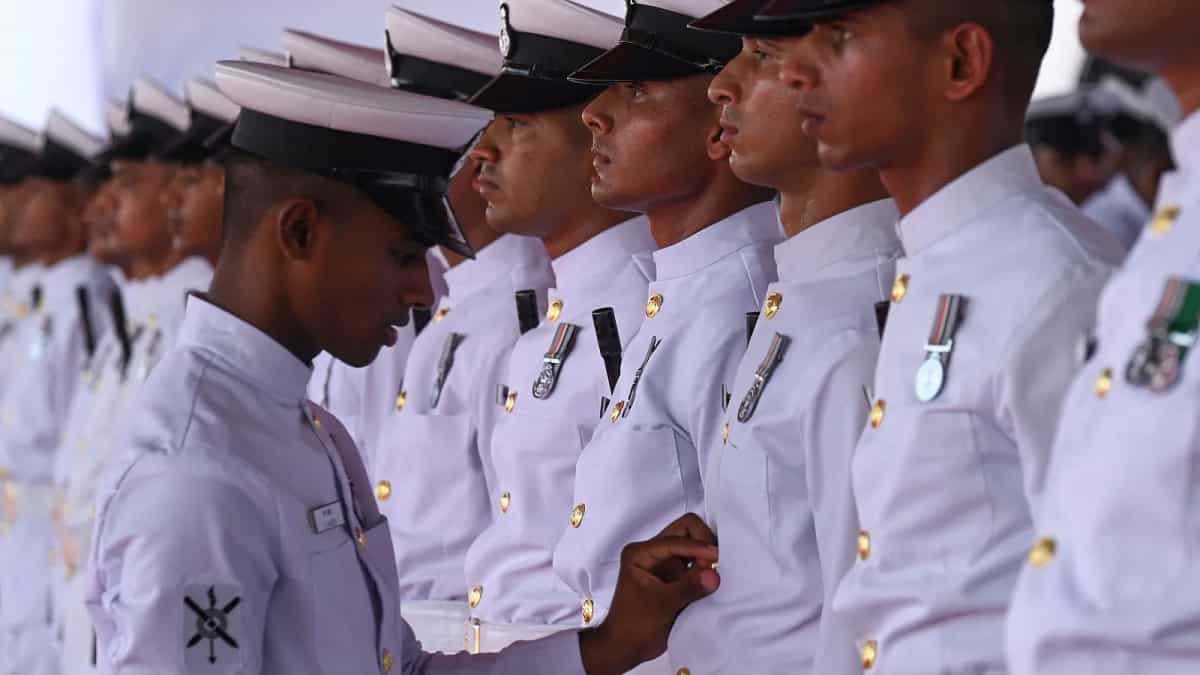
Photo for representative purpose
As India sails through a transformative phase in its defence landscape, the introduction of the Agniveer scheme stands as a significant milestone. At the heart of this evolution, the Indian Navy has seamlessly integrated these young warriors into its ranks, bringing with them a fresh wave of enthusiasm, dedication, and a redefined spirit of service. As a seasoned naval officer who has witnessed this transition firsthand, I find it both fitting and timely to reflect on the Agniveers' journey within the Navy, their performance, and the indelible impact they have made in such a short span of time.
The Beginning of a New Era
The induction of the first batch of Agniveers marks a pivotal moment in our armed forces. These young recruits, hailing from diverse backgrounds across the nation, were welcomed into almost every branch of the Navy. They were quickly deployed across a broad spectrum of maritime security operations, from patrolling the high seas to managing complex logistics and technical tasks in naval establishments. The urgency of the times demanded swift integration, and the Navy rose to the challenge.

I am sure that those who joined naval service earlier today after a stunning passing-out parade (POP) at INS Chilka will keep this new-found tradition alive and continue it.
From the onset, Agniveers were not only expected to match the standards set by their predecessors but also to adapt rapidly to the rigours of naval life. On any major warship today, you will find Agniveers standing shoulder to shoulder with seasoned sailors, executing their duties with a level of professionalism that belies their limited time in service. Their integration has been so seamless that, at times, it is easy to forget that they are new to life at sea. This is a testament to both the training they have received and the inherent qualities they bring to the Navy.
Overcoming Initial Concerns
&imwidth=180&imheight=135&format=webp&quality=medium)
Asian Games 2026: India face Afghanistan in quarterfinal on Sep 28; Pakistan clash with Hong Kong
&imwidth=180&imheight=135&format=webp&quality=medium)
Myanmar training camp case: US national, 6 Ukrainians allowed to meet their families abroad
&imwidth=180&imheight=135&format=webp&quality=medium)
Bigg Boss 20: Salman Khan schools Rhiti Tiwari over Qazi Touqeer clash, compares her to Dolly Bindra
&imwidth=180&imheight=135&format=webp&quality=medium)
Mushtaq Khan dies at 56: When Welcome actor opened up about his salary for iconic role Ballu
&imwidth=180&imheight=135&format=webp&quality=medium)
LPU students go on rampage, vandalise campus amid widespread protest: What's happening
&imwidth=180&imheight=135&format=webp&quality=medium)
'FIRST LOOK from inside Noah’s Ark': Researchers share video from inside mysterious mound in Turkey
&imwidth=180&imheight=135&format=webp&quality=medium)
‘Attack on Mecca a red line for Pakistan’: Shehbaz Sharif warns Houthis at UN
&imwidth=180&imheight=135&format=webp&quality=medium)
Pakistan deploys over 20,000 security personnel as PTI vows march for Imran Khan's release
&imwidth=180&imheight=135&format=webp&quality=medium)
OpenAI AI Agents hacked 4 websites before Hugging Face, researchers reveal
&imwidth=180&imheight=135&format=webp&quality=medium)
'A terrorist country is asking me that question?': Jaishankar hits back at Pakistani journalist at UN; flags attacks on commercial shipping
&imwidth=180&imheight=135&format=webp&quality=medium)
Trump-Xi summit wrap: Big pageantry, Iran talks, few major developments and more meetings planned
&imwidth=180&imheight=135&format=webp&quality=medium)
Did Hitler kill his niece Geli Raubal? Newly found records reopen a 95-year-old mystery
&imwidth=180&imheight=135&format=webp&quality=medium)
Hawaii braces for Hurricane Nolo: NOAA warns of flash flooding and mudslides
&imwidth=180&imheight=135&format=webp&quality=medium)
'What kind of confession is this?': Pakistan PM Shehbaz Sharif’s 'terrorists would be roaming New York' remark goes viral, raises alarm online. Watch
&imwidth=180&imheight=135&format=webp&quality=medium)
US-Iran war: Trump rejects Iran's Hormuz proposal, reports suggest talks expected next week
&imwidth=180&imheight=135&format=webp&quality=medium)
Bollywood x K-pop crossover! LE SSERAFIM’s Kazuha charms fans with Shah Rukh Khan’s ‘Chammak Challo’ steps
&imwidth=180&imheight=135&format=webp&quality=medium)
Gaza's war turned environmental damage into second crisis
&imwidth=180&imheight=135&format=webp&quality=medium)
‘Serial practitioner of terrorism’: Jaishankar calls out Pakistan’s ‘state-sponsored’ terror at UNGA
&imwidth=180&imheight=135&format=webp&quality=medium)
‘It is all possible’: Putin weighs next steps on Ukraine talks, rules out Europe conflict
&imwidth=180&imheight=135&format=webp&quality=medium)
Prince Harry offers rare glimpse into Archie and Lilibet’s life after UK move
&imwidth=180&imheight=135&format=webp&quality=medium)
Nigeria Navy moves to boost oil security, tackle crude theft and infrastructure threats
&imwidth=180&imheight=135&format=webp&quality=medium)
Donald Trump shares image of Xi's arrival in Washington, carries signs of AI
&imwidth=180&imheight=135&format=webp&quality=medium)
Pentagon quietly adds 37 wounded troops to Iran war tally without explaining when or how
&imwidth=180&imheight=135&format=webp&quality=medium)
US court backs Pentagon's decision to exclude Anthropic over Claude AI restrictions
&imwidth=180&imheight=135&format=webp&quality=medium)
US Supreme Court backs Trump administration's use of SAVE database to check voter citizenship
&imwidth=180&imheight=135&format=webp&quality=medium)
‘Could kill billions...’: Bill Gates backs calls to slow AI development amid fears of catastrophe
&imwidth=180&imheight=135&format=webp&quality=medium)
'Countries far from conflict are penalised': Jaishankar calls for Gulf peace, seafarer safety at UN
&imwidth=180&imheight=135&format=webp&quality=medium)
WATCH | As Shehbaz Sharif claims Pakistan’s ‘victory’ during 2025 conflict, Indian diplomat R Srinivas laughs at UN
&imwidth=180&imheight=135&format=webp&quality=medium)
Outrage erupts after 3-year-old is married to 60-year-old man in Pakistan, link to her sister's murder being probed
&im=FitAndFill=(700,400)&imwidth=180&imheight=135&format=webp&quality=medium)
New Friday OTT releases (September 25, 2026): Don’t Be Shy, Hunkkaar: The Roar, Mango Pachcha- 6 movies and TV shows on Netflix, Prime Video and more
&imwidth=180&imheight=135&format=webp&quality=medium)
Global community 'absent' in Gulf crisis: Saudi at UN calls for freedom of navigation, pre war status for Hormuz
&imwidth=180&imheight=135&format=webp&quality=medium)
Farhan, who went viral for AK47 celebration vs India in Asia Cup, hopes to lead Pakistan beyond Asian Games
&imwidth=180&imheight=135&format=webp&quality=medium)
‘I rejected it’: Trump confirms turning down Iran’s proposal to reopen Hormuz, claims Tehran is losing ‘badly’
&imwidth=180&imheight=135&format=webp&quality=medium)
Russia will achieve Ukraine war aims; Europe doing everything to block peace talks: Lavrov at UN
When the Agnipath scheme was first introduced, there were understandable concerns regarding its impact on combat efficiency. The question on many minds was whether a new, relatively short-term recruitment model could sustain the high standards of our armed forces. However, the past year has provided ample evidence to dispel these concerns.
Aboard the Navy's frontline combatants, Agniveers have demonstrated a remarkable quick learning and adaptation capacity. Trained on the job, much like their predecessors, these young men and women have proven that they can be moulded into highly competent sailors within a short period. Their deployment in operational posts has shown no discernible drop in combat efficiency, which speaks volumes about the effectiveness of the training processes in place. Moreover, the ability to train these recruits "onboard" for specific roles has, in some cases, led to greater efficiency. The agility and adaptability of Agniveers, coupled with the Navy's robust training mechanisms, have ensured that these recruits are not just filling positions but excelling in them.
The Spirit of Teamwork and Integration
Central to the Navy's philosophy is the concept of teamwork, and the Divisional system has played a crucial role in ensuring that Agniveers are fully integrated into their respective teams. From the very beginning, efforts have been made to ensure that each Agniveer feels like an equal member of the crew. This inclusion extends beyond routine tasks and operational duties to involve them in all aspects of naval life, from preparing major weapon systems to participating in challenging evolutions like underway replenishment and towing.
The success of this approach is evident in the way Agniveers have performed across various roles. Whether it's maintaining critical machinery, standing watch, or participating in demanding physical evolutions, these recruits have shown that they are not just up to the task but are excelling at it. The Navy's investment in their training and integration is already paying dividends, with these young sailors contributing effectively to the operational readiness of their ships.
Excellence in Training and Beyond
The Agniveers' performance in various training schools has been particularly noteworthy. These young recruits have consistently delivered impressive results, especially in technical subjects where many have exceeded expectations. Their academic achievements are complemented by their physical prowess, with several Agniveers emerging as champions in prestigious events such as cross-country championships, athletics, and swimming competitions.
Beyond their professional and physical capabilities, Agniveers have also made a significant cultural impact within the Navy. Their enthusiasm and willingness to participate in team events have brought a renewed sense of energy and camaraderie to the ranks. Whether it's showcasing their talents in cultural activities or confidently representing the Navy in interviews and public appearances, these young men and women embody the changing fabric of Indian society. They are a reflection of a new generation that is self-assured, determined, and ready to contribute to the nation's security with pride.
Challenges and the Road Ahead
Like any new initiative, the Agnipath scheme has faced its share of challenges. The short-term nature of the Agniveer engagement raises questions about long-term retention and the potential loss of trained personnel. However, the Navy has approached these challenges with a mindset of continuous improvement. Course corrections are being made where necessary, and the Navy remains committed to refining the Agniveer experience to maximise its benefits for both the recruits and the service.
Looking ahead, the potential for Agniveers to shape the future of the Navy is immense. As they gain more experience, these young sailors will not only continue to serve with distinction but will also take on roles as mentors for the next batch of recruits. Their experiences, both positive and challenging, will provide valuable lessons that will inform the training and integration of future Agniveers. In time, they will contribute to the evolution of the Navy, ensuring that it remains a formidable force in the defense of our nation.
A Future of Promise
The Agniveer initiative, in its nascent stages, has already proven to be a success within the Indian Navy. The seamless integration, exceptional performance, and cultural impact of these young recruits are a testament to the effectiveness of the Agnipath scheme and the Navy's ability to adapt and innovate. As we look to the future, it is clear that Agniveers will continue to play a vital role in the defense of our nation, embodying the values of dedication, excellence, and service.
In a world where the security landscape is constantly evolving, the Agniveers represent the future of India's defence forces—dynamic, resilient, and ready to face any challenge. As a nation, it is incumbent upon us to support and nurture this initiative, ensuring that our armed forces remain at the cutting edge of combat readiness. The success of the Agniveer program within the Navy is not just a reflection of our naval prowess but also a beacon of hope for the future of India's defence strategy. The Navy's deck is now richer with the presence of these young men and women, who will undoubtedly steer the ship towards greater achievements in the years to come.
(Disclaimer: The writer's views do not represent those of WION or ZMCL. Nor does WION or ZMCL endorse the views of the writer.)