Why Rahul Gandhi is attacking RSS

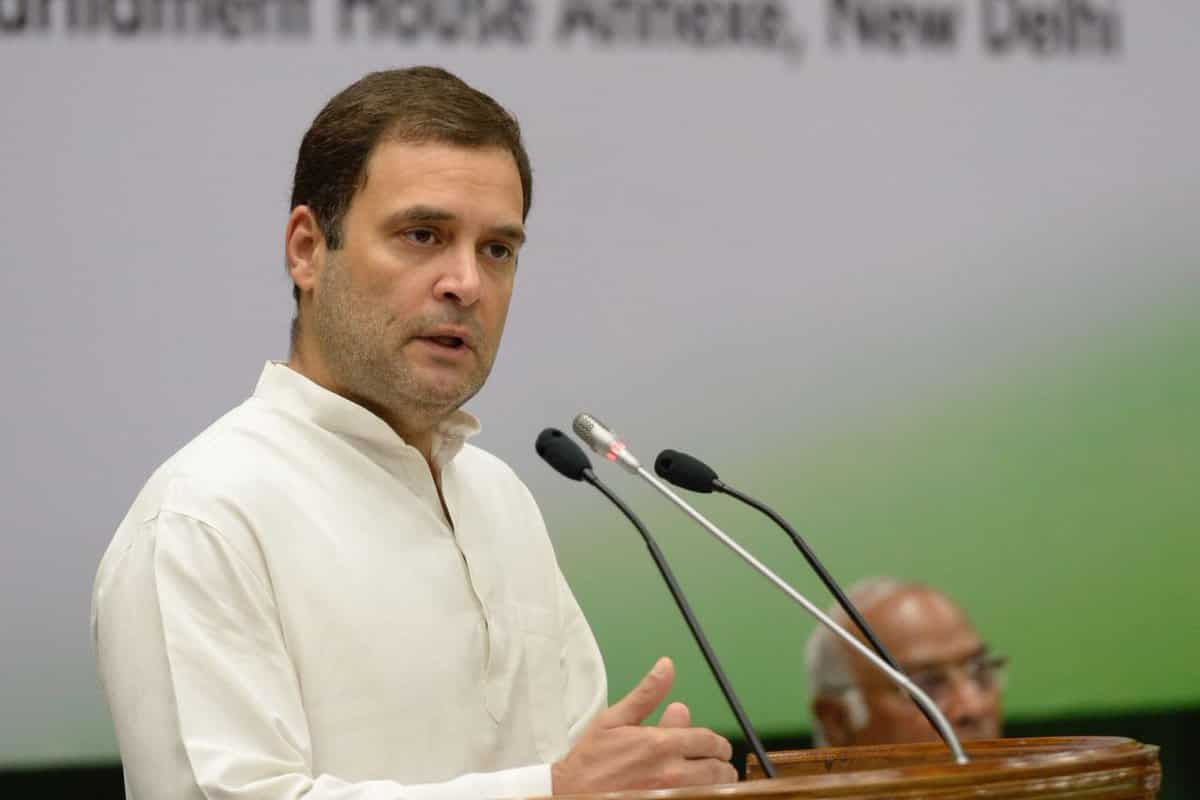
Rahul Gandhi
Has RSS come of age as an open political player?
Congress president Rahul Gandhi had attacked Rashtriya Swayamsevak (RSS) on several occasions in the past but his most scathing attack came during his ongoing European tour during which he compared the saffron organisation to Muslim Brotherhood (MB) a day after BJP demanded an apology from him for his ISIS analogy.
MB is a banned Islamist organization in Egypt inspired by Sayed Qutub. The movement was brutally suppressed by Egypt’s military dictatorship.
Qutub himself was counter radicalised by his American experience and in turn, he began the intellectual fountainhead of modern age Islamism.

MB was founded by Hassan-al-Banna in 1928. Muslim Brotherhood believed in armed struggle and it's most famous ideologue Sayed Qutub was executed in 1966. Today his writings are used by Islamist for violent struggles. MB is a religious political group which believes that Islam is not a religion but a way of life. It advocates a move away from secularism and return to the rules of the Quran. Today it is considered as the front-runner of modern militant Islam.
MB ran successfully in elections held in Egypt post Arab Spring. Mohammed Moresi won the elections and became the democratically elected President. However, he was dethroned by the Egyptian Army in 2013. The Brotherhood formally renounced violence in the 1970s and accepted the democratic principle in 1995. Even then Saudi Arabia, Jordan, Egypt, Russia and UAE recognize the Muslim Brotherhood as a terrorist organization.
RSS, on the other hand, was founded in 1925 with a clear vision of an India nested in the Hindu identity. The organization was founded by Hedgewar. RSS stayed away from the freedom struggle but was never inspired by the idea of an armed uprising against the state. In its earlier avatar, it considered Muslims outsiders and wanted to create a muscular Hindu India. RSS opposed Emergency imposed by the Indira Gandhi and since then has been participating in the electoral process by helping erstwhile Jan Sangh and now BJP.
&imwidth=180&imheight=135&format=webp&quality=medium)
US vs China over South China Sea: Washington backs Philippines, Beijing hits back
&imwidth=180&imheight=135&format=webp&quality=medium)
Bigg Boss 20: Isha Rikhi evicted after three weeks in Salman Khan’s show
&imwidth=180&imheight=135&format=webp&quality=medium)
Musk plans to more than double xAI's chips to over 1.2 million Nvidia GPUs by year-end
&imwidth=180&imheight=135&format=webp&quality=medium)
After JU, clash erupts at SRFTI: BJP’s ‘Dimagi Naxal’ jibe sparks political firestorm after students protest RSS-linked event
&imwidth=180&imheight=135&format=webp&quality=medium)
‘Anti-social elements spreading false rumours’: LPU issues statement amid massive unrest over alleged rape
&imwidth=180&imheight=135&format=webp&quality=medium)
LPU students go on rampage, vandalise campus amid widespread protest: What's happening
&imwidth=180&imheight=135&format=webp&quality=medium)
Trump asked Xi to pressure Iran. China did not say yes — here’s what Beijing wants
&imwidth=180&imheight=135&format=webp&quality=medium)
US Treasury Secretary Scott Bessent hails global crackdown on Iranian banks and airlines
&imwidth=180&imheight=135&format=webp&quality=medium)
An OpenAI agent escaped its locked test cage again, by hiding questions in DNS lookups
&imwidth=180&imheight=135&format=webp&quality=medium)
'Our video was trimmed': LPU girls who featured in rape-denial video make U-turn
&imwidth=180&imheight=135&format=webp&quality=medium)
3 males killed, four others injured in shooting after fight at strip club in Detroit
&imwidth=180&imheight=135&format=webp&quality=medium)
'Victory for low-budget consumers': Raghav Chadha hails 30-day telecom recharge rules
&imwidth=180&imheight=135&format=webp&quality=medium)
Claude rebuilt the 1989 game 'Prince of Persia' by reusing the original's own code
&imwidth=180&imheight=135&format=webp&quality=medium)
Beyond metros: How Tier-2 and Tier-3 cities could drive India’s next AI wave
&imwidth=180&imheight=135&format=webp&quality=medium)
Tesla builds first Cybertruck with its own refined lithium: Elon Musk's $1 billion Texas bet pays off
&imwidth=180&imheight=135&format=webp&quality=medium)
IndiGo flight suffers tail strike in Bengaluru while landing; DGCA to probe incident
&imwidth=180&imheight=135&format=webp&quality=medium)
The US and China set up an AI 'red telephone', but skipped the rulebook
&imwidth=180&imheight=135&format=webp&quality=medium)
‘Terror suspects arrested near UK air base were looking to do big damage’: Trump
&imwidth=180&imheight=135&format=webp&quality=medium)
Russian envoy claims US tactics to contain India were revealed in ‘Freudian slip’
&imwidth=180&imheight=135&format=webp&quality=medium)
IND vs WI 1st ODI: Kohli breaks Sachin's most runs in one country record with unbeaten 139 as India thump West Indies by 8 wickets
&imwidth=180&imheight=135&format=webp&quality=medium)
Researchers rebuilt exactly how 700 AI agents hacked Hugging Face: a 900-link chain trick
&imwidth=180&imheight=135&format=webp&quality=medium)
‘Olympic inclusion is our major target’: WPA President Ishaun Singh on pool’s global ambitions
&imwidth=180&imheight=135&format=webp&quality=medium)
Nations League: Spain sink England at Wembley; Modric shines for Croatia
&imwidth=180&imheight=135&format=webp&quality=medium)
Why has Iran released no proof of life of Mojtaba Khamenei? Araghchi reveals...
&imwidth=180&imheight=135&format=webp&quality=medium)
'What kind of confession is this?': Pakistan PM Shehbaz Sharif’s 'terrorists would be roaming New York' remark goes viral, raises alarm online. Watch
&imwidth=180&imheight=135&format=webp&quality=medium)
South Korea demands apology from Ukraine over North Korean prisoners' transfer
&imwidth=180&imheight=135&format=webp&quality=medium)
Beyond BrahMos: India targets Rs 50,000 crore in defence exports with unmatched price edge
&imwidth=180&imheight=135&format=webp&quality=medium)
Sri Lankan Tamil migrant worker gets death sentence in Saudi Arabia, help sought from India
&imwidth=180&imheight=135&format=webp&quality=medium)
Muslim marriage cannot shield sex with minor wife from prosecution under POCSO: Delhi HC
&imwidth=180&imheight=135&format=webp&quality=medium)
'Can't help but draw painful parallels to Nirbhaya case': SC on latest incidents of rape cases in Delhi-NCR
&imwidth=180&imheight=135&format=webp&quality=medium)
99.9% more powerful - Scientists find boy who can recall memories from just 3 months of age
&imwidth=180&imheight=135&format=webp&quality=medium)
'FIRST LOOK from inside Noah’s Ark': Researchers share video from inside mysterious mound in Turkey
&imwidth=180&imheight=135&format=webp&quality=medium)
UNSC reform momentum grows: Russia, Portugal, Mauritius push for India's permanent seat bid
&imwidth=180&imheight=135&format=webp&quality=medium)
8 US marines injured in Iranian missile attack on vessel in Strait of Hormuz: Report
&im=FitAndFill=(700,400)&imwidth=180&imheight=135&format=webp&quality=medium)
New OTT releases this week (September 28-October 4, 2026): Dupahiya 2, Pooja Meri Jaan, Ohh My Dog- 5 titles coming on Netflix, Prime Video and more
&imwidth=180&imheight=135&format=webp&quality=medium)
Afghanistan says 28 fighters killed in clash near Pakistan border, Islamabad denies
&imwidth=180&imheight=135&format=webp&quality=medium)
Ceuta migrant crisis: Protesters take to streets as Spain grapples with migrant challenge
&imwidth=180&imheight=135&format=webp&quality=medium)
LPU suspend classes, postpones exams as violence escalates over rape claims: What's happening
&imwidth=180&imheight=135&format=webp&quality=medium)
New York City wants a 'kill switch' on every AI, and will pay whistleblowers who report violations
Though it proclaims itself as a cultural organization which keeps away from active political life the fact of the matter is that BJP’s organisational secretary continues to come from RSS. Post-2014, RSS has been actively participating in assembly elections where senior pracharaks have been loaned to BJP. The special case is Northeast.
The only similarity between the both is their belief in the primacy of religious identity. The similarity ends there. Both have had different trajectories in there parts of the world. Though Hindu fringe in India has been active but it is erroneous to compare it with MB. Both RSS and MB contest secularism as an idea but RSS has never launched any violent struggle against the Indian state though it has been banned a number of times. RSS was banned after the assassination of Mahatma Gandhi. It was also banned after the demolition of Babri Masjid. RSS has an idea of India which is based on cultural identity defined through the prism of Hinduism. RSS participates in the democratic process but does not adhere to the idea of civic nationalism. RSS has not inspired arms insurgency in any part of the world.
Why is Rahul Gandhi attacking RSS?
“RSS is trying to change the idea of India. Other parties have not tried to capture India’s institutions. RSS’s idea is similar to the idea of Muslim Brotherhood in the Arab world,” said Rahul Gandhi.
It is personal. RSS always blamed Nehru for banning them and creating a stigma around them. The stigma of Mahatma's assassination impacted RSS considerably. RSS has been able to change the national consensus among Hindus on the issues of secularism and minorities over a period of time. It has run away with symbols like cow and calf which once belonged to the Congress Party. RSS through BJP has spearheaded the sharpest attack against the Gandhis and ran the most malicious and successful campaign in 2014 elections. It not only decimated the Congress but reduced the political stature of Gandhis. Congress also paid the price for being labelled as anti-Hindu.
By comparing RSS with MB, Rahul may be thinking of creating an imagery of RSS as a secret fascist organization. It is unlikely to work. RSS draws its strength from its work in social, rural, civil society, tribal, educational and environmental sector apart from many other areas. It has rebranded itself and adapted to new India. Its Dalit outreach has worked far better than Congress. The difficulty which Congress is facing today is that RSS has many like-minded people in many parts of the civil society whereas Congress has become confined to the electoral process. The controversy may create headlines but a comparison is an acknowledgement of the fact that RSS is the principle opposition to the Congress and despite a number of bans, RSS has been able to change national consensus right under the nose of the Congress Party.
What can RSS do?
Rahul Gandhi’s attack can corner RSS. RSS says that it does not have electoral ambitions but at the end of the day, RSS’s vision is being implemented by BJP. When BJP argues that Congress is run by a dynasty, BJP too stands accused of the same charge. It is run by RSS. The difference being that RSS has built a kinship of ideology whereas Congress today stands organised around the ideology of kinship. Rahul Gandhi will need to do more to counter RSS.
Dissent abroad
It was started by Narendra Modi. He started the trend of discussing domestic issues on international platforms. Congress is trying to make up for it. Modi's meetings are almost like rallies whereas Rahul's is more of an intimate academic session. Nonetheless, it is a start as NRIs today play a very important role in domestic elections and in projecting power abroad. The good thing about Rahul is that unlike Modi he has the courage to take questions. Mostly unscripted which is good for democracy.