Wars beyond battlefields? India warns UNSC of growing threat to global food security

&imwidth=600&imheight=450&format=webp&quality=medium "Wars beyond battlefields? India warns UNSC of growing threat to global food security")
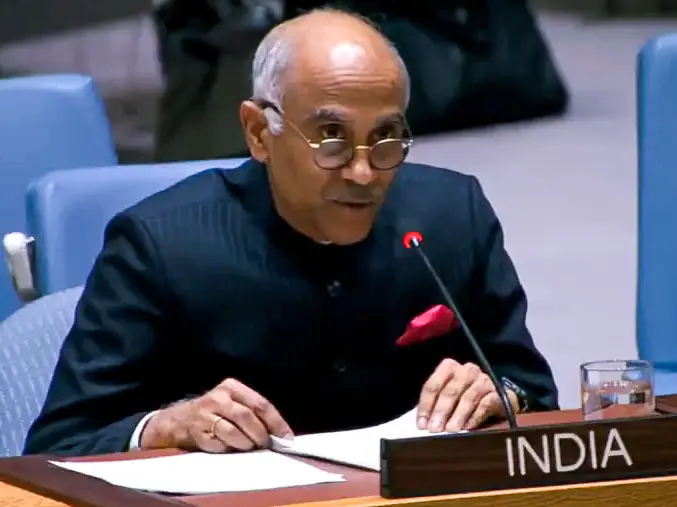
Permanent Representative of India to the United Nations Parvathaneni Harish Photograph: (ANI)
India has urged the UN Security Council to act swiftly to limit conflicts’ impact on global food security, as disruptions in the Black Sea, Hormuz and Red Sea threaten supplies and raise prices.
India on Tuesday (Aug 25) called on the United Nations Security Council to act swiftly to limit the humanitarian consequences of conflicts, warning that wars are increasingly disrupting food supplies far beyond the regions where fighting takes place.
Speaking at a Security Council open debate on “Food Under Fire: The Security Council's Role in Mitigating Global and Local Food Crises”, India’s Permanent Representative P Harish said conflicts were creating knock-on effects across energy markets, fertiliser supplies, shipping and agricultural trade.
“Today’s conflicts increasingly generate ripple effects far beyond the immediate theatre of hostilities,” Harish said.
He stressed that countries dependent on imports are particularly vulnerable when wars disrupt trade routes and supply chains. The Council’s immediate focus, he said, should be on ensuring humanitarian access and preventing measures such as sanctions from unintentionally obstructing food and agricultural trade.
“The Council’s immediate priority should be to mitigate the humanitarian consequences of conflict,” Harish said, calling for “safe, rapid and unimpeded humanitarian access”.
Trending Stories
&imwidth=280&imheight=210&format=webp&quality=medium)
&imwidth=280&imheight=210&format=webp&quality=medium)
&im=FitAndFill=(700,400)&imwidth=280&imheight=210&format=webp&quality=medium)
&imwidth=280&imheight=210&format=webp&quality=medium)
&imwidth=280&imheight=210&format=webp&quality=medium)
&imwidth=280&imheight=210&format=webp&quality=medium)
&imwidth=280&imheight=210&format=webp&quality=medium)
&imwidth=280&imheight=210&format=webp&quality=medium)
&imwidth=280&imheight=210&format=webp&quality=medium)
&imwidth=280&imheight=210&format=webp&quality=medium)
&imwidth=280&imheight=210&format=webp&quality=medium)
&imwidth=280&imheight=210&format=webp&quality=medium)
&imwidth=280&imheight=210&format=webp&quality=medium)
&imwidth=280&imheight=210&format=webp&quality=medium)
&imwidth=280&imheight=210&format=webp&quality=medium)
&imwidth=280&imheight=210&format=webp&quality=medium)
&imwidth=280&imheight=210&format=webp&quality=medium)
&imwidth=280&imheight=210&format=webp&quality=medium)
&imwidth=280&imheight=210&format=webp&quality=medium)
&imwidth=280&imheight=210&format=webp&quality=medium)
&imwidth=280&imheight=210&format=webp&quality=medium)
&im=FitAndFill=(700,400)&imwidth=280&imheight=210&format=webp&quality=medium)
&imwidth=280&imheight=210&format=webp&quality=medium)
&imwidth=280&imheight=210&format=webp&quality=medium)
&imwidth=280&imheight=210&format=webp&quality=medium)
&imwidth=280&imheight=210&format=webp&quality=medium)
&imwidth=280&imheight=210&format=webp&quality=medium)
&imwidth=280&imheight=210&format=webp&quality=medium)
&imwidth=280&imheight=210&format=webp&quality=medium)
&im=FitAndFill=(700,400)&imwidth=280&imheight=210&format=webp&quality=medium)

&im=FitAndFill=(700,400)&imwidth=280&imheight=210&format=webp&quality=medium)
&imwidth=280&imheight=210&format=webp&quality=medium)
&imwidth=280&imheight=210&format=webp&quality=medium)
&imwidth=280&imheight=210&format=webp&quality=medium)
&imwidth=280&imheight=210&format=webp&quality=medium)
&imwidth=280&imheight=210&format=webp&quality=medium)
&imwidth=280&imheight=210&format=webp&quality=medium)
Harish also highlighted India’s domestic food-security measures, including the National Food Security Act and PM-KISAN, which provides direct benefit transfers to more than 110 million farming households. He said India's promotion of millets had also encouraged greater attention to climate-resilient crops.
The remarks came as UN Secretary-General Antonio Guterres pointed to three key trouble spots affecting global food and commodity flows — the Black Sea, Strait of Hormuz and Red Sea.
“The war in Ukraine is affecting grain and energy exports in the Black Sea, both from Ukraine and Russia,” Guterres said.
He said restrictions around Hormuz had pushed commodity prices higher and reduced availability, while attacks on commercial ships in the Red Sea were disrupting supply chains.
The UN has proposed a protected corridor through Hormuz for fertilisers and foodgrains. A UNOPS-led task force has also worked on a system to register and verify vessels carrying fertilisers.
“What is needed now is the cooperation and political will of the parties,” Guterres said.
WFP Acting Director Carl Skau warned that prolonged disruption to maritime trade could push tens of millions more people into food insecurity.

