'Partition is a continuing tragedy', says MJ Akbar on India's painful history

&imwidth=600&imheight=450&format=webp&quality=medium "'Partition is a continuing tragedy', says MJ Akbar on India's painful history")
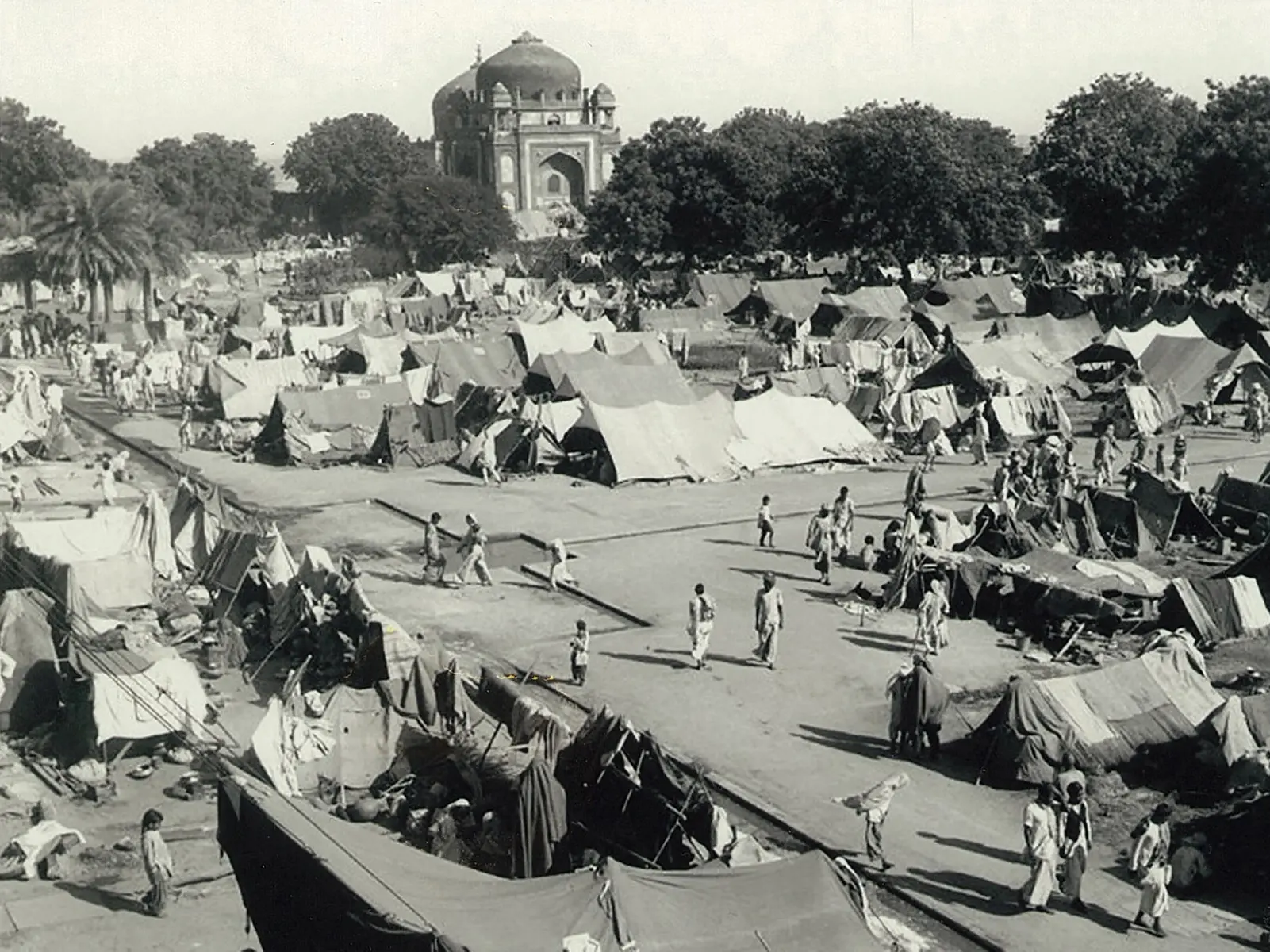
An undated handout image released by the Indian Ministry of Information and Broadcasting on June 13, 2017 and taken circa 1947/1948 shows a camp for displaced Indian Muslims next to Humayun's Tomb in New Delhi, during the period of unrest following the Partition of India and Pakistan. Photograph: (AFP)
MJ Akbar discusses partition, Gandhi, Jinnah and British colonialism, calling partition a continuing tragedy and stressing India's lost potential
Veteran journalist, author and former parliamentarian MJ Akbar has described the Partition of India as a continuing tragedy, arguing that its consequences continue to shape India's present and future. Speaking about his book Gandhi's Hinduism, the Struggle Against Jinnah's Islam, Akbar said the events that led to Partition remain one of the deepest wounds in the history of the subcontinent.
“The partition of India is a continuing tragedy. Most tragedies tend to end at some point. This tragedy is bleeding our nation, bleeding our future really,” Akbar said. He argued that the cost of Partition should not be measured only through defence expenditure or the continuing tensions in the region, but also through what he described as the destruction of India's potential. “The destruction of the potential of India,” he said.
Akbar also reflected on what India could have looked like had Partition not taken place, pointing to the country's historical and geographical links with regions stretching towards Afghanistan and Myanmar. “Do you think any other power would have been able to enter West Asia? Without India having a dominant strategic role in the peace of the region. Not in the wars of the region. We would have been a preventive factor in the wars of the region,” he said.
He described Pakistan as an ‘artificial intrusion’ within what he called the psychological geography of India and questioned the idea that religion could serve as the foundation of a nation. “The idea is that Islam can be the basis of nationalism of a nation. That is an absurdity. I will put it very simply,” Akbar said. He pointed to the existence of multiple Arab nations despite their shared religion and argued that national identity cannot be reduced to faith.
Akbar contrasted this with Mahatma Gandhi's understanding of Hinduism, which he said was rooted in the idea of unity and an expansive conception of faith. “God is older than religion,” Akbar said. Explaining the idea, he said, “If God is older than religion then God made you. I don't know what your faith is. But I am a Muslim. God made you. The Hindu, the Christian, the Parsi. As much as God made a Muslim.”
Also Read: ‘No party sought meeting till 4 pm,’ says EC on INDIA bloc protest against CEC Gyanesh Kumar
Trending Stories
)
)
)
)
)
)
)
)
)
)
)
)
)
)
)
)
)
)
)
)
)
)
)
)
)
)
)
)
)
)
)
)
)
)
&im=FitAndFill=(700,400))
)
)
)
)
Akbar said Gandhi's conception of religion was fundamentally about finding different paths to the same creator. “He said one God is the creator of all of us. All religions are different paths to the same God,” he said. According to Akbar, this understanding made it impossible to confine religion within the boundaries of nation states. “Once you accept that. Then how do you, how can you imprison religion into blocks of nation states. Even Islam. Islam lives in a mosque. It doesn't, it can't be imprisoned in a nation,” he said.
Akbar also highlighted Gandhi's practice of including the Surah Fatiha in his prayers alongside Hindu devotional hymns, arguing that Gandhi's religious philosophy was fundamentally inclusive. “Allah is Rabbul Alameen. The Lord of the Alam, the Lord of the Universe. Universe. He is not Rabbul Muslimeen,” he said. “He is not God only of Muslims. He created the whole universe.”
Akbar further argued that religion should not become a source of division, saying that the idea of one creator could instead serve as a unifying force. “Once we accept that he is both a symbol of unity as well as a unifier of human beings then many of the divisions that have been created in the name of religion would disappear,” he said. He also criticised the tendency to impose narrow interpretations on faith. “You can't turn what I could call the liquidity, the breadth of faith into narrow sectarianism,” Akbar said. “Let God be the judge. Why are we choosing to become petty little Gods ourselves.”
On Jinnah, Akbar acknowledged his intelligence but offered a sharply critical assessment of his political role in the events leading up to Partition. “The fact that he was an intelligent man is not in doubt whatsoever. Perhaps even a fantastic project could only be implemented by an intelligent man,” he said. But Akbar argued that Jinnah's political project ultimately resulted in a devastating outcome for the subcontinent.
Describing the circumstances surrounding Jinnah's pursuit of Pakistan, he said it became “a dying man's obsession” and “a dying man's dream”. “And can you imagine that an intelligent man's final obituary would be written in the blood of violence. In the blood of vivisection, in the blood of partition, in the blood of millions dead. And so many more millions devastated,” Akbar said. “But his role in history is a role written in red, the red of blood.”
Akbar also placed significant responsibility for Partition on British colonial policy, arguing that the British were determined to leave behind what he called a parting wound on India's destiny. “I think the British were determined to inflict this parting wound on the destiny of India,” he said. He was particularly scathing about the legacy of European colonialism. “The history of the British Empire is a history of famine,” Akbar said. He added, “Europe has been the most malevolent and barbaric perpetrators of massacres.”
Akbar argued that colonialism had also distorted the understanding of India's own history. “One of the great tragedies of our history is that the British actually interfered and came between us and the facts that have been reported and recorded by contemporary sources. They removed large chunks of pre-British history from our collective memory,” he said. Ultimately, Akbar said his book was an attempt to encourage readers to confront history through facts rather than inherited narratives.
“I wanted every reader and perhaps larger circumference than just the readership to look at the facts and not to become victims of the twists and the misappropriation of the truths that was done so effectively by the British historians and with British writers,” he said. He described a book as a modest contribution to a much larger historical conversation. “A book at best can be a very small lamp on a very broad highway. But every lamp is useful,” Akbar said.

