

&imwidth=800&imheight=600&format=webp&quality=medium "Operation Sindoor: CDS Gen Chauhan says 15% of Army’s time spent countering misinformation")
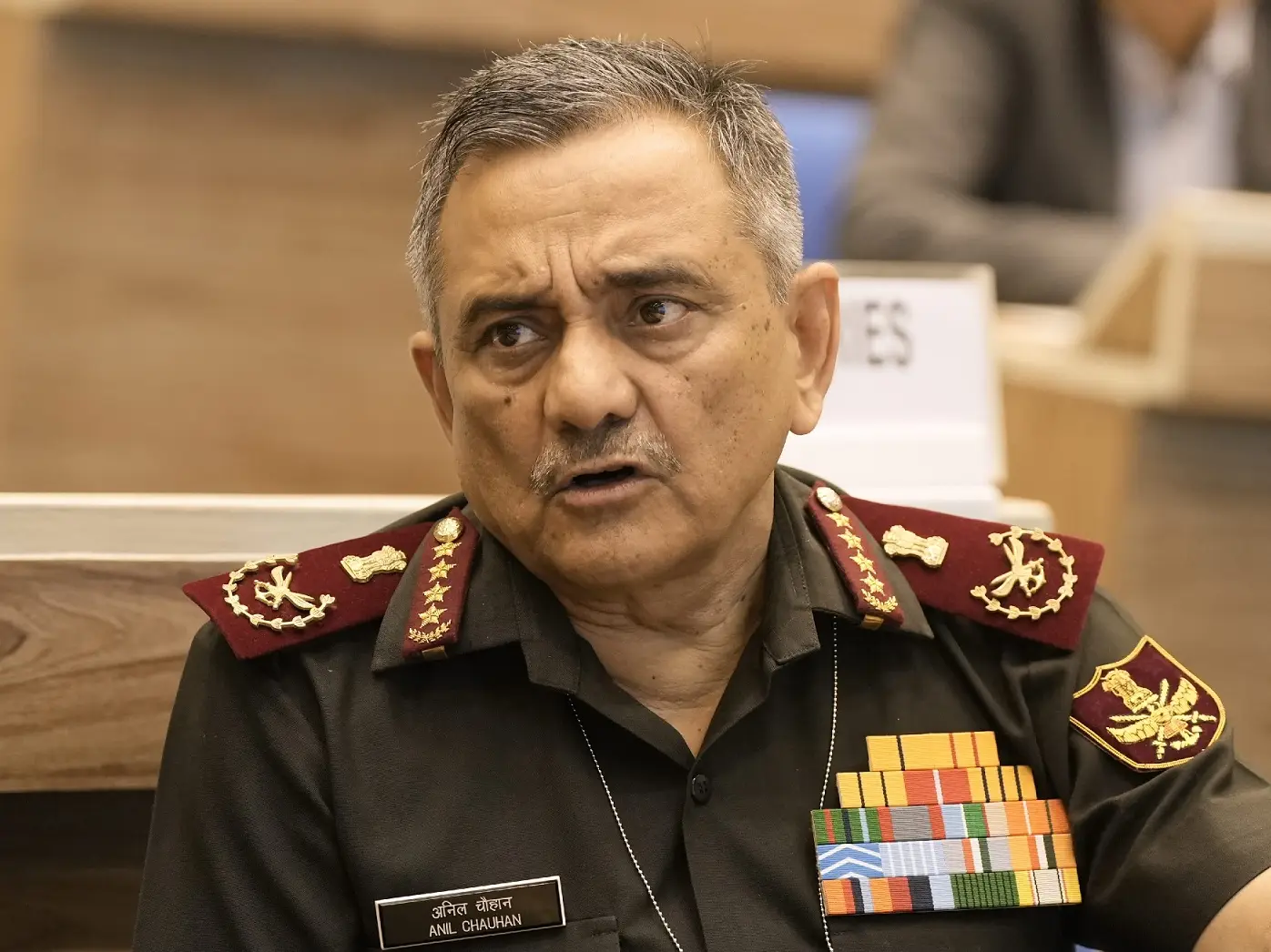
The Chief of Defence Staff (CDS), General Anil Chauhan, has revealed that approximately 15% of armed forces’ time during Operation Sindoor went into countering fake news and misleading narratives, and added that the way wars are fought has changed and modern warfare depends on technology, cyber operations, and the ability to control information.
“Combating fake news was a constant effort. Our communication strategy was deliberate; we chose to be measured, not reactive, because misinformation can quickly distort public perception during high-stakes operations,” General Chauhan said on the sidelines of the Shangri-La Dialogue in Singapore, reported ANI.
The CDS further stressed that India’s strategy for managing narratives should prioritise verified facts and credible evidence, even if it results in a more measured or delayed public response.
“India has always built its narratives on solid ground, even if we’ve sometimes been slow to present them. For instance, in the first three days, two women officers were our primary spokespeople because the actual military leadership were directly engaged in fast-moving operations. It was only after the 10th that the DGMOs came forward to brief the media,” he said.
“As someone directly involved in these operations, I can say that cyber did play a role in the conflict, but its impact was limited. While both sides did experience attacks, including some denial-of-service efforts, our military systems are air-gapped, meaning they’re not connected to the internet and are therefore largely secure. Attacks on public-facing platforms like school websites may have occurred, but they did not affect operational systems,” he added.
During a press briefing amid Operation Sindoor, India’s foreign secretary, Vikram Misri, had criticised Pakistan for spreading disinformation.
Trending Stories
&imwidth=180&imheight=135&format=webp&quality=medium)
Viral video shows cross falling on Colombia priest, no official confirmation | WATCH
&imwidth=180&imheight=135&format=webp&quality=medium)
Rafale Marine fighter begins flight trials in Goa ahead of Indian Navy induction
&imwidth=180&imheight=135&format=webp&quality=medium)
Ranbir Kapoor apologises for Dussehra speech slip, clarifies remark at Ramayana event
&imwidth=180&imheight=135&format=webp&quality=medium)
Meta slapped with $25 billion fine in New Mexico over Facebook data practices, company plans appeal
&imwidth=180&imheight=135&format=webp&quality=medium)
WATCH: Woman IPS officer fires several rounds of AK-47, ignites debate online
&imwidth=180&imheight=135&format=webp&quality=medium)
EU probes Booking.com under Digital Services Act
&imwidth=180&imheight=135&format=webp&quality=medium)
Pakistan signs another defence pact even as Makkah Alliance shows no teeth. This time, it's with Qatar, Indonesia, Turkey
&imwidth=180&imheight=135&format=webp&quality=medium)
Ilhan Omar breaks silence over alleged marriage to her brother; Trump thinks it's 'really good answer'
&imwidth=180&imheight=135&format=webp&quality=medium)
US-Iran war: Bibi, Trump gamble on new Iran war to save themselves in polls
&imwidth=180&imheight=135&format=webp&quality=medium)
From Agni-V to Project Kusha: How are India’s indigenous missile systems and defence shield reshaping modern warfare
&imwidth=180&imheight=135&format=webp&quality=medium)
'It's a crime not to see this scene': Tehran puts Trump 'behind bars'
&imwidth=180&imheight=135&format=webp&quality=medium)
Will Rohit and Kohli play ODI World Cup 2027? BCCI president Manhas says board 'not in a position to comment'
&imwidth=180&imheight=135&format=webp&quality=medium)
Why websites around the world are suddenly going offline? What you need to know about PHP
&imwidth=180&imheight=135&format=webp&quality=medium)
US midterms 2026: What polls and prediction markets indicate about Congress
&imwidth=180&imheight=135&format=webp&quality=medium)
'You are a dummy, you are a stupid person': Trump loses temper with CNN, ABC reporters after questions about Russia sanctions
&imwidth=180&imheight=135&format=webp&quality=medium)
China's dancing robot turns violent bodyguard, lifts cars and fights intruders - Watch
&imwidth=180&imheight=135&format=webp&quality=medium)
16-foot doomsday fish in Chile triggers fears that the next earthquake is coming
&imwidth=180&imheight=135&format=webp&quality=medium)
US to get 850 F-35 stealth fighter jets under 10-year Pentagon-Lockheed deal
&imwidth=180&imheight=135&format=webp&quality=medium)
Are the US and Israel preparing for another major attack on Iran? Here's what report claims
&imwidth=180&imheight=135&format=webp&quality=medium)
Priyanka Chopra celebrates Dussehra 2026 with Nick Jonas and daughter Malti Marie | See pics
&im=FitAndFill=(700,400)&imwidth=180&imheight=135&format=webp&quality=medium)
New OTT releases this week (October 19-25, 2026): Gajab Raat to Chaar Yaar-8 titles to watch during Dussehra week on Netflix, Prime Video and more
&imwidth=180&imheight=135&format=webp&quality=medium)
‘I caution the president...’: Trump’s ex-press secretary warns after Zacharia’s exit
&imwidth=180&imheight=135&format=webp&quality=medium)
'Father of all bombs' vs 'mother of all bombs': Iran threatens US with new weapon as Trump hints at MOAB strike
&imwidth=180&imheight=135&format=webp&quality=medium)
Diljit Dosanjh's Oct 30 Delhi show hits roadblock, Delhi Police denies permission
&imwidth=180&imheight=135&format=webp&quality=medium)
Australia police arrest former national 100m champ Jake Doran for alleged child abuse
&imwidth=180&imheight=135&format=webp&quality=medium)
'Gyanu must go': CJP's Saurav Das, Ashutosh Ranka after release, despite Jantar Mantar protest undertaking
&imwidth=180&imheight=135&format=webp&quality=medium)
Kolkata airport: CISF detects ₹1.13 crore in US dollars hidden in bags of 2 Bangkok-bound passengers
&imwidth=180&imheight=135&format=webp&quality=medium)
Feds obtain DNA evidence that could prove Ilhan Omar married her brother: Report
&imwidth=180&imheight=135&format=webp&quality=medium)
US midterms 2026: Trump's approval rating hits record low as Democrats gain ground
“The claims that they have made about attacking various military installations are completely false. The claim about the air station in Sirsa being destroyed is completely false. The claim about the air station in Surat—completely false.... These are lies about critical infrastructure, power systems, and cyberstructures. I urge all watching this not to be misled by the lies being peddled by Pakistan,” he had said.
Operation Sindoor began with airstrikes on nine terror camps in Pakistan and Pakistan-occupied Kashmir on May 7, but the operation was much more than just physical combat, the CDS said.
It was “multi-domain” and, besides traditional military action, included cyber capabilities, intelligence, disinformation management, and the coordination of multiple forces across land, air, sea, and cyber.
“Modern warfare is undergoing a complex convergence of tactical, operational, and strategic layers; old and new domains; and even of time and space,” news agency ANI quoted Anil Chauhan as saying.
‘Integrated tech and real-time networking vital elements of warfare now’
The CDS further stressed the need for integrated technology in warfare. “What matters most in modern warfare is the networking of systems and real-time integration across air, land, sea and cyber domains. If you have great tech but it’s not connected, you can’t fully leverage it.”
Chauhan also said that India is preparing for future warfare by embracing technology, joint operations, and better narrative control, as demonstrated during Operation Sindoor.
“We’re no longer fighting linear wars; we’re operating across distributed networks, applying force in non-linear ways, where deception is becoming more important than surprise,” he said.
“We’ll need separate organisations for drones, EW, UTAPs (Unmanned Teaming Aerial Platforms), etc.,” he said.
General Chauhan also highlighted the importance of reform in military structure and training and said India is moving towards more integrated and agile forces.

