NCERT Emergency controversy widens as Preamble, 'secularism' disappear from Class 9 Social Science textbook

&imwidth=600&imheight=450&format=webp&quality=medium "NCERT Emergency controversy widens as Preamble, 'secularism' disappear from Class 9 Social Science textbook")
Emergency row overshadows another NCERT controversy: Where did 'secular' go? Photograph: (Combination created using images from ANI and Wikimedia Commons)
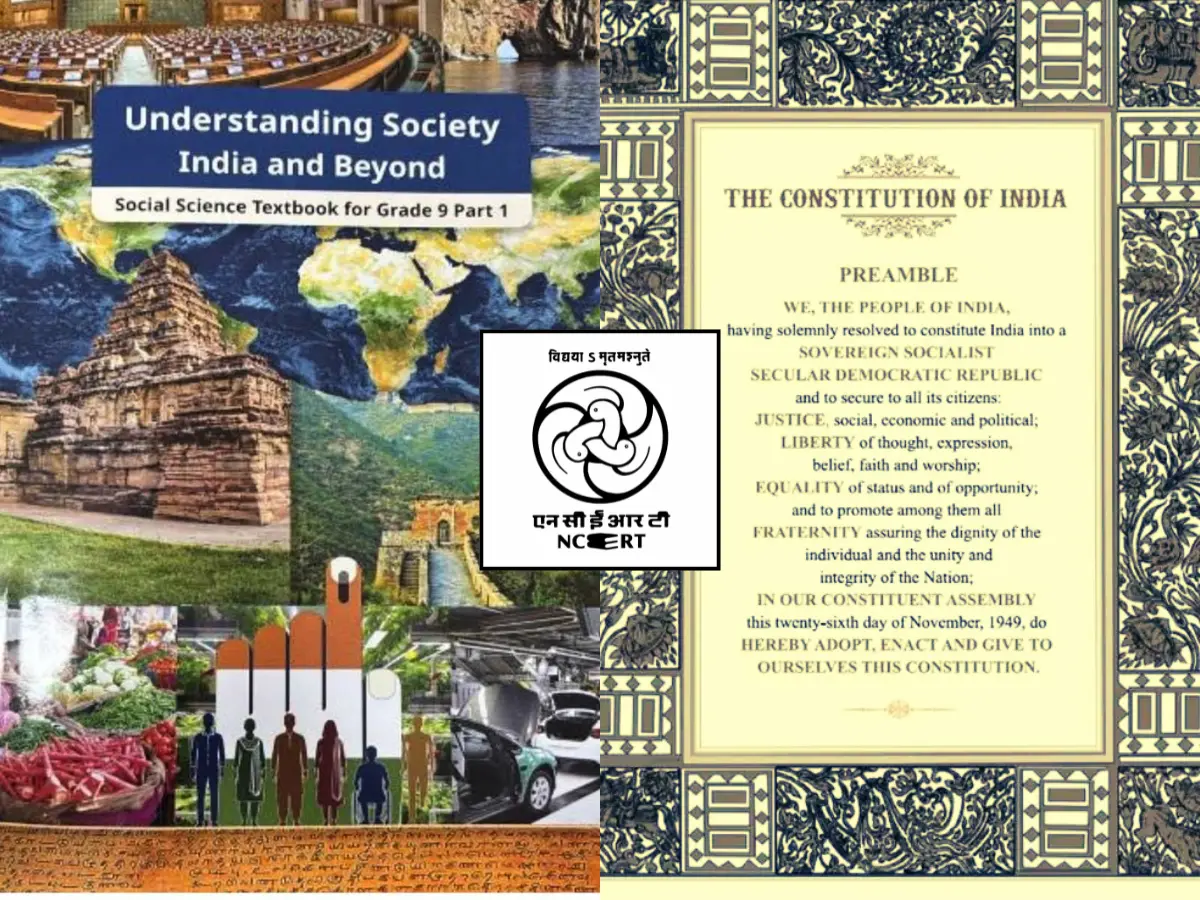
While political parties continue to clash over NCERT's new chapter on Emergency, another change has largely escaped attention. The revised Class 9 Social Science textbook no longer has the Preamble or the words "secular" or "secularism", both of which featured prominently in earlier editions.
NCERT's new Class 9 Social Science textbook has become the centre of a fresh debate, not just because it adds the 1975 Emergency for the first time, but also because it appears to have left out the Preamble and the words "secular" and "secularism" that featured prominently in the earlier version. However, the omission had gone largely unnoticed in the larger political fight over the Emergency chapter, even as the Bharatiya Janata Party and Congress continue to spar over how that period should be taught to students.
The revised textbook, 'Understanding Society: India and Beyond-Part 1', has been developed under the National Education Policy 2020 and the National Curriculum Framework for School Education 2023. It moves away from the earlier standalone political science textbook and instead brings together material from history, geography, political science and economics in a single integrated volume.
Also read | 'Challenges to democracy in India': For first time, NCERT to teach Class 9 students about Emergency
Preamble left out of new Class 9 Social Science textbook
In the new book, the Constitution is discussed through chapters on the Constituent Assembly, constitution-making, democratic institutions and fundamental rights. The text describes the Constitution as a "robust, flexible, transformative, and responsive" document and highlights the values of liberty, equality, justice and fraternity.
But unlike the older Class 9 textbook, it does not reproduce the Preamble in full. The earlier 'Democratic Politics-I' volume had used the Preamble as the starting point for explaining the Constitution, describing it as the philosophy on which the entire constitutional framework was built.
Trending Stories
&imwidth=280&imheight=210&format=webp&quality=medium)
&imwidth=280&imheight=210&format=webp&quality=medium)
&imwidth=280&imheight=210&format=webp&quality=medium)
&imwidth=280&imheight=210&format=webp&quality=medium)
&imwidth=280&imheight=210&format=webp&quality=medium)
&imwidth=280&imheight=210&format=webp&quality=medium)
&imwidth=280&imheight=210&format=webp&quality=medium)
&imwidth=280&imheight=210&format=webp&quality=medium)
&imwidth=280&imheight=210&format=webp&quality=medium)
&imwidth=280&imheight=210&format=webp&quality=medium)
&imwidth=280&imheight=210&format=webp&quality=medium)
&imwidth=280&imheight=210&format=webp&quality=medium)
&imwidth=280&imheight=210&format=webp&quality=medium)
&imwidth=280&imheight=210&format=webp&quality=medium)
&imwidth=280&imheight=210&format=webp&quality=medium)
&imwidth=280&imheight=210&format=webp&quality=medium)
&imwidth=280&imheight=210&format=webp&quality=medium)
&imwidth=280&imheight=210&format=webp&quality=medium)
&imwidth=280&imheight=210&format=webp&quality=medium)
&imwidth=280&imheight=210&format=webp&quality=medium)
&imwidth=280&imheight=210&format=webp&quality=medium)
&imwidth=280&imheight=210&format=webp&quality=medium)
&imwidth=280&imheight=210&format=webp&quality=medium)
&imwidth=280&imheight=210&format=webp&quality=medium)
&imwidth=280&imheight=210&format=webp&quality=medium)
&imwidth=280&imheight=210&format=webp&quality=medium)
&imwidth=280&imheight=210&format=webp&quality=medium)
&imwidth=280&imheight=210&format=webp&quality=medium)
&imwidth=280&imheight=210&format=webp&quality=medium)
&im=FitAndFill=(700,400)&imwidth=280&imheight=210&format=webp&quality=medium)
&imwidth=280&imheight=210&format=webp&quality=medium)
&imwidth=280&imheight=210&format=webp&quality=medium)
&imwidth=280&imheight=210&format=webp&quality=medium)
&imwidth=280&imheight=210&format=webp&quality=medium)
A sovereign, Socialist, SECULAR, Democratic Republic
The new book also fails to include the words "secular" or "Secularism". Notably, the previous versions of the textbook spelt out the meaning of terms such as "Sovereign", "Socialist", "Secular", "Democratic" and "Republic". They explained secularism as a system with no official religion in which the state gives equal respect to all faiths.
However, a review of the new textbook shows that the words "secular" and "secularism" do not appear anywhere in the volume. There is also no indication that the concepts will be dealt with in a later class. That change has added another layer to the controversy surrounding the book.
The new textbook also revises the treatment of the Election Commission. Where the earlier book emphasised its independence and wide-ranging powers, the new version focuses more narrowly on its constitutional authority and role in conducting elections.

