

&imwidth=800&imheight=600&format=webp&quality=medium "Kashmir’s liquor shop debate intensifies: Political rift, religious opposition, and civil society unite against alcohol sales")
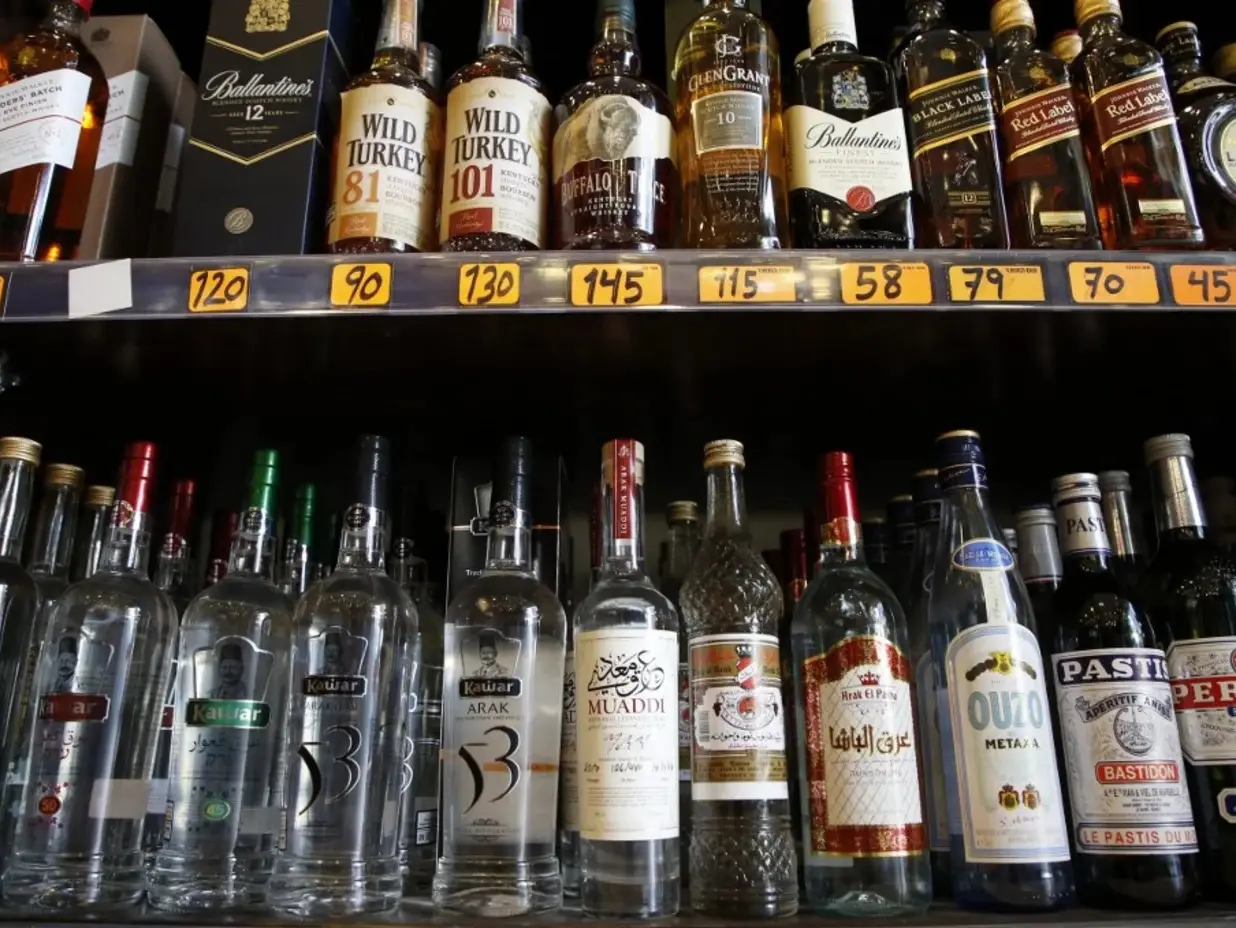
Srinagar: The growing controversy over liquor shops in Kashmir has sparked a fierce political, religious, and social debate across the Valley, with opposition parties, clerics, trade bodies, and civil society organisations demanding a complete ban on alcohol sales.
The issue escalated after Chief Minister Omar Abdullah defended the government’s position, stating that liquor shops exist for those “whose religion permits it” and that “no one is forcing anyone” to consume alcohol. His remarks triggered sharp criticism from opposition parties and religious leaders, who accused the government of ignoring Kashmir’s religious and cultural sensitivities.
The People’s Democratic Party (PDP) has launched a signature campaign demanding a complete ban on liquor sales in Jammu and Kashmir. Senior party leaders, including Iltija Mufti, accused the Omar Abdullah-led government of failing to take concrete steps despite public opposition to alcohol sales.
PDP president Mehbooba Mufti said the National Conference government cannot shift responsibility onto previous coalition governments.
“PDP was in government twice, and both times we were part of an alliance. Unlike the National Conference, we never had a majority on our own,” Mehbooba Mufti said. “They have nearly 50 MLAs and govern with their own mandate. During the campaign, they promised to shut down liquor shops once they come to power.”
She further argued that the government’s reluctance to impose a ban was linked to revenue dependence. Referring to Jammu and Kashmir’s power sector, she said several hydroelectric projects had been transferred to the NHPC over the years, weakening the region’s financial independence.
Trending Stories
&imwidth=180&imheight=135&format=webp&quality=medium)
'My name has always been Ilhan Omar': Congresswoman hits back at Trump, calls him a 'creep'
&imwidth=180&imheight=135&format=webp&quality=medium)
Gravitas | US attack could trigger WW III: Russian planes in Tehran, Israeli jets, US warships in action
&imwidth=180&imheight=135&format=webp&quality=medium)
Viral video shows cross falling on Colombia priest, no official confirmation | WATCH
&imwidth=180&imheight=135&format=webp&quality=medium)
US Navy, Marine Corps boards defy Trump's transgender military ban, vote to retain troops
&imwidth=180&imheight=135&format=webp&quality=medium)
Will the US attack Iran this weekend? Trump's envoy says, 'absolutely'
&imwidth=180&imheight=135&format=webp&quality=medium)
Fauzi teaser out: Prabhas takes on the British Empire in patriotic avatar | Watch
&imwidth=180&imheight=135&format=webp&quality=medium)
India-China face-off continues near Arunachal’s Taksing, reveals ITBP chief in first official confirmation of tensions
&imwidth=180&imheight=135&format=webp&quality=medium)
Nairobi building collapse: Several feared trapped after 16-storey structure crumbles; rescue operation underway
&imwidth=180&imheight=135&format=webp&quality=medium)
Pakistan airline PIA unveils new crew uniforms, faces online criticism
&imwidth=180&imheight=135&format=webp&quality=medium)
Did Neha Bora call for Bangladesh-like GenZ protest, 'anarchy' in India? WION Fact-checks viral claim
&imwidth=180&imheight=135&format=webp&quality=medium)
'Already tired of his 9-to-5': Baby born with a moustache becomes internet sensation, video goes viral | Watch
&imwidth=180&imheight=135&format=webp&quality=medium)
Horrific video shows the moment 18-year-old fell to her death from Mexico amusement park ride
&imwidth=180&imheight=135&format=webp&quality=medium)
'Black triangle' UFO flying at 1,800mph spotted over sensitive US site: Latest Trump admin UFO file dump
&imwidth=180&imheight=135&format=webp&quality=medium)
IND-W vs ZIM-W, 1st ODI: Rawal, Charani star in India’s nine-wicket win over Zimbabwe
&imwidth=180&imheight=135&format=webp&quality=medium)
Massive 7.2 magnitude quake off Vanuatu triggers tsunami warning for coasts within 300 km
&imwidth=180&imheight=135&format=webp&quality=medium)
French Open: PV Sindhu storms into final with win over Hina Akechi
&imwidth=180&imheight=135&format=webp&quality=medium)
Google Fitbit Air’s new health guardian feature tracks trends: How it works
&imwidth=180&imheight=135&format=webp&quality=medium)
US midterms 2026: Trump revises Canada tariffs as Susan Collins faces tight re-election race in Maine
&imwidth=180&imheight=135&format=webp&quality=medium)
US midterms 2026: Viral video claims Lindsey Graham paid underage men for sex; clip released weeks before his sister's Senate race
&imwidth=180&imheight=135&format=webp&quality=medium)
IND vs NZ 2nd T20I: Shreyas Iyer on brink of breaking Rohit Sharma’s record
&imwidth=180&imheight=135&format=webp&quality=medium)
AI deepfakes are spreading online: Why is removing them so difficult?
&imwidth=180&imheight=135&format=webp&quality=medium)
China's dancing robot turns violent bodyguard, lifts cars and fights intruders - Watch
&imwidth=180&imheight=135&format=webp&quality=medium)
Global cybersecurity alert: PHP flaws trigger website shutdowns as hack attempts surge into millions
&imwidth=180&imheight=135&format=webp&quality=medium)
'You’re a horrible little reporter, aren’t you?': Trump snaps at NBC reporter questioning his support for Ramaswamy's campaign ad
&imwidth=180&imheight=135&format=webp&quality=medium)
Chemical warehouse explosion in Mexico: Several injured in multiple blasts, 1,000 evacuated in León
&imwidth=180&imheight=135&format=webp&quality=medium)
US charges two former FBI officials with lying to Congress about Hunter Biden probes. 'Politically motivated' Trump grievance or something else?
&im=FitAndFill=(700,400)&imwidth=180&imheight=135&format=webp&quality=medium)
How smart robots and AI assemble vehicles in 20 hours
&im=FitAndFill=(700,400)&imwidth=180&imheight=135&format=webp&quality=medium)
New Friday OTT releases (October 23, 2026): Gajab Raat, Dorothy, Chaar Yaar- Watch these 6 new movies and TV shows on Netflix, Prime Video and more
&imwidth=180&imheight=135&format=webp&quality=medium)
Anthropic security chief issues grim cyberattack warning: ‘It’s going to get a lot worse’
&imwidth=180&imheight=135&format=webp&quality=medium)
Tu Hai Meri Kiran film review: Sonakshi Sinha and Zaheer Iqbal's thriller gets tangled in its own twists
&imwidth=180&imheight=135&format=webp&quality=medium)
First Lady Melania Trump secures ceasefire between Russia, Ukraine in Oleshky: White House
&imwidth=180&imheight=135&format=webp&quality=medium)
Negotiators from Ukraine, Russia, United States to meet in Abu Dhabi: Zelensky
&imwidth=180&imheight=135&format=webp&quality=medium)
Farooq Abdullah says Pakistan’s raising of Kashmir issue keeps pressure on Delhi
&imwidth=180&imheight=135&format=webp&quality=medium)
Emmanuel Macron calls Paris suburb shooting a 'racist terrorist attack' after one killed, several injured
“Our biggest source of revenue should have been our power projects,” she said. “Had these projects remained with Jammu and Kashmir, we would not have been so dependent on revenue from liquor sales.”
The controversy intensified after rumours circulated on social media claiming that the government was planning to approve new liquor vends in Kashmir. The Chief Minister’s Office dismissed the reports as “fake propaganda.” However, remarks by National Conference president Farooq Abdullah added fuel to the debate when he stated that alcohol could be banned “in two minutes” if the Central government compensated Jammu and Kashmir for the resulting revenue loss.
Religious organizations have also intensified their campaign against liquor sales. Clerics from multiple communities argue that alcohol is incompatible with Kashmir’s religious and cultural ethos and warn that it acts as a gateway to drug addiction and broader social decay.
Religious leaders questioned how the government could simultaneously promote the “Drug-Free J&K” or “Nasha Mukt Abhiyan” campaign while permitting alcohol trade in the region.
Business and trade organisations have also joined the chorus demanding stricter action. Tariq Ghani, president of the Kashmir Chamber of Commerce, called for a united stand against both drugs and alcohol.
“Alcohol has destroyed countless families,” Ghani said. “All political parties, the administration, and the government must come together on this issue. If there is political will, alcohol can be banned entirely.” He urged the government to launch a dedicated anti-alcohol campaign similar to the ongoing anti-drug initiatives in the Union Territory.
Despite mounting pressure, the government maintains that no new liquor shops have been opened and argues that alcohol consumption remains a matter of personal choice. Officials also warn that a total prohibition could encourage smuggling, bootlegging, and illegal trade while reducing government revenue and affecting the tourism-driven economy.
However, tourism stakeholders in Srinagar have strongly rejected the argument that alcohol sales are necessary for tourism. Many traders insist that tourists visit Kashmir for its natural beauty, culture, and hospitality, and not for liquor access.
Manzoor Pakhtoon, president of the Houseboat Association, said linking tourism with alcohol was misleading. “There are several dry states in the country that continue to attract large numbers of tourists,” he said. “Tourism can thrive through culture, natural beauty, and hospitality, not through alcohol sales.”
He also expressed concern about the impact of alcohol on young people, calling for collective efforts by society and the government to discourage harmful addictions.
As the debate deepens, civil society groups across Kashmir are now preparing to launch a Valley-wide anti-alcohol and anti-drug movement in coordination with religious organisations. The campaign, which organisers describe as a movement for “societal protection,” aims to pressure the government into shutting down liquor vends across the region.
With political parties trading accusations, religious leaders escalating protests, and civil society mobilising public opinion, the controversy over liquor sales has evolved into one of the most emotionally charged public debates in Kashmir in recent years.
