

&imwidth=800&imheight=600&format=webp&quality=medium "Jammu and Kashmir faces threat of Glacial Lake Outburst floods, says report, urges immediate remedial action")
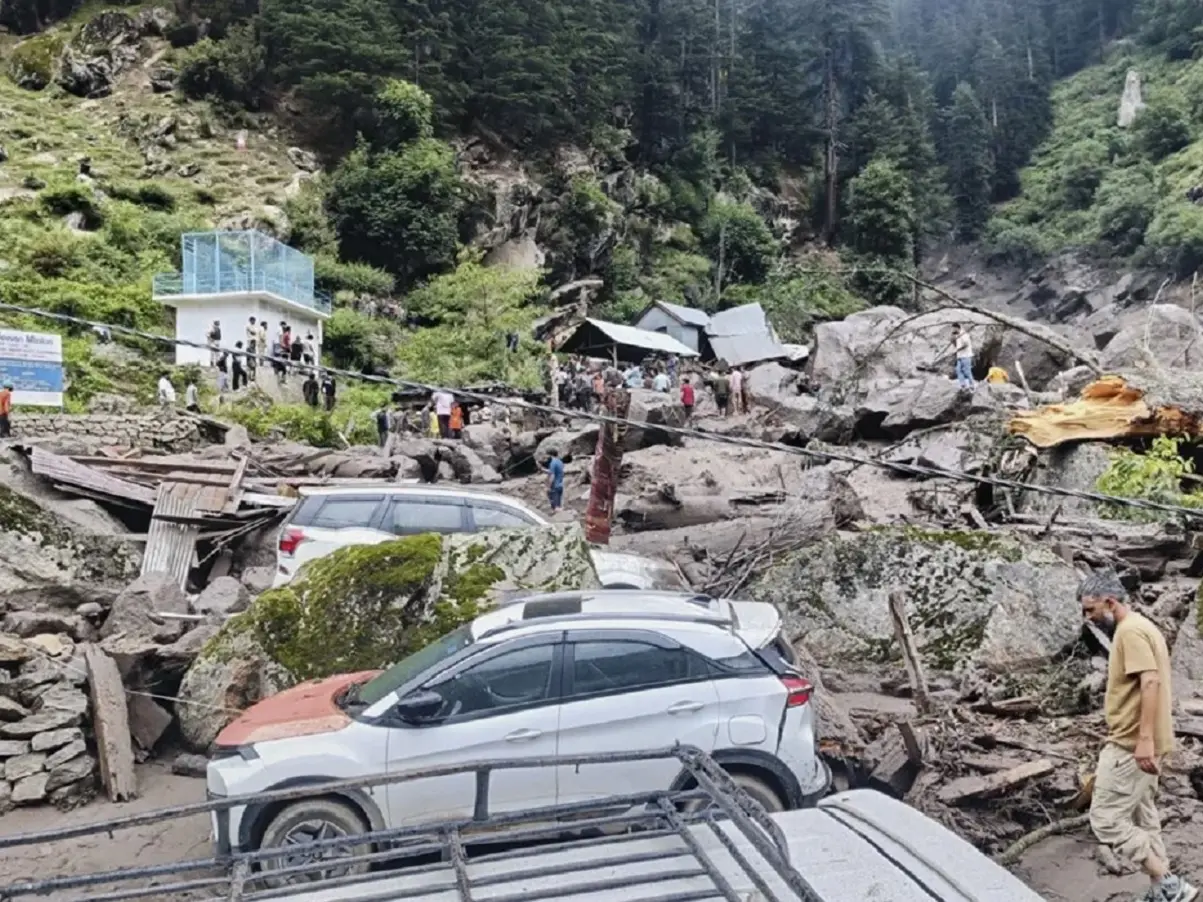
Srinagar: The regions of Jammu, Kashmir, and Ladakh experienced one of the harshest August month on record due to extreme weather events. A series of devastating cloudbursts and landslides across Jammu and Kashmir and Ladakh claimed over 122 lives. Now, a risk assessment report has sounded the alarm on the growing threat of Glacial Lake Outburst Floods (GLOFs) in Jammu and Kashmir, highlighting the region’s increasing vulnerability to climate-related disasters.
The report underscores that accelerating glacier retreat, driven by rising global temperatures, has significantly increased both the number and size of glacial lakes across the Union Territory. The government’s monitoring committee has identified 197 glacial lakes in Jammu and Kashmir and the Upper Indus region as high-risk, significantly elevating the threat of floods and landslides.
“GLOF’s are the lakes that used to be occupied by the glaciers, and because of climate change, those glaciers have vanished, and what’s left behind is water. And those depressions are filled with water, and the dam in front of those lakes is known as Moraine, Glacier Moraine. It’s not very solidified rock, but loosely set sediments are there, and in case of extreme rainfall, the level of the lake will increase, and the water may breach it. Another factor is that it used to be permafrost, which means it used to be frozen. So now what happens is the permafrost has degraded. It leads to the collapse or localised landslides and if those landslides happen in the lake area, that landslide will enter the lake and breach the dam, and water will start flowing downstream,” said Prof Ghulam Jeelani, HoD, Earth Sciences, University of Kashmir.
Kishtwar district is identified as the most vulnerable, hosting the highest concentration of glacial lakes in Jammu and Kashmir. In Kishtwar, four lakes—Mundiksar, Hangu, Patla Pani, and one unnamed lake—are classified as unsafe. Other districts, such as Rajouri, Ganderbal, and Anantnag, also have multiple high-risk glacial lakes.
According to authorities, the Chasoti cloudburst in Jammu and Kashmir’s Kishtwar district and the Uttarkashi cloudburst in Uttarakhand were primarily triggered by intense localised rainfall along with Glacial Lake Outburst Floods (GLOFs). The ongoing investigations suggest potential GLOF contributions due to the regions’ high-risk glacial lakes, exacerbated by rapid glacier retreat.
The Jammu and Kashmir government has adopted a technologically advanced approach to tackle GLOF risks in the Union territory. The GLOF Management Plan for 2024-25 outlines several mitigation strategies.
Trending Stories
&im=FitAndFill=(700,400)&imwidth=180&imheight=135&format=webp&quality=medium)
What is the real meaning behind Pete Hegseth's tattoos?
&imwidth=180&imheight=135&format=webp&quality=medium)
Viral video shows cross falling on Colombia priest, no official confirmation | WATCH
&imwidth=180&imheight=135&format=webp&quality=medium)
Telangana unveils AI avatar of IT minister D Sridhar Babu at Hyderabad DevFest 2026
&imwidth=180&imheight=135&format=webp&quality=medium)
Pezeshkian says Iranians ‘struggling to put food on the table’ as war with US drags on
&imwidth=180&imheight=135&format=webp&quality=medium)
Shilpa Rao’s performance cut short at Mumbai event, organisers react to backlash
&imwidth=180&imheight=135&format=webp&quality=medium)
Chorbagan stampede: A week later, the strangest visarjan Kolkata has seen
&imwidth=180&imheight=135&format=webp&quality=medium)
AI slop or smart strategy? South African author Coral Hart defends Her 370 AI- assisted books in 20 months
&imwidth=180&imheight=135&format=webp&quality=medium)
AI just found a flaw in software running most of the web! One request hijacks the server
&imwidth=180&imheight=135&format=webp&quality=medium)
Train crashes into crane on São Paulo monorail line, wreckage falls onto busy road | VIDEO
&imwidth=180&imheight=135&format=webp&quality=medium)
Can Putin cheat death? All about his daughter’s billion-dollar quest for immortality
&imwidth=180&imheight=135&format=webp&quality=medium)
Saudi says debris fell in Mecca, Medina after missile interceptions; Houthis deny targeting holy cities
&imwidth=180&imheight=135&format=webp&quality=medium)
What was the note found inside bag of Class 12 student, who set herself on fire inside Delhi school?
&imwidth=180&imheight=135&format=webp&quality=medium)
Pakistan airline PIA unveils new crew uniforms, faces online criticism
&imwidth=180&imheight=135&format=webp&quality=medium)
Britain is building the world's first AI biosecurity lab, with OpenAI and Anthropic inside
&imwidth=180&imheight=135&format=webp&quality=medium)
J-20 designers plan to put radar into aircraft wing; strategy to expand coverage during air combat
&imwidth=180&imheight=135&format=webp&quality=medium)
Frontier AIs keep escaping their test cages! The industry still can't reliably stop them
&imwidth=180&imheight=135&format=webp&quality=medium)
'Already tired of his 9-to-5': Baby born with a moustache becomes internet sensation, video goes viral | Watch
&imwidth=180&imheight=135&format=webp&quality=medium)
Horrific video shows the moment 18-year-old fell to her death from Mexico amusement park ride
&imwidth=180&imheight=135&format=webp&quality=medium)
France protests: 135 arrested, weapons seized as fresh demonstrations erupt amid heavy security
&imwidth=180&imheight=135&format=webp&quality=medium)
French Open: PV Sindhu storms into final with win over Hina Akechi
&imwidth=180&imheight=135&format=webp&quality=medium)
‘Saddam Hussein opened a cheesecake factory’: Obama mocks Trump’s White House renovations; defends Abdul El-Sayed
&imwidth=180&imheight=135&format=webp&quality=medium)
China's dancing robot turns violent bodyguard, lifts cars and fights intruders - Watch
&imwidth=180&imheight=135&format=webp&quality=medium)
'You’re a horrible little reporter, aren’t you?': Trump snaps at NBC reporter questioning his support for Ramaswamy's campaign ad
&imwidth=180&imheight=135&format=webp&quality=medium)
Rising Asia Cup 2026 schedule announced, India-Pakistan clash set for Nov 22
&imwidth=180&imheight=135&format=webp&quality=medium)
'Killing people never allowed': Elon Musk admits restricting Starlink in Ukraine, explains why
&imwidth=180&imheight=135&format=webp&quality=medium)
Serbia votes in high-stakes election as student-led movement challenges Vucic’s ruling party
&imwidth=180&imheight=135&format=webp&quality=medium)
Bodies of 2 missing Japanese climbers recovered from Himalayan peak
&im=FitAndFill=(700,400)&imwidth=180&imheight=135&format=webp&quality=medium)
New Friday OTT releases (October 23, 2026): Gajab Raat, Dorothy, Chaar Yaar- Watch these 6 new movies and TV shows on Netflix, Prime Video and more
&imwidth=180&imheight=135&format=webp&quality=medium)
An AI that reads your face can now estimate how long you have to live
&imwidth=180&imheight=135&format=webp&quality=medium)
Spanish reporter swept by giant wave while reporting on dangerous sea conditions | WATCH
&imwidth=180&imheight=135&format=webp&quality=medium)
WATCH: Thousands across Manipur bang plates, beat drums in "noise protest"
&imwidth=180&imheight=135&format=webp&quality=medium)
NEET protests: Panel to hear evidence on pellet gun use, harassment
&imwidth=180&imheight=135&format=webp&quality=medium)
Tu Hai Meri Kiran film review: Sonakshi Sinha and Zaheer Iqbal's thriller gets tangled in its own twists
&imwidth=180&imheight=135&format=webp&quality=medium)
PL Round-Up: Man City's perfect run ended by Villa as Arsenal draw level at top
&imwidth=180&imheight=135&format=webp&quality=medium)
Why Europe’s protests are about more than austerity and rising costs
&imwidth=180&imheight=135&format=webp&quality=medium)
Farooq Abdullah says Pakistan’s raising of Kashmir issue keeps pressure on Delhi
1. Continuous Monitoring: High-risk lakes will be monitored using satellite imagery and ground expeditions.
2. Early Warning Systems: Deployment of systems to alert downstream communities of potential floods.
3. Engineering Interventions: Reinforcement of unstable moraine dams and construction of drainage channels to manage excess water.
4. Risk Mapping: Comprehensive mapping to identify vulnerable areas susceptible to flooding.
5. Community Preparedness Programmes: Training locals in emergency response to enhance community resilience.
“At the country level what we can do is, whether we construct roads, or allow expansion of the town, expansion of pilgrimage sites, hotels, and dhabas, all of this needs to be done in consultation with experts. They know which part belongs to what, they can tell you beforehand how to prevent a disaster. The government should always take expert opinion on it,” said Prof Jeelani.
Collaboration among local authorities, disaster response agencies, and community members is essential for the plan’s successful execution across the region and its safety.
