ISRO's 120-tonne SSLV to launch 175 kg Earth-imaging satellite EOS-08

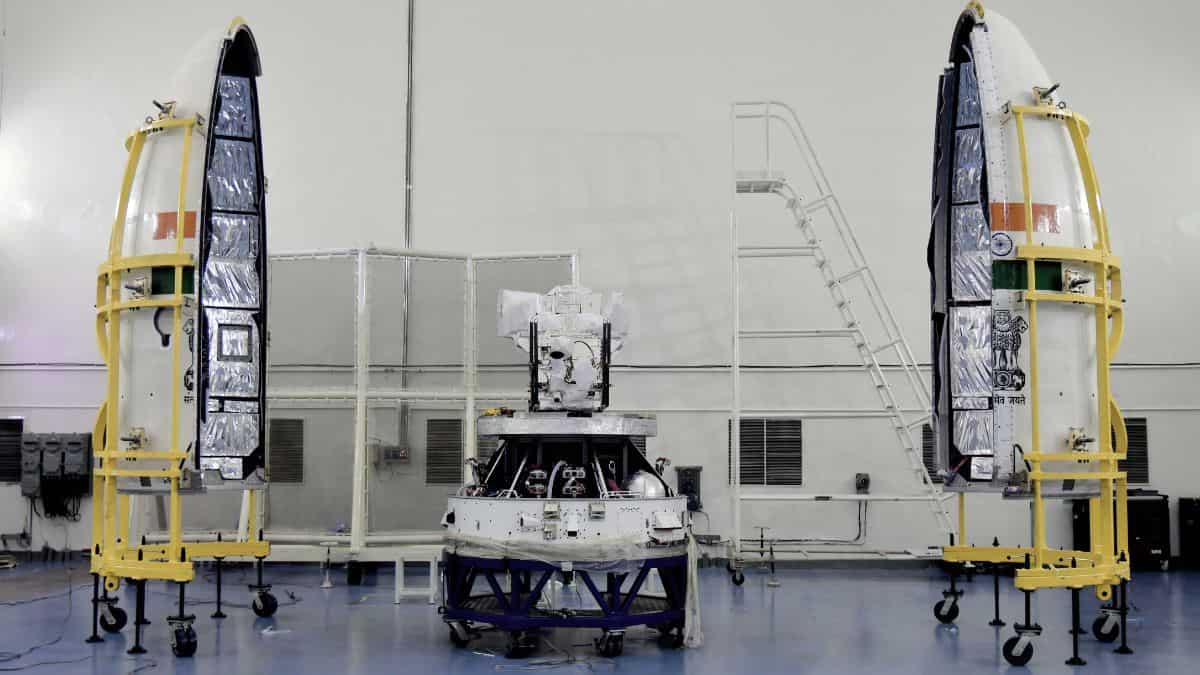
SSLV
The 6 hours and 30-minute countdown for ISRO's third rocket launch mission of the calendar year 2024, will commence at 2:47 am IST onAugust 16, Friday. If all goes well, at 9:17 am IST, the 120-tonne SSLV rocket will lift off from the first launchpad at Satish Dhawan Space Centre, Sriharikota, carrying the 175kg multi-payload Earth Observation satellite EOS-08.
Designated at 'SSLV-D3', this mission will mark the third and final developmental flight of the SSLV rocket, India's newest and smallest launch vehicle. The countdown is a technical process during which various health checks will be performed on the rocket's systems, and liquid rocket fuels will be filled. In the case of the SSLV, it comprises three stages that are powered by pre-filled solid fuel and a final stage that is powered by a combination of liquid fuels.

The initial two or three flights of a rocket are known as developmental flights. These launches are meant to test and prove the crucial systems and technologies of the rocket. Once the developmental flights are completed, the rocket can be utilised for commercial missions and can be built and launched more often.
SSLV had its maiden developmental flight in August 2022 and encountered a software-driven failure in its final minutes as it flew towards its designated orbit. SSLV tasted success in its second developmental flight that took place in February 2023. Friday's launch will be the third in this series.
In a mission that will last longer than 15 minutes, the SSLV will be placing the EOS-08 and a privately built experiment into an orbit that is 475 km above the Earth.
Built on the Microsat/IMS-1 structure, EOS-08 carries three payloads: Electro Optical Infrared Payload (EOIR), Global Navigation Satellite System-Reflectometry payload (GNSS-R), and SiC UV Dosimeter.
The EOIR payload is designed to perform Earth-imaging during the day and night, for applications such as satellite-based surveillance, disaster monitoring, environmental monitoring, fire detection, volcanic activity observation, and industrial and power plant disaster monitoring.
The GNSS-R payload demonstrates the capability of using Global Navigation Satellite Systems Reflectometry for remote sensing for applications such as ocean surface wind analysis, soil moisture assessment, cryosphere studies over the Himalayan region, flood detection, and inland waterbody detection. GPS, Beidou, Glonass, Galileo, and India's NavIC are the prominent constellations that provide Position, Navigation, and Timing (PNT) services. GNSS-R is a method where the reflections of the microwave signals beamed down by GNSS satellites will be used to study the Earth and its topography.
The Silicon Carbide (SiC) UV Dosimeter is meant to monitor the levels of ultraviolet radiation in space. This would prove helpful as India prepares for the crewed Gaganyaan mission, the country's maiden astronaut mission to low earth orbit.
