ISRO makes progress in Semi-cryo engine development; 8th test firing done

&imwidth=600&imheight=450&format=webp&quality=medium "ISRO makes progress in Semi-cryo engine development; 8th test firing done")
Semicryogenic engine
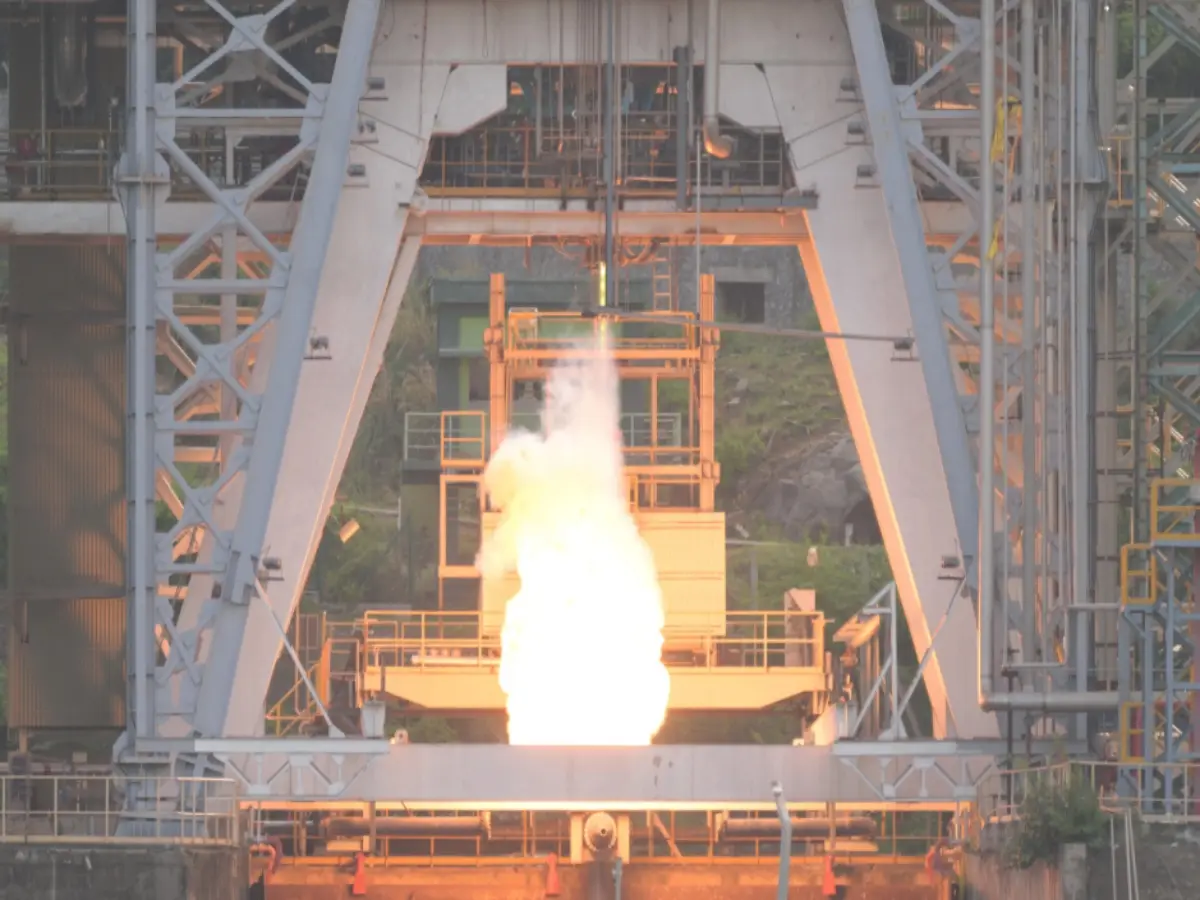
This test has provided sufficient confidence towards the demonstration of steady state performance of engine powerhead at 200 tonne (100%) thrust level and also achieved a major milestone in the indigenous development of Semicryogenic engine.
The Indian space agency ISRO announced that it successfully conducted the eighth test firing of the Power Head Test Article(PHTA), which comprises the critical power-generating section of the Semi-cryogenic rocket engine that it is building. This effort marks incremental progress in its decades-long effort to build a semi-cryogenic rocket engine, one that is powered by Kerosene(stored at room temperature) and super-cooled liquid oxygen. Meant to deliver 200-tons of thrust, this 'SE2000' engine would potentially offer a major upgrade compared to the 80-ton Indo-French Vikas engine which is the mainstay of Indian spacefaring rockets.
While the previous test firings of the PHTA were carried out at 47% (94-ton) and 60% (120-ton) thrust levels, ISRO said that the latest test firing was conducted at 175-ton thrust level (88%), and it also demonstrated successful operation of main turbopumps delivering 400 and 500 bar outlet pressures. Interestingly, ISRO did not reveal for how long this latest test firing was conducted.
Earlier tests lasted less than five seconds, ISRO data shows. Typically, a semi-cryogenic rocket engine has to function for 120 to 260 seconds and demonstrate its performance in ground testing, before it is ready for an actual flight.
Further, ISRO elaborated that the test proceeded as predicted and all the engine parameters were as expected. This test has provided sufficient confidence towards the demonstration of steady state performance of engine powerhead at 200 tonne (100%) thrust level and also achieved a major milestone in the indigenous development of Semicryogenic engine.
Though the PHTA test at 88% thrust is a milestone in a decades-long effort, ISRO is still years away from having a flight-ready Semi-cryogenic engine. ISRO intends to use the Semi-Cryogenic Propulsion Stage (SC120), powered by the under-development 'SE2000' engine to replace the current L110 core stage of the LVM3 launch vehicle. This upgrade is expected to substantially increase the payload capacity while enhancing operational efficiency of In dia's most powerful launch vehicle.
Trending Stories
)
)
)
)
)
)
)
)
)
)
)
)
)
)
)
)
)
)
)
)
)
)
)
)
)
)
)
)
)
)
)
)
)
)
&im=FitAndFill=(700,400))
)
)
)
)
ISRO is also working on procuring a Russian rocket engine
While efforts are on to develop its own semi-cryogenic engine, ISRO is looking to procure a Russian Semi-cryogenic rocket engine to meet its mission requirements of the near future. In its Annual report for 2025-26, ISRO revealed that its officials visited Moscow for technical discussions withRussianSpace agency Roscosmos on the delivery of semi-cryogenicrocketengines; the draft contract is currently under the approval process, ISRO added.
This is the first publicly available ISRO document that refers to the long-drawn process for procuring high-thrustrocketengines from Russia to enhance India'srocketry muscle power for lifting heavier payloads into space.
Recently, areport by India's Parliamentary Standing Committee on Science and Technology stated thatISROhas been allocated funds in 2026-27 for the "Induction of procuredSemi-cryogenicenginetowards expediting the enhancement of LVM3 launch vehicle payload capability."
