India's G20 Presidency an opportunity to showcase 'Vasudhaiva Kutumbakam': Meenakshi Lekhi

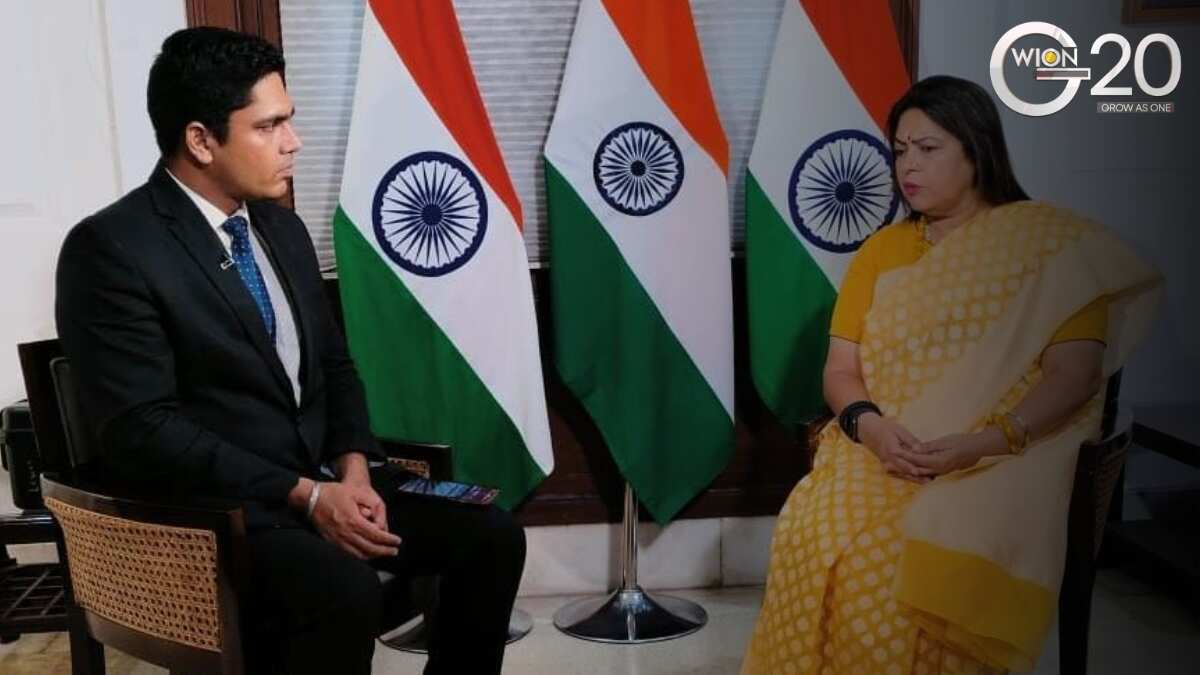
Meenakshi Lekhi
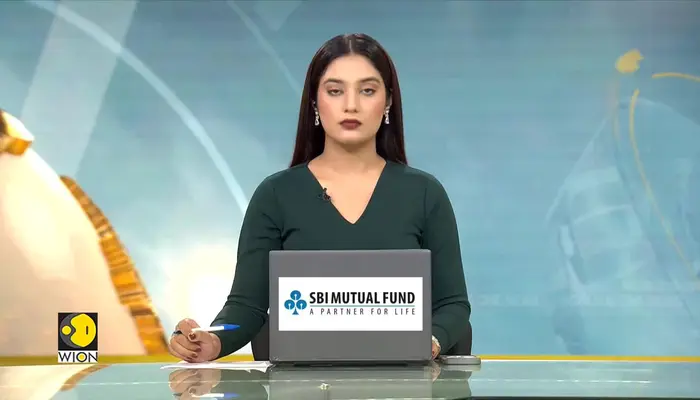
With the G20 summit just around the corner, India's Union Minister of State for External Affairs, Meenakshi Lekhi, shared insights into the nation's preparations and diplomatic initiatives. As the host of the G20 summit on September 9th and 10th in Delhi, world leaders will be reaching the Indian national capital in the next 24 hours.
Speaking to our diplomatic correspondent Sidhant Sibal, Lekhi highlighted the summit's theme, saying, "This is one platform that is trying to bring everyone together to address the right causes for all the people." India's commitment to inclusiveness is evident with efforts to get African Union on the G20 platform and engage in discussions surrounding digital India, women-led development, startups, sustainability, and climate finance.

Regarding the absence of Chinese President Xi Jinping at the summit, Lekhi said, "It's not for us to discuss at all." In response to Russian President Vladimir Putin's absence, Lekhi highlighted the courtesy of a phone call from Putin to India's Prime Minister and recognised that "there are internal reasons which each country is free to deal with."
As the minister of state for culture, she detailed plans to introduce the spouses of world leaders to India's rich agricultural heritage and cutting-edge digital innovations. The special tour will take place at the Indian Agricultural Research Institute (IARI) and provide a unique shopping experience featuring millets and the Unified Payments Interface (UPI) at the National Gallery of Modern Art.
WION:How momentous this occasion is for India, as it rolls out the red carpet for world leaders.
)
No Pandya as Auqib Nabi earns maiden ODI call-up; Mayank returns for WI T20Is| check full squads
)
Trump praises India’s Opium crackdown, hails anti-drug efforts
Mandakini breaks silence on Dawood Ibrahim photo: 'I was not invited by him'
)
Former India player Diana Edulji wants Smriti Mandhana to replace Harman as skipper at the earliest
)
Trump calls Canada-EU associate membership plan ‘laughable’ and threatens 'very serious tariffs'
)
Protests erupt over migrant housing plan in Piddington
)
India can scale up Finland’s circular solutions, minister Multala says
)
Shahzad Bhatti Network declared terrorist organisation under UAPA: Govt order
)
240-million-year-old bizarre 'pig with a tusk' creature creates new dilemma over origin of dinosaurs
)
Europe wants a common playbook for security threats, seeks security beyond NATO
)
Formula One reveals the 2027 race calendar; Monaco to host sprint race for the first time
)
All Indian goods to get duty-free access to New Zealand
)
Bigg Boss 20: Mahhi Vij reveals she lost Yuva role to Kareena Kapoor; 'didn’t work out in my favour'
)
Lionel Messi for 2026 Ballon d’Or over Mbappe and Yamal, says Diego Simeone
)
US House votes 417-3 to pass Ratepayer Protection Act targeting AI data center electricity costs
)
Hong Kong unveils 11 new measures to boost birth rates, offers higher cash bonuses and housing perks
)
Former OpenAI researcher warns of growing risks from Artificial Intelligence
)
Veteran actor Anant Nag honoured with Indian cinema’s highest award
)
Wildfire tears through forests in Spain's Valencia
)
AUS vs SA: Steve Smith still gets 'little flashbacks' from sandpaper gate
)
PM Modi’s 76th birthday: From Akshay Kumar to Shilpa Shetty, Bollywood celebs extend warm wishes
)
Pakistan naval vessel returns to harbour with 'severe damage' after collision with Indian warship in Arabian Sea
)
Fed raises rates for first time in 3 years, Kevin Warsh defies Trump as inflation mounts
)
Katrina Kaif’s postpartum weight is not the problem; your gaze is
)
Daayra movie review: Kareena Kapoor, Prithviraj Sukumaran shine in Meghna Gulzar’s cop-versus-cop crime thriller
)
Saudi Vs Houthis: Yemeni military rebels clash with Houthis
)
Pak batter Rizwan's petition against being questioned by cyber crime agency rejected by court
)
US trade tariff: 100% tariff targets Russian buyers amid trade tensions
)
Pakistan: Imran Khan's sons Kasim & Sulaiman claim their father is 'tortured' in jail
&im=FitAndFill=(700,400))
New OTT releases this week (September 14-20, 2026): Lust Stories 3, Waiting Hai, Irumudi- 5 new titles coming on Netflix, Prime Video and more
)
Ebola outbreak: WHO sees encouraging signs in fight against Ebola outbreak
)
Trump gets new power to hit India, China with up to 100% tariffs as US Senate clears Russia sanctions bill
)
‘Imagine 50 AI fighters cornering one manned jet’: India’s mobbing doctrine eyes a new era of air warm
)
Saudi vs Houthis: Riyadh claims to have shot Houthi drone targeting Mecca
)
US Treasury rallies global financial institutions for Op Economic Outcast to isolate Iran
)
Want to get married within a year? Why 18 lakh people rush to Jaipur for ‘sacred henna’
)
Pakistan boycotts chess match against Israel at Olympiad
)
UN General Assembly 2026: What is veto power. Which countries have it and how does it work?
&im=FitAndFill=(700,400))
Suriya and Jyothika say ‘I do’ again after 20 years! See their dreamy wedding pics
)
Abhishek Sharma rises to No. 2 in T20Is; ENG’s Robinson 3rd after record Pakistan Tests
)
Laura Wolvaardt sets new world record for most WT20I runs in a year
)
The Early Spring season 2 is happening, but fans have one request - 'don't change the actors'
)
Meenakshi Lekhi:So I would say, the G20 presidency being hosted by India, I think none could have explained it better than Mr. Rishi Sunak who said that India is the right country at the right time to host the right event. So G 20 presidency, which is taking basically the economic might of the world together to discuss the problems which plague the global economy and also all the other issues because end of the day we all need to survive in our respective states and provide for people. So unless you have economic measures to deal with it, It gets difficult and economic measures is just one part of the story. The other major issues will be food, fuel, fertilizers, health, and education. So all the SDG goals along with culture are what need to be taken care of and that cannot happen unless people with the technology, technique, manpower, resources, and of course the investment come together. So this is one platform which is trying to bring everyone together to address the right causes for all the people and the tagline which we chose for this event is, "Vasudhaiva Kutumbakam", we believe in it and we got an opportunity to showcase what India believes in and how India has progressed ahead or is wanting to get ahead and aspirational country, the aspirations of millions of people together, but in the right direction.
WION:How does India plan to give shape to the global discussions through its presidency of the G 20 grouping?
Meenakshi Lekhi:So the global discussions have been focused on for example, we we would attempt to, to bring all the perspectives so comprehensive analysis of things, whether it's legal aspects or the financial aspects, democratization of the processes, decentralization of the processes, at the same time, working together cooperation, harmony, and so many things we have showcased and in those showcasing, even say a small thing like in the cultural corridor, India has exhibited "Richa from Rigveda" which is 'संगच्छध्वं संवदध्वं सं वो मनांसि जानताम्। देवा भागं यथा पूर्वे सञ्जानाना उपासते।।' which means let's speak in the same language, Let's walk together, And let's hold each other's hand and walk together and let our hearts and minds be in harmony. And is that not the purpose of G20? That's exactly the purpose of the 20. So getting the African Union on board was one such attempt that we made having discussions around digital India inclusiveness, digital inclusion, also women-led development, startups, sustainability, climate finance, less and less importance to fossil fuels. So diversification when it comes to sources of energy, CDRI, ISA, so on and so forth. So, at every vertical, we have tried to put these elements together in a very cohesive fashion.
WION:Ma'am, do you see some challenges as well, China challenge, the Chinese president is not coming? He has of course Deputed someone, but do you see this shadow of China trying to undermine the Indian presidency?
Meenakshi Lekhi:I would not delve deep into it because one can have the authority to undermine us, we will be undermining ourselves if we speak that language. But in these forums, it happens that not everybody can be present for various reasons, variety of reasons. And many times those reasons are internal more than external, so I would give it to the Chinese government, it's up to them at what level they want to be part of it. It's not for us to discuss at all.
WION:Also on the big focus is climate change issue and artificial intelligence? What kind of conversations do you expect or outcomes we expect from the G 20 summit on these issues?
Meenakshi Lekhi:So I believe, climate change we have talked about getting all the international global finance institutions to fund & finance various projects because, at end of the day, we must realize that the focus, if continues to be the global north or including that of the financial Institute's, then that's not the place where you can sort of, that doesn't make economic sense. The projects, the countries, the places where the growth is going to come from if we analyse, the 3/4th will be coming from the emerging economies. So that's where the finances are needed - number one. Number two, finances are needed in the global south countries because they are the ones who are impacted the most. So once they're impacted the most, the sustainability issue also becomes imperative. And if we think the winds the air the fire, will not impede me and will only impede some other country, that's not the way things happen. So even if one country gets impacted where it's happening, but air reaches everywhere, and the whole globe gets impacted, the sea level rise is something which will impact everyone. You cannot say it will only impact the coastal countries, not the ones who are away & do not have the sea shore, it doesn't work like that. And we are living in a world of global connectivity. So supply chain management, financial management, migration of people, everything needs to be addressed simultaneously and thus it's a whole and not in pieces and bits that you can discuss any problem.
Watch theinterview here:
WION:Ma'am, India has invited a specific group of countries. These countries include countries from Africa. In fact, this is the largest representation of African countries when it comes to G 20. Summit and countries from the Gulf as well UAE and Oman. What is the rationale of inviting this set of countries?
Meenakshi Lekhi: So one because it is our presidency, the importance in their lives to these countries is for us, plus we want & we understand the stakes are very high and in these stakes, they are all stakeholders. So in all the subjects, these are the countries who are stakeholders. So, Bangladesh becomes important if you want to find the solution because sustainability and sea level rise is as important and they are our neighbors, UAE becomes important, Mauritius become important becomes important, all the African Union nations become important. The Nigerian president is already here, South Africa, every country becomes important. So from our perspective, the countries we share a relationship with and we feel they will be relevant to the discussion and being housed here, we have invited all of them.
WION:But the Russian president is not coming. The reason has been the Ukraine conflict. Do you think that changes the summit or impacts the summit or this is part of what has been happening because he missed the summit last year as well?
Meenakshi Lekhi:So again, I would say that the Russian president had the courtesy to make a call to our Prime Minister. And we look at it from that perspective. There are internal reasons which each country is free to deal with. And we would expect that but it's not as if there is no representation from Russia. Their foreign minister, Mr. Lavrov is going to be representing this country which is just up to Russia who they wish to send. I will go by that.
WION:You're also the culture minister. What plans are there to show India's culture; You also want to host the spouses at Jaipur House, where we are right now. What kind of cultural outlook will be given to the spouses as well?
Meenakshi Lekhi:I wish I could take you through, let me see if I can. We are trying to give them a shopping experience. We are also going to be uploading their phones with some bit of money because they can't use UPI for the simple reason that they don't have bank accounts here, but the government will give some small money in the accounts so that they can shop with the scanning of the QR code, just to give them the experience that this is how India is working and carrying on the traditions but keeping the technology in mind as well. So you want to buy a one piece of glass bangle, do that through your phone, and the culture of course they will get to experience one exhibition we're having here called "Roots to Routes". So it is a beautiful exhibition, we have showcased the chariot, which is the oldest chariot in the world, and a few 1000 BC, which is the carbon dating and other techniques that showcase the shield with the special kind of sword and dagger, which were all recovered from Sinauli. We have got some paintings and expressions from Rajmalas, and Sringaras. And this could be looking at things from 2000 BC to a second century AD or fifth century or fourth century like that or some could be 14th century. There is a book on Veterinary Science, which is dealing with the ailments of horses in Sanskrit. So you know, Ayurveda works for the animals along with the humans that are India and some classic pieces when it comes to the aspects of spirituality and religion. So you could see stupas and Buddhism and some very, very finely crafted rock sculptures and stone cuts. You have jewellery, which is from the 2nd century BC to the third century BC. Some Indo-Greek influences, Atlantis, I mean, it's Outstanding.
WION:Are any special gifts planned to be given to the spouses of the leaders?
Meenakshi Lekhi:I'm sure that gifts are planned, gifts are handcrafted boxes from across the country, a piece of textile and metal piece etc. And mostly we've tried to promote one district one product, ODOP products will be showcased. And beautiful products, you know it, I know that these are some very, very exclusive, handcrafted things. And that's precisely part of the shopping experience as well.
WION:I think similar experiences were planned at the Bharat mandapam as well. The three C's craft cultural cuisines are being planned and the evolution of Indian democracy, if you can shed some light on the experiences that are expected at the park Mandapam the venue of the G 20 summit..
Meenakshi Lekhi:I must say in the cultural corridor, we have got a few artefacts from outside the country or the G 20, other inviting countries have sent some pieces which will be showcased and bringing the values together and showcasing those values to the world. Magna Carta to Declaration of Rights to our own Rig Veda, a copy of the Mona Lisa, etc, etc. But in terms of Indian sites and digitization, digital experience, shopping experience, the craft experience of course the meal. So I usually put it in one line and say all the five senses will be catered to, because that has been the planning throughout in more than 220 such meetings which have already taken place and maybe more by now, 230 meetings probably. In all these meetings we have tried to put the elements of culture. For your ears, we have music, for your sight, we have dance, paintings, colourful artefacts, and crafts, for the tastes, we would set it off with gourmet cuisine of the particular region and a particular aspect. You could feel various textiles and fragrances. So that has been the motto of G20 "Atithi Devo Bhawa" and & under that, we have done all that we could and we tried to actually showcase the rich heritage of our country in this connection, I must mention the spouse's program along with the Gourmet and planning of the menu, we have laid a lot of emphasis on millets. The morning session of the spouses is planned in an Indian agricultural research institute, which is a research institute, so everybody's come to know of ISRO. Very few knew about IARI, but it is equally to be credited in different fields of science. So one is biological science and the other is space science. So in terms of the plant sciences, the kind of work which has gone in because we were we are still a very populated country. Feeding so many people has always been a challenge, but we were at one time, a food, insecure country, for food insecurity food secure country and we are able to feed many of our friends and neighbours. That has been the strength of India from the Green Revolution to crop diversification to millets. How our labs have worked, how our scientists have worked, dairy farming and so on and so forth. That's also India's story which we must all speak about. So IARI, experience is going to be an exposition, where we are trying to showcase the ancient meals of Indians which we ate, and which we must eat even today because it is something which is not only dealing with hunger, but nutrition. It's very, very nutritious. In addition to the fact that from a sustainability perspective, it is low on costs, lowers water consumption, and climate change climate because it's the seed of climate resistance and if the lifespan of say wheat etc. is four and a half months, the millet crop you will receive them to two and a half months. So even in the shortest period of span, you'll get the full crop. So from a sustainability and taste perspective, the way Indians are capable of making very tasty meals out of anything, millet has been one choice and nutritious and also for health-conscious lot that is the food to be eaten.
WION:And in many ways, a symbol of culture will be Natraj; if you can talk for that as well.
Meenakshi Lekhi: So 28-29 feet tall ashtadhaatu which means 8 metals statue of the creator and the destroyer, the cosmic dance performer Natraj, right outside Bharat Mandapam and so the artists who have made it, it's actually I mean, they themselves come from the traditions of Chola, so they were the creators for Brihadeshwara temple, 34th generation and from the ancient technique of lost wax they take of creation of mould, they have created the statue so this is a piece in itself, creation itself is a story and of course our heritage, the science and technology of it because I usually have this thing you know when I when anyone looks at a beautiful sari or something that say, Oh, how artistic and I'm like, no, no, no, sorry. This is not just art. This is Art combined with science because you have to understand the tension of the thread. You have to be able to craft that thread, weave that thread, understand the geometry, understand the chemistry on what chemicals will bring which colour and how which part of the root or the stem will bring this colour. So it's not just art. Art has a huge amount of Science to it. So Chola bronze is not just art with the craftsmanship of the top order with the best of human skill, along with the best of the technology, malleability, point to other sharpening of the tools, I think I think it's an outstanding piece. And that's where we must recognize the metallurgical power of our country, from ancient times to now.
WION:My last question to you before I let you go is how India will become the voice of the global south after this summit.
Meenakshi Lekhi:Thank you very much for this question because that's another very, very important aspect in which the Indian presidency will be different from other presidencies. In this particular presidency, we have tried to bring global south on the agenda because from an understanding perspective as I had spoken initially, getting a comprehensive idea about every subject so global south is not a pejorative term which it used to be at one time, it is a term where you seek participation because these are the countries which are actually rich countries in terms of resources. So their resources need to be managed their natural resource to human resource need to be managed, The people who have the investment who have the money or whose economies are stronger, need to invest it right to get the most benefit out of those resources and also give away the resources to those people and those countries so that everyone can work hand in hand and the benefits accrue to those countries as well. So that's where the global south becomes important and we ourselves represent both the global north and Global South, and thus we are in the right position to make a case for everybody's participation so that everybody's on board and we are able to take the right decision for the survival of everyone, everyone's wellbeing. For that, for the sake of greater harmony and peace for everyone.
WATCH WION LIVE HERE
You can now write for wionews.com and be a part of the community. Share your stories and opinions with us here.