
&imwidth=800&imheight=600&format=webp&quality=medium "Indian government mulls expanding Fast Breeder Nuclear Reactor programme with industry partners")
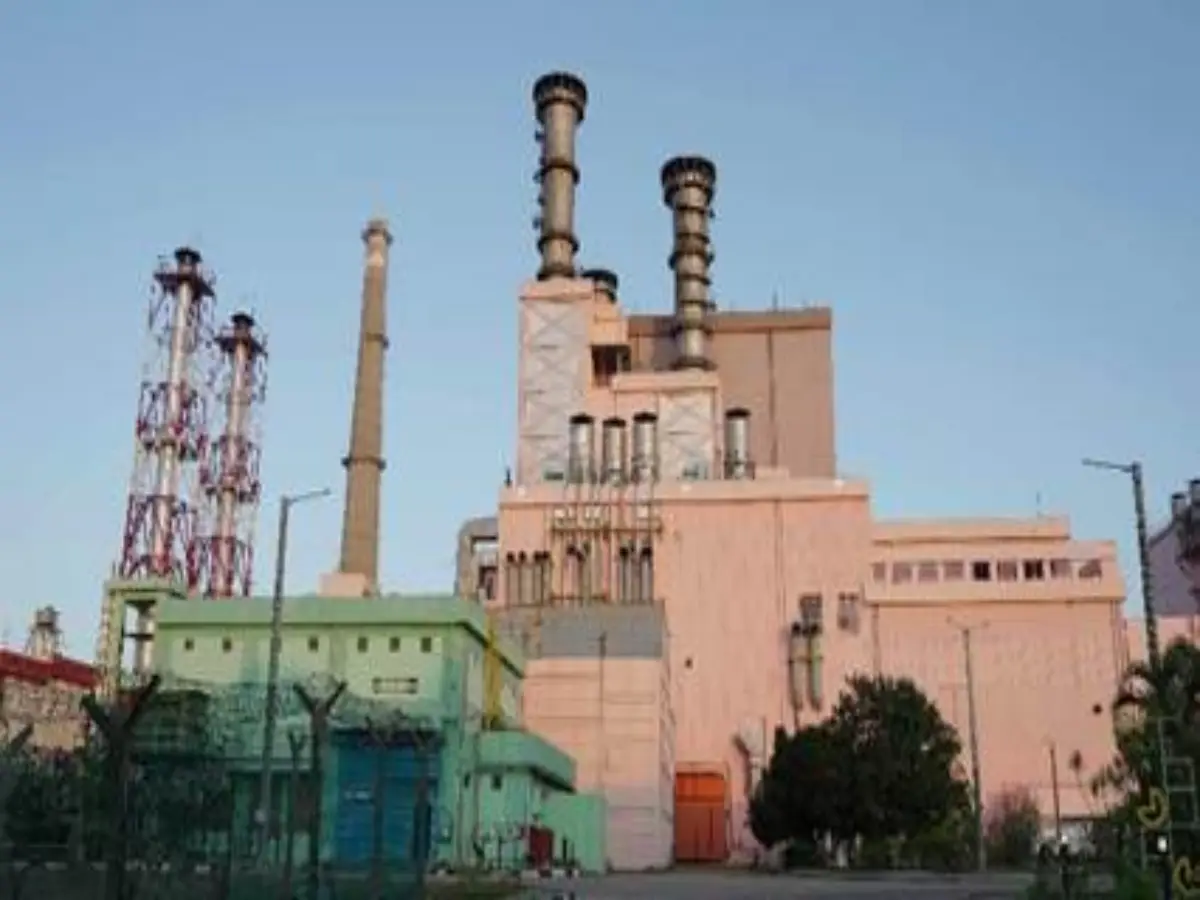
Bharatiya Nabhikiya Vidyut Nigam Limited (BHAVINI), a Government of India Enterprise under the country's Department of Atomic Energy (DAE), organised an Industry Partnership Conclave for Fast Breeder Reactor (FBR) Expansion. This comes months after India's 500 Megawatt Prototype Fast BreederReactor(PFBR) at Kalpakkam, Tamil Nadu, successfully attained first criticality, in April 2026. Simply put, first criticality is the start of controlled fission chain reaction.
The event brought together senior representatives from leading public and private sector industries, technology partners, equipment manufacturers, and engineering organisations. Key stakeholders associated with the Indian nuclear power programme gathered to forge collaborative partnership and build a robust roadmap for the next phase of India’s nuclear energy growth.
Speaking at the event, P.A. Suresh Babu, Chairman & Managing Director of BHAVINI expressed deep gratitude to the industrial partners for their contributions to the Prototype Fast Breeder Reactor (PFBR). Drawing from his extensive experience with India's Pressurised Heavy Water Reactor (PHWR) fleet and the VVER(Soviet-origin Water-Water Energetic Reactor) programme that is operational at Kudankulam in Tamil Nadu, the CMD highlighted how Indian industries transformed the nuclear sector. He emphasized that a similar partnership-driven approach is vital to expand the FBR programme and achieve long-term energy security, sustainable development and making the best use of the nation's nuclear fuel resources.

Domain experts explored new opportunities arising from the planned growth of Fast Breeder Reactors, such as: manufacturing critical systems and equipment locally to reduce foreign reliance, enhancing manufacturing capabilities and enforcing strict quality assurance, creating a sustainable ecosystem for private and public industries in the nuclear sector.
What is India's three-stage Nuclear programme?
Trending Stories
)
Nigeria: Protesters take to the streets, police fire shots
)
US-Iran war: Tehran draws red lines — seven demands before any peace talks
)
Russia-Europe tensions: Polish PM warns Russian attacks could test NATO's unity
&im=FitAndFill=(700,400))
‘Not the US or China’: These are the countries leading the world in arable land
)
Mark Carney mimics Trump in hilarious moment over C$70 billion clean-energy investment; room erupts in laughter
)
Pentagon revives mandatory testosterone testing for male troops aged 30 and above
)
‘End of my career...’: NSA Doval recalls tense Sikkim mission when China captured Indian intelligence team
)
Trump defends AI amid growing alarm, announces new 'AI force' and promises an 'AI czar'
)
Iran sets 7 conditions to end war with US: What are Tehran’s demands?
)
Trump announces ‘AI Force’ as debate grows over AI risks and regulation
)
China may have gained access to US's classified F-35 jets; parts meant for repairs diverted to Hong Kong, sparking Pentagon inquiry
)
Gaza under attack: Health chief's son killed in IDF strikes
)
Inspired by podcasts and Meghalaya murder case: How Siya allegedly planned Ketan Agarwal’s Lohagad fort murder
)
Arvind Kejriwal, family members, Delhi CM Rekha Gupta get SIR notices
)
Cochin shipyard starts building Indian Navy's next-gen missile vessels
)
Saudi vs Houthis: Houthis claim missiles & drones used in attack on key Saudi sites
)
Ed Sheeran addresses Macklemore's removal, Gaza conflict during Philadelphia concert: 'I cannot hide how I feel'
)
Brigitte Bardot’s private collection set for Paris auction; key items and prices revealed
)
‘Will go to any extent’: Pakistan vows to defend Saudi Arabia amid Houthi attacks
66 years of the Indus Waters Treaty: How India and Pakistan settled a bitter river dispute
)
The Verdict | When precision fails: US commits war crime in Minab school strike, UN finds
)
9 women found dead near Johannesburg: South Africans rally, demand 'enough' to femicide
)
Trump wants to rename ‘Artificial Intelligence’, gives 3 options: Which one would you pick?
)
US-Iran war: Tehran sets seven conditions to re-engage in talks with US
)
Reacher star Alan Ritchson opens up about alleged blackmail, suicide attempt during difficult period
)
Africa is splitting, and a lot sooner than estimated, giving way to a new ocean
)
Flying cars in UAE: Ras Al Khaimah signs deal with Chinese company to test new transport
)
Trump bans CNN, MS NOW and Politico from White House over ‘FAKE NEWS’
)
Trump 2.0: Dark days ahead for America’s ‘imperial presidency’
&im=FitAndFill=(700,400))
How many F-35s does Britain, Japan and Israel have?
)
Harry Brook targets long reign at top of T20I rankings after Sri Lanka sweep
)
Russia's deadly Ukraine strikes kill 2 in Sumy, hit Dnipro mall
)
Russia holds first parliamentary elections since the beginning of the Ukraine war
&im=FitAndFill=(700,400))
Meet top 5 Indian batters with fastest T20I centuries
)
Raphinha hat-trick powers Barcelona to 3-1 win over Sevilla in La Liga
)
India’s 3-stage nuclear programme is a sequential strategy to convert uranium into plutonium and finally utilize thorium for generating sustainable nuclear energy.
In the first stage, Pressurised Heavy Water Reactors (PHWRs) use natural Uranium to generate electricity and produce Plutonium-239 as a by-product. At present, India has about two dozen PHWR Nuclear power plants, which contribute about 3percent of India's total power generation.
The second stage employs Fast Breeder Reactors (FBRs), which use Plutonium(by-product from first stage) to generate more fissile material, while converting thorium into Uranium-233.
In the third stage, advanced reactors utilize Uranium-233 along with Thorium to produce sustainable nuclear energy.
In simple terms, India's Fast Breeder Reactors technology forms the vital bridge between the current fleet of pressurized heavy water reactors and the future deployment of Thorium-based reactors.
This long-term strategy is particularly suited to India, which possesses minimal Uranium reserves, but one of the world’s largest Thorium reserves. While the first stage is fully operational, the second stage has just begun and had a long way to go, while the third stage remains in the research phase.
India's goal to expand Nuclear power generation capacity
At present, India has the capacity to generate about 8,780 Megawatt of Nuclear energy from over two dozen facilities across the country. India's Nuclear power generation capacity is expected to increase to 22,380 MW by 2031-32 on progressive completion of projects under implementation, as per Government data.
