India Budget 2025: Zero income tax till ₹12 lakh income under new tax regime, announces FM Nirmala Sitharaman

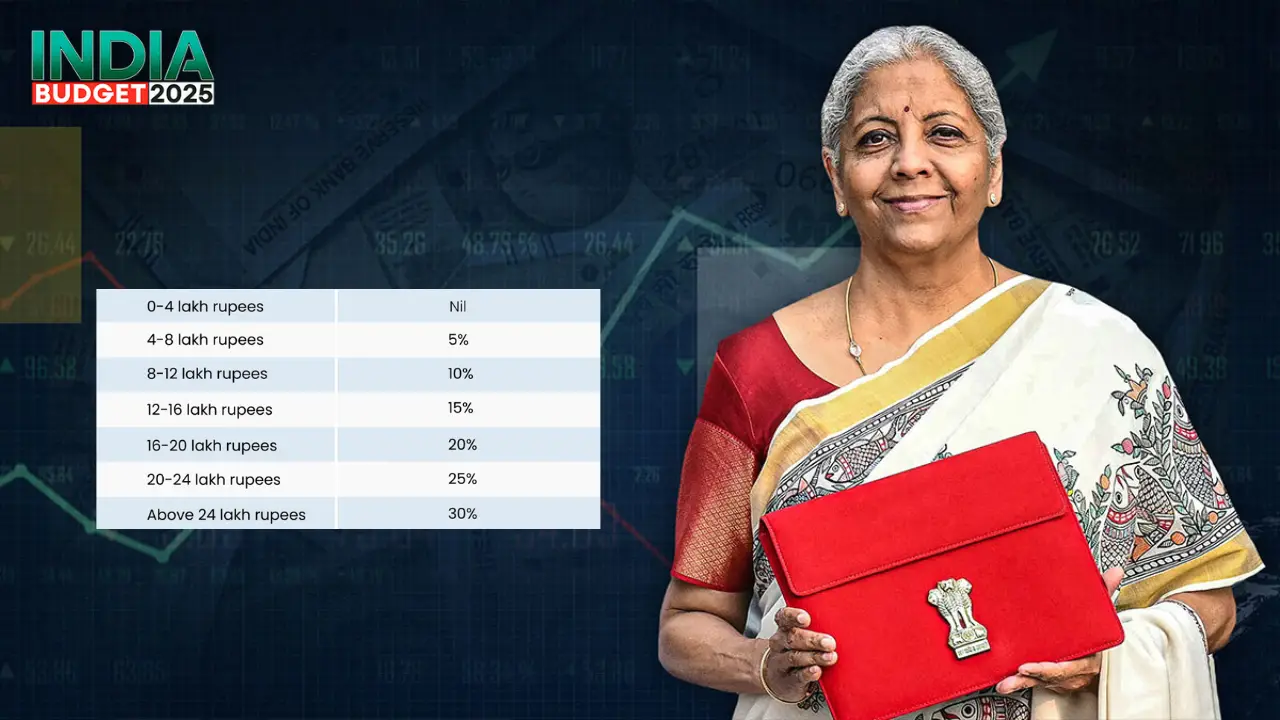
India budget, trending, business, economy: New tax regime's benefits, including a nil tax slab for up to ₹12 lakh income and a ₹12.75 lakh limit for salaried individuals with a ₹75,000 standard deduction.
Indian Finance Minister Nirmala Sitharaman on Saturday (Feb 1) announced a major relief for the middle class with a special tax exemption for salaried individuals. The new tax structure is designed to reduce taxes for middle-income earners, leaving more disposable income for household consumption, savings, and investment, which can help boost economic growth.
'Nil Tax' slab
As per the announcement, under the new tax regime, the government has introduced significant changes to benefit taxpayers, especially the middle class. One of the key highlights is the introduction of a "nil tax" slab for income up to ₹12 lakh (or 1.2 million), meaning individuals with income up to this threshold will pay no income tax.
For salaried taxpayers, this limit increases to ₹12.75 lakh, with a standard deduction of ₹75,000.
The revised slabs and rates aim to substantially reduce the tax burden on the middle class, leaving more money in their hands for increased household consumption, savings, and investment.
Trending Stories
)
)
)
)
)
)
&im=FitAndFill=(700,400))
)
)
)
)
)
)
)
&im=FitAndFill=(700,400))
)
)
)
)
)
)
)
)
)
)
)
)
)
)
)
)
)
Also read | India Union Budget 2025: ‘Govt to support domestic electronic equipment industry’, FM Sitharaman
Tax exemptions over the years
A look at tax exemption over the years shows that exemption limits have gradually increased. In 2005, the exemption limit was ₹1 lakh, and is now ₹12 lakhs. Here are the tax exemptions:
- 2005: ₹1 lakh
- 2012: ₹2 lakhs
- 2014: ₹2.5 lakhs
- 2019: ₹5 lakhs
- 2023: ₹7 lakhs
- 2025: ₹12 lakhs
Also read | Budget 2025: 120 new aviation destinations - modified 'UDAN Scheme' to boost regional air connectivity
New tax regime — 2024-25 vs 2025-26
Under the new tax regime for FY 2024-25, no income tax was payable up to the total income of Rs 7 lakh.
- Up to Rs 3 lakh: NIL
- Rs 3 lakh—Rs 7 lakh: 5 per cent
- Rs 7 lakh—Rs 10 lakh: 10 per cent
- Rs 10 lakh—Rs 12 lakh: 15 per cent
- Rs 12 lakh—Rs 15 lakh: 20 per cent
- Above Rs 15 lakh: 30 per cent
In contrast, the new tax regime offers a different structure. Nil tax till ₹12 lakhs andabove that, the applicable tax is:
- Rs 0-4 lakh — Nil
- Rs 4-8 lakh — 5 per cent
- Rs 8–12 lakh — 10 per cent
- Rs 16–20 lakh — 20 per cent
- Rs 20–24 lakh — 25 per cent
- Above Rs 24 lakh — 30 per cent
To simplify, here's a chart detailing what the tax burden would be for a person earning 15 Lakh.
/wion/media/post_attachments/7c797ed1-1ac.png)

