&imwidth=800&imheight=600&format=webp&quality=medium "India achieves clean energy target milestone five years ahead of schedule. Here is why it matters")
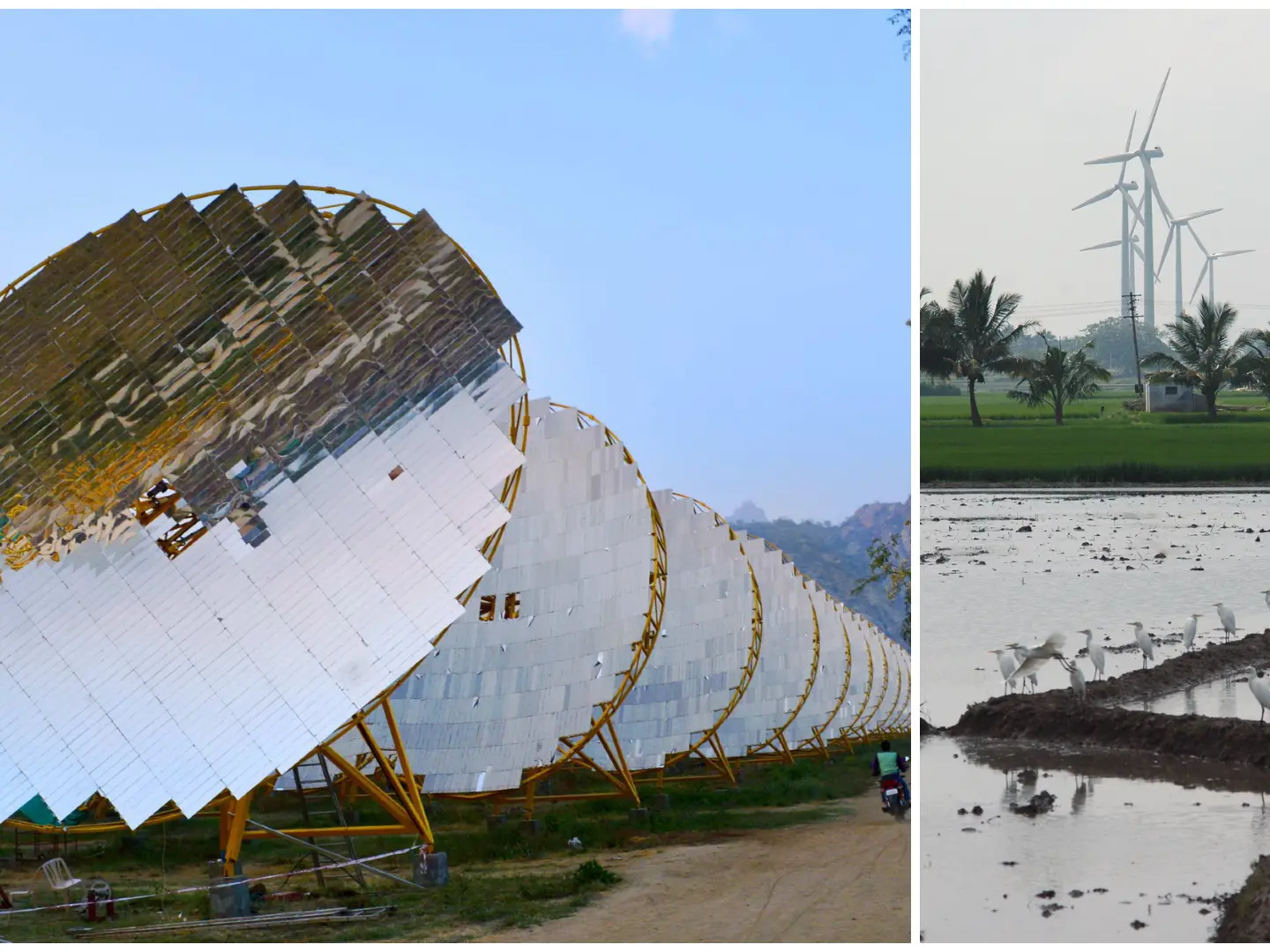
India has reached a significant clean energy milestone five years earlier than planned. By June 30, half of the nation’s total power generation capacity comes from non-fossil fuel sources, said the Ministry of New and Renewable Energy (MNRE). How did India reach this mark? What does it mean in real numbers? And what is the future of clean energy for India? Here is a lowdown:
India achieves renewable energy milestone: What does it mean?
Out of a total 484.8 Gigawatts installed capacity, 242.8 GW is now based on renewable or low-carbon sources, said the ministry in a statement.

Under the Paris Climate Accord and National Targets, India had committed to set up 500 GW of renewable energy-based power generation by 2030. Achieving the 50 per cent non-fossil fuel capacity mark in 2025 showcases India’s strong progress and leadership in clean energy transitions, according to experts.
How India generates its power now
As of June 30, India’s installed power capacity composition is: 49.92 per cent thermal or fossil fuels, 1.81 per cent nuclear and 48.27 per cent renewable energy (including large hydropower).
“Timely interventions for renewables, like the waiver of Inter-State Transmission System (ISTS) charges and regular auctions, have elevated India's commitment to sustainability, and today it has the world's third-largest solar power capacity,” said Aarti Khosla, Founder and Director, Climate Trends.
Trending Stories
)
The Verdict | When precision fails: US commits war crime in Minab school strike, UN finds
)
Why Ranveer Singh’s Dhurandhar missed India’s Oscar entry; FFI jury member reveals what happened
)
US And Denmark reach Greenland deal, Trump announces expanded military presence
)
India seeks to build a full semiconductor supply chain
)
Trump signs Russia sanctions law: India faces fresh 100% tariff threat over Russian oil
)
Shivakumar attends 79th Kalyana Karnataka Utsav in Kalaburagi
)
US hiding troop deaths in Iran war? Toll higher than Pentagon count, claims report
)
Ukraine plans record $109 bn defence spending, nearly two thirds of budget amid Russia war
)
Trump's Greenland dream comes true? POTUS announces 'Infinite Life' deal with Denmark, claims permanent US control
)
China may have gained access to US's classified F-35 jets; parts meant for repairs diverted to Hong Kong, sparking Pentagon inquiry
)
Flying cars in UAE: Ras Al Khaimah signs deal with Chinese company to test new transport
)
‘Will go to any extent’: Pakistan vows to defend Saudi Arabia amid Houthi attacks
)
Pentagon revives mandatory testosterone testing for male troops aged 30 and above
&im=FitAndFill=(700,400))
Meet top 5 Indian batters with fastest T20I centuries
)
Godfather of AI Geoffrey Hinton gives US lawmakers a one-year warning on AI
)
NASA research plane reaches 61,000 feet over Panama
)
Google’s Gemini AI hacks real systems by guessing passwords during security test
)
Indian activist-lawyer Prashant Bhushan's post brings focus on ‘conflict of interest’ appointments of ex-govt officials at Reliance, Adani groups
)
Brigitte Bardot’s private collection set for Paris auction; key items and prices revealed
)
FACT CHECK: Why did PM Modi ask Xi ‘is it okay’ at BRICS Summit? New video reveals...
)
Africa is splitting, and a lot sooner than estimated, giving way to a new ocean
)
Three labourers killed as DU student loses control of his car, rams into them on Dwarka Expressway
&im=FitAndFill=(700,400))
From Abhishek Sharma to Sahil Chauhan, 5 batters with fastest T20I hundreds
)
Trump bans CNN, MS NOW and Politico from White House over ‘FAKE NEWS’
)
Indian Cinema bets big on mythology, brings ancient stories to modern audiences
)
Pyongyang dismisses US, western pressure over nuclear programme
&im=FitAndFill=(700,400))
New Friday OTT releases (September 18, 2026): Lust Stories 3, You+Me, Best of the Best- 8 new titles coming on Netflix, Prime Video and more
)
Russia holds first parliamentary elections since the beginning of the Ukraine war
)
'Gangsta' crab shoves knife blade at man and his dog in Florida - Watch
)
Fast bowler Brydon Carse faces no charges over Derby nightclub incident
)
Tirupati Laddu ghee adulterated with chemicals, says ED, supplier arrested
)
Who is Khalilur Rahman? All you need to know about 81st UN General Assembly President
)
Trump 2.0: Dark days ahead for America’s ‘imperial presidency’
&im=FitAndFill=(700,400))
Meet top 5 bowlers in latest ICC T20I rankings
)
IIT Bombay student dies by suicide, was caught seeking AI help during exams
)
Trump signs Russia sanctions bill into law, targets Moscow’s energy sector
India's global standing on emissions
India’s per capita emissions remain at one-third of the global average, which keeps it among the lowest worldwide.
It is also one of the few G20 countries on track to meet its Nationally Determined Contributions (NDCs) on climate action.
How India achieved the clean energy milestone
Several government initiatives have helped India achieve rapid growth in clean energy development. They include PM-KUSUM, or Pradhan Mantri Kisan Urja Suraksha evam Utthaan Mahabhiyan, a scheme on solar power for farmers. PM Surya Ghar Muft Bijli Yojana aims to provide free solar electricity for households.
The National Wind-Solar Hybrid Policy of the Indian government aims to promote large grid-connected wind-solar PV hybrid systems. India is also going through large-scale solar park development.
“India is one of the leading countries which have achieved this feat, better than most developed nations. The aggressive non-fossil fuel capacity addition is a positive example for the world to follow. Policy push coupled with the entrepreneurial spirit of India Inc has been instrumental in achieving this growth,” said Mohit Bhargava, Former CEO, NTPC Green Energy Ltd.
The way ahead for India on non-fossil fuel energy
India will now have to shift towards strengthening the national transmission grid, expanding battery storage capacity and developing pumped hydro storage systems, according to experts.