
&imwidth=800&imheight=600&format=webp&quality=medium "How RSI-India, inspired by MIT, is giving Indian school students a taste of cutting-edge research")
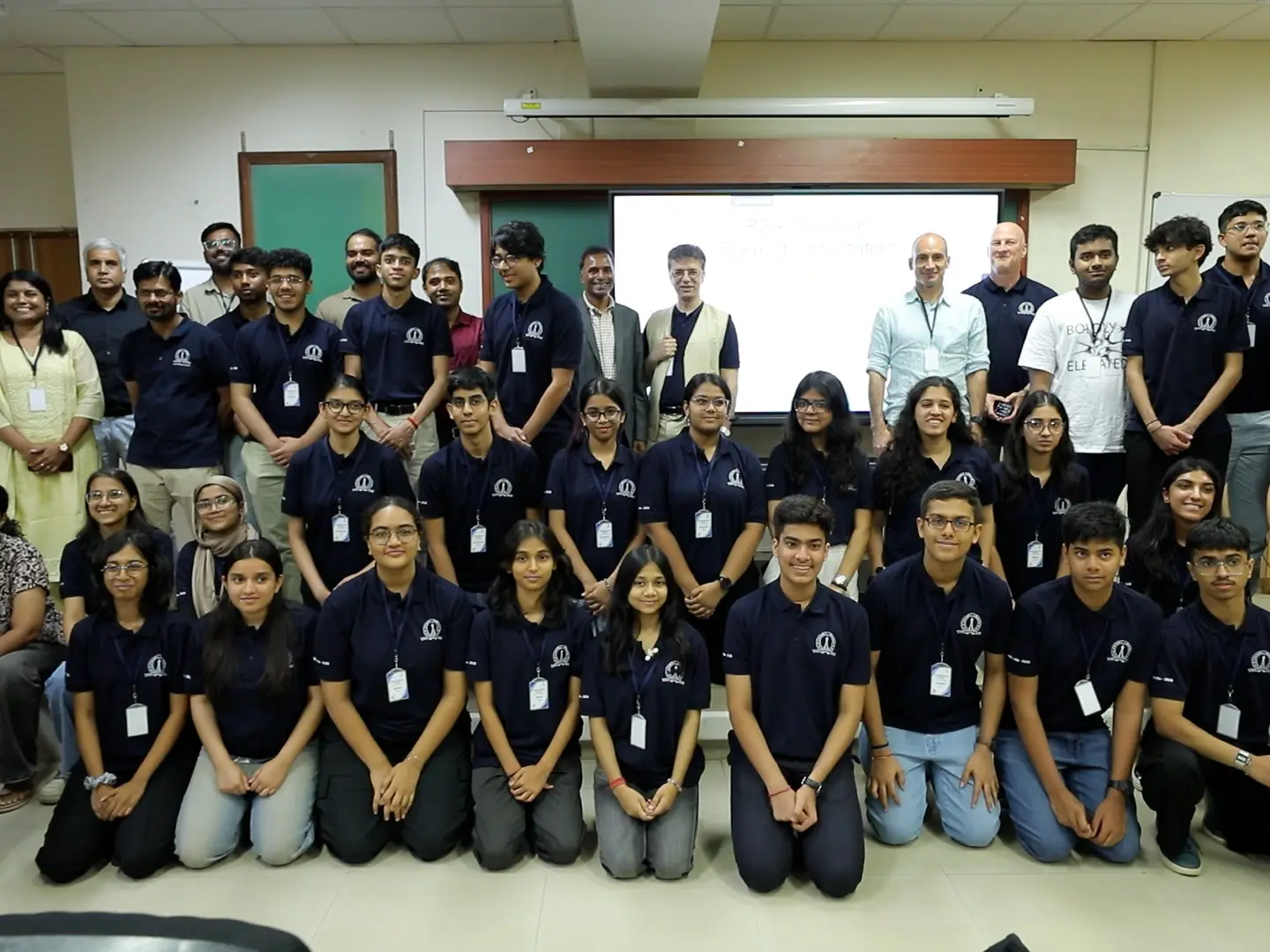
At the Indian Institute of Science in Bengaluru, summer looks a little different for a select group of Class XI students. They are spending six weeks immersed in scientific research, learning directly from some of the country's top researchers. The students are part of Research Science Initiative-India (RSI-India), a six-week STEM research programme inspired by the globally recognised Research Science Institute at the Massachusetts Institute of Technology (MIT). Hosted at IISc Bengaluru in collaboration with the Centre for Excellence in Education (CEE), the programme offers some of India's brightest young minds a rare opportunity to engage with advanced scientific research long before they enter university.
For these students, the experience goes far beyond a traditional summer programme. Over six weeks, they work alongside scientists and mentors in cutting-edge laboratories, undertake independent research projects, and present their findings at the endof the programme.

The initiative is important for India, saidProf.Deepak Saini, Faculty Coordinator for RSI-IISc programme.
"RSI hasbeen around for a very long time, especially in various other countries, and it has always led to training of the next generation of scholarly people," said Saini, aprofessor in the Department of Developmental Biology and Genetics at IISc.
"We need to bringyounger-generation students to get experience of doing deep science at an institute like IISc. So, it was a naturalcollaborationof RSI with IISc, and that's what actually led IISc toestablish the RSI initiative."
Trending Stories
)
The Early Spring is proof not everyone can talk about their real feelings, and it is perfectly OK
)
UN votes to ‘correct the map’ as India backs fairer world view
)
Nigerian Navy discovers 99,000 litres of suspected stolen, illegally refined products as it intensifies anti-crude oil theft operations
)
Who is Aditi Paudel? 17-year-old becomes Japan's first literacy ambassador
)
Bengaluru: Officials find 40 kg expired chilli at chairman's club
)
Jaishankar rejects trade link to ending Ukraine war
)
Israeli strikes on Lebanon kill three, injure 23 despite truce
)
Alpine glacier was covered with sheep wool sheets to prevent melting. It worked
)
South Korea mulls deploying military assets to Strait of Hormuz
)
World's fifth-largest economy, British army can't afford to train
)
Breaking | Vance takes the podium: First White House briefing since Leavitt's exit
)
Taiwan raises 'concerns' over China's missile test
)
BRICS 2026: $1 trillion sovereign capital set to converge in Delhi for first iBRICS Summit
)
What is Iran's Pickaxe Mountain that Trump has again threatened to bomb?
)
UN votes to correct world map that visually shrank Africa for 450 years
)
Former NewJeans member Danielle launches YouTube channel, hints at new solo journey
)
Bangladesh batter Towhid Hridoy creates history with 350 not out in South Africa
)
Brendan Fraser’s transformation fuels The Mummy 4 excitement as fans welcome back Rick O’Connell
&im=FitAndFill=(700,400))
Krishna Janmashtami 2026: From Dhaniya Panjiri to Makhana Kheer- 5 best sweet dishes perfect for celebrating Lord Krishna’s birth
)
Donald Trump plans to travel to Ireland on Qatari-donated jet amid security concerns
)
Nazi-looted art to return to Jewish heirs
)
Eight killed in Kerala’s Thrissur after car rams into lorry parked on highway
&im=FitAndFill=(700,400))
Why Russian fighter jets use bulky, low-pressure tyres compared to US jets
)
FBI-wanted fraud accused arrested in Jalandhar over $600,000 scam
&im=FitAndFill=(700,400))
Why US tanks weigh over 20 tons more than Russian tanks
&im=FitAndFill=(700,400))
New Friday OTT releases (September 4, 2026): GDN, Dhamaal 4, Jagamae Sangeetham- Watch 6 new movies and TV shows on Netflix, Prime Video and more
)
Killing the Himalayas slowly: Human urine is melting a glacier on Mount Everest
Who is eligible to apply for RSI-India?
The programme is open to Indian students who have completed Class X and are enrolled in Class XI. These students apply on an individual basis, and are not nominated or selected by their schools. A small cohort is chosen each year, allowing participants to receive close mentorship from IISc professors.
RSI-India: Inspired by a globally renowned model
Participants begin with introductory coursework before moving into hands-on research under the guidance of faculty mentors. The programme culminates in a student symposia where they present both a research paper and an oral presentation based on their work.
In addition to laboratory research, students hear speakers from the worlds of research and tech as part of the Palsamudram Distinguished Lecture Series, and interact with peers from diverse backgrounds, creating connections that often extend beyond the programme itself.
Also Read: Paper leak, re-NEET and trauma: What's the mental cost of India's medical entrance exam crisis
The vision behind bringing RSI to India
The idea of bringing RSI to India took shape after its transformative impact was witnessed firsthand by those closely connected to the programme. Inspired by the success of the original RSI in the United States, efforts were made to create a similar opportunity for talented Indian students, giving them access to world-class research mentorship and scientific training at an early stage.
Reflecting on what sparked the initiative, Sanjay Palsamudram, founder of the Palsamudram Trust, said the inspiration came after his daughter participated in the programme in the US. "My daughter got into this programme five years ago and she underwent this programme. It was life-transforming," he said.
Recognising that only a limited number of Indian students could participate in the US programme, he began exploring ways to expand access.
"Instead of taking students from India to MIT, I thought why not bring the programme here so many more students in India can benefit?" he said.
Discussions between CEE and IISc eventually began and thisledto the launch of RSI-India.
Students eager to learn
Among the selected studentsis Sulipsa Bhatta, a Class XI student from Kendriya Vidyalaya, sees the programme as an opportunity to learn from some of the country's leading scientists andresearchers.
"I'm really excited and very happy that I got into such a prestigious programme. Whatever I get, I'll squeeze every single essence of knowledge and learning from every single person from whom I am able to learn,"she said.
Overseeing the programme is Dr. Amy Sillman, Director of RSI-India and an alumna of the first RSI cohort in the United States in 1984. She leads the programme's academic and mentorship initiatives, guiding students through an intensive research experience.
Investing in India's scientific future
As India seeks to strengthen its research ecosystem and build a pipeline of future innovators, initiatives such as RSI-India are creating opportunities for young students to engage directly with science and research. The hope is that the curiosity they nurture today could contribute to the discoveries, technologies and solutions that shape India's future.