How India slashed port turnaround time by half to drive record cargo volumes

&imwidth=600&imheight=450&format=webp&quality=medium "How India slashed port turnaround time by half to drive record cargo volumes")
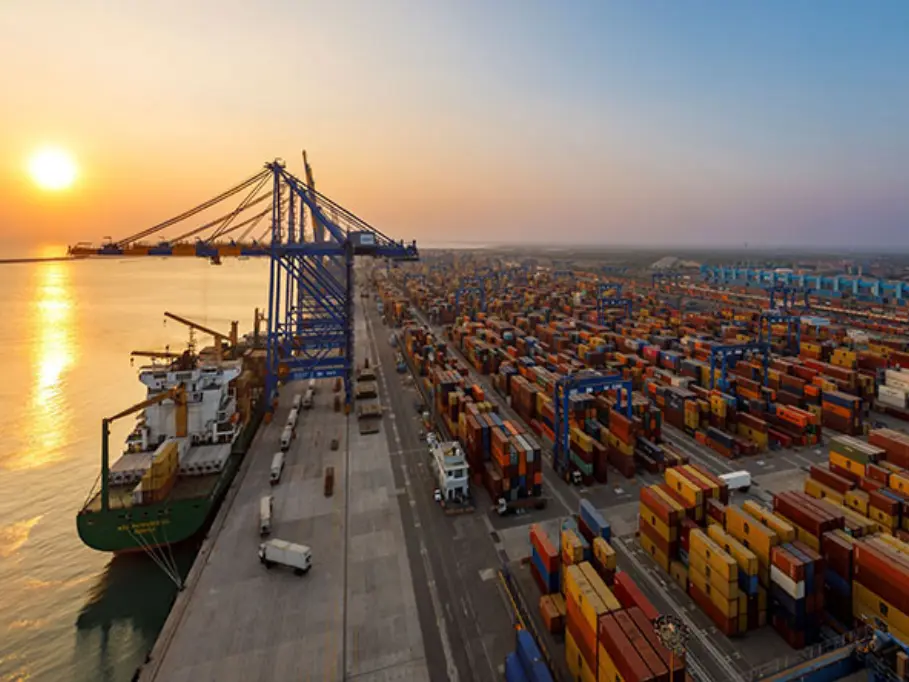
How India slashed port turnaround times by half to drive record cargo volumes Photograph: (Credit: ANI)
India’s major state-owned ports handled a record-breaking 915.17 million tonnes of cargo in FY 2025–26, driven by a structural overhaul that cut vessel turnaround times from 96 to 49.5 hours.
India’s maritime sector has undergone structural change over past decade, evolving from an operational bottleneck into a highly efficient global trade driver. To mark this milestone, the Maritime Reform Utsav was launched by the Ministry of Ports, Shipping and Waterways. It highlights a decade of infrastructure modernisation, unprecedented cargo growth, and rapid digitisation. The progress can be underscored by the dramatic surge in operational efficiency. This had been backed by extensive mechanisation and the implementation of single-window digital ecosystems. The average turnaround time for vessels at major Indian ports dropped by nearly half, which translates to slashing it down from 96 hours in 2014 to just 49.5 hours.
This efficiency boost directly catalysed historic cargo volumes. In the recently concluded financial year (FY 2025–26), India’s major state-owned ports collectively handled a record-breaking 915.17 million tonnes (MT) of cargo, registering a 7.06% year-on-year growth and comfortably outperforming the government’s annual target of 904 MT. Deendayal Port led the volume surge by handling 160.11 MT, followed closely by Paradip Port at 156.45 MT. Today, nine Indian ports feature in the global top 100 for efficiency.
The transformation extends well beyond coastal harbors. Driven by the flagship Sagarmala Programme and the Jal Marg Vikas Project, India's inland waterways experienced a staggering 700% explosion in cargo movement. Internal river and canal corridors carried 145.50 million tonnes of cargo this past year, up from a meager 18.10 million tonnes in 2014, successfully shifting heavy freight off congested highways.
Furthermore, India has dramatically expanded its human capital and fleet. The country’s sea-going workforce has nearly tripled over the last 12 years, with Indian seafarers now contributing roughly 12% of the global maritime workforce. Concurrently, the Shipping Corporation of India has scaled up its energy supply chain fleet under the reform banner, adding massive, specialised gas carriers to secure domestic fuel logistics.
As the sector pivots toward automation, artificial intelligence, and developing green hydrogen hubs at major ports, India’s modernised maritime framework continues to drastically lower logistics costs, positioning the nation as an aggressive global maritime powerhouse.
Trending Stories
&imwidth=280&imheight=210&format=webp&quality=medium)
&imwidth=280&imheight=210&format=webp&quality=medium)
&imwidth=280&imheight=210&format=webp&quality=medium)
&imwidth=280&imheight=210&format=webp&quality=medium)
&imwidth=280&imheight=210&format=webp&quality=medium)
&imwidth=280&imheight=210&format=webp&quality=medium)
&imwidth=280&imheight=210&format=webp&quality=medium)
&imwidth=280&imheight=210&format=webp&quality=medium)
&imwidth=280&imheight=210&format=webp&quality=medium)
&imwidth=280&imheight=210&format=webp&quality=medium)
&imwidth=280&imheight=210&format=webp&quality=medium)
&imwidth=280&imheight=210&format=webp&quality=medium)
&imwidth=280&imheight=210&format=webp&quality=medium)
&imwidth=280&imheight=210&format=webp&quality=medium)
&imwidth=280&imheight=210&format=webp&quality=medium)
&imwidth=280&imheight=210&format=webp&quality=medium)
&imwidth=280&imheight=210&format=webp&quality=medium)
&imwidth=280&imheight=210&format=webp&quality=medium)
&imwidth=280&imheight=210&format=webp&quality=medium)
&imwidth=280&imheight=210&format=webp&quality=medium)
&imwidth=280&imheight=210&format=webp&quality=medium)
&imwidth=280&imheight=210&format=webp&quality=medium)
&imwidth=280&imheight=210&format=webp&quality=medium)
&imwidth=280&imheight=210&format=webp&quality=medium)
&imwidth=280&imheight=210&format=webp&quality=medium)
&imwidth=280&imheight=210&format=webp&quality=medium)
&imwidth=280&imheight=210&format=webp&quality=medium)
&imwidth=280&imheight=210&format=webp&quality=medium)
&imwidth=280&imheight=210&format=webp&quality=medium)
&imwidth=280&imheight=210&format=webp&quality=medium)
&imwidth=280&imheight=210&format=webp&quality=medium)
&imwidth=280&imheight=210&format=webp&quality=medium)
&imwidth=280&imheight=210&format=webp&quality=medium)
&imwidth=280&imheight=210&format=webp&quality=medium)
&im=FitAndFill=(700,400)&imwidth=280&imheight=210&format=webp&quality=medium)
&imwidth=280&imheight=210&format=webp&quality=medium)
&imwidth=280&imheight=210&format=webp&quality=medium)
&imwidth=280&imheight=210&format=webp&quality=medium)
&imwidth=280&imheight=210&format=webp&quality=medium)
Here's a breakdown:
- Efficiency Doubled: Average vessel turnaround times slashed from 96 hours to 49 hours.
- Record Trade Volumes: Major ports handled a historic 915.17 million tonnes of cargo last fiscal year.
- 700% River-Cargo Surge: Inland waterway freight skyrocketed from 18.10 to 145.50 million tonnes.
- Global Standing: Nine Indian ports now rank in the global top 100 for efficiency.
- Seafarer Boom: India's maritime workforce nearly tripled, now supplying 12% of global seafarers.
- Energy Security: The Shipping Corporation of India expanded its fleet to 58 vessels, inducting new Very Large Gas Carriers (Sahyadri and Shivalik) to secure LPG supply chains.
- Digital & Green Pivot: Ports are transitioning to AI-driven single-window digital systems and setting up dedicated Green Hydrogen hubs.