Is the Gandhi family holding Congress together or holding it back?

&imwidth=600&imheight=450&format=webp&quality=medium "Is the Gandhi family holding Congress together or holding it back?")
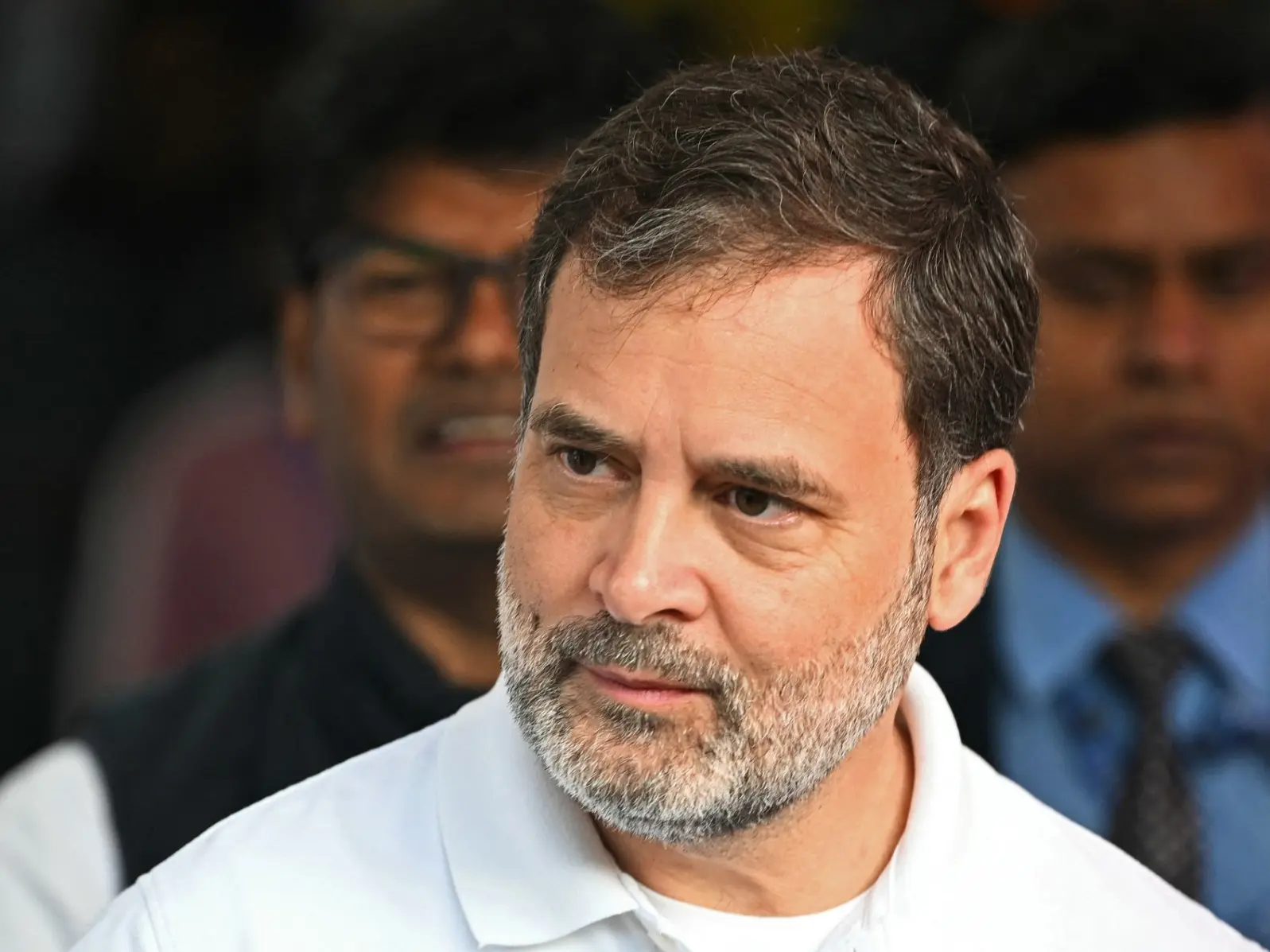
India's Congress party leader Rahul Gandhi leaves after casting his vote at a polling station during the Delhi legislative assembly election, in New Delhi on February 5, 2025. Photograph: (AFP)
Historian Ramachandra Guha's critique of Rahul Gandhi has reignited debate over whether the Gandhi family remains Congress's greatest strength or its biggest obstacle in challenging the BJP.
Prominent historian Ramachandra Guha's column on Rahul Gandhi has created a stir in the intellectual community in New Delhi. He questioned the credibility of Rahul Gandhi to lead the decade-old party of India and his credentials to lead the country in scenarios like the West Asia war and oil crisis. This is significant because Guha, widely regarded as a Gandhian in his intellectual DNA and who spent years critiquing Hindu Nationalism, argues that the Gandhi family is helping Narendra Modi consolidate power. Guha argues that Congress, which held government in fourteen states in 2013, has now been reduced to merely 5 in 2026, and three successive general election defeats pile on the dismal performance of Rahul Gandhi as the leading face of the party. The BJP gleefully amplified the opinion, Shashi Tharoor pushed back with a comparison to Barack Obama, who also lacked any administrative experience prior to holding the most important office of the United States.
Is the Gandhi family an asset or a liability?
While Guha considers Rahul Gandhi to be an amiable personality. He claims that the Congress party has been plagued by utter hubris. He argued that while Rahul Gandhi's Bharat Jodo Yatra was a genuine political achievement, it rebuilt his credibility and humanised him, demonstrating an ability to connect with ordinary Indians, which he had earlier failed to galvanise. The significant improvement in Congress tally from 52 to 99 seats showed there was momentum. Then came the fielding of Priyanka Gandhi in Wayanad, which reversed the perception that the Congress party was larger than a family enterprise. The moment it was coming out of the dynastic label, Rahul won both Wayanad and Rae Bareli in the 2024 elections and vacated the safer Wayanad seat and gifted it to his sibling. Priyanka entered parliament for the first time, winning Wayanad.
But this is not merely about one constituency decision. Leaders like Jyotiraditya Scindia, Himanta Biswa Sharma, Ghulam Nabi Azad, people who could have held power centres regionally, became chief ministers, cultivated a new generation of leaders, were either sidelined or left disenchanted by the ceiling of the Gandhi family. In Congress, loyalty becomes the primary currency, beyond competence and ambition, which can be threatening to the elites. The G-23 letter by the rebel group in 2020, featuring leaders like Gulam Nabi Azad, Kapil Sibal, Shahshi Tharoor, Raj Babbar, and Bupinder Singh Hooda, sheds light on the inner turmoil and demand for structural reform. Many of whom have either been sidelined or defected to BJP. It shows the lack of internal democracy; further, Rahul Gandhi's relationship with power makes it a paradoxical situation. He denies the accountability of becoming a President, but effectively has final say on every decision, thus creating a power vacuum where there is authority without accountability.
Where Guha gets it wrong?
Guha gets the whole argument one-sided; he fails to acknowledge that the Congress party is not functional in isolation. It is a microsystem that exists within a broader, political and institutional framework of India. Which Tharoor aptly points out. Even if the Obama comparison does not fit the analogy, the premise is widely accurate. Rahul Gandhi is not fighting on a level playing field. We have seen the largest erosion of democratic institutions in India, from the ED, CBI, Election Commission, to the media. Every institution has become an organ of the ruling party's organism, adding to that the huge corporate financing that funnels to the ruling party. Evaluating Gandhi and Congress's dismal performance without considering the uneven playing field will be like a race between a disabled person and an able-bodied athlete. Further, the increase in Congress's vote share in the 2024 election complicates Guha's narrative. While ninety-nine seats are not a remarkable achievement, it shows an uptick in Congress's vote share.
Trending Stories
)
)
)
)
)
)
)
)
)
)
)
)
)
)
)
)
)
)
)
)
)
)
)
)
)
)
)
)
)
)
)
)
&im=FitAndFill=(700,400))
)
)
)
)
)
)
Guha's narrative shares two contrarian ideas: the Gandhi family is so strong that it is not allowing a meaningful alternative to the ruling BJP, while it is utterly politically ineffective. This is a passionate argument for a supposed utopia when a reformed, democratised, reinvigorated Congress will exist independent of Gandhi. But Congress is not a single party in an organisational sense, it's a coalition of hundreds of regional caste groups, local strongmen, interest groups and local networks who share a legacy loyalty to the Gandhi surname. A version of Congress did not historically exist where there was no Gandhi, and it may never exist. This is perhaps the legacy of the institutional wreckage of Indira Gandhi's centralisation of power, where loyalty to the party meant loyalty to the Gandhis. Without Gandhi, the party could be reduced to multiple self-interest groups without any adhesive ideals and ideas. A version may painfully emerge without Gandhi, but it will be a fatal transition, till then some other party might consolidate, and the Congress might not survive.

