‘Five evils’ of liquor ban: Supreme Court questions whether prohibition really works

&imwidth=600&imheight=450&format=webp&quality=medium "‘Five evils’ of liquor ban: Supreme Court questions whether prohibition really works")
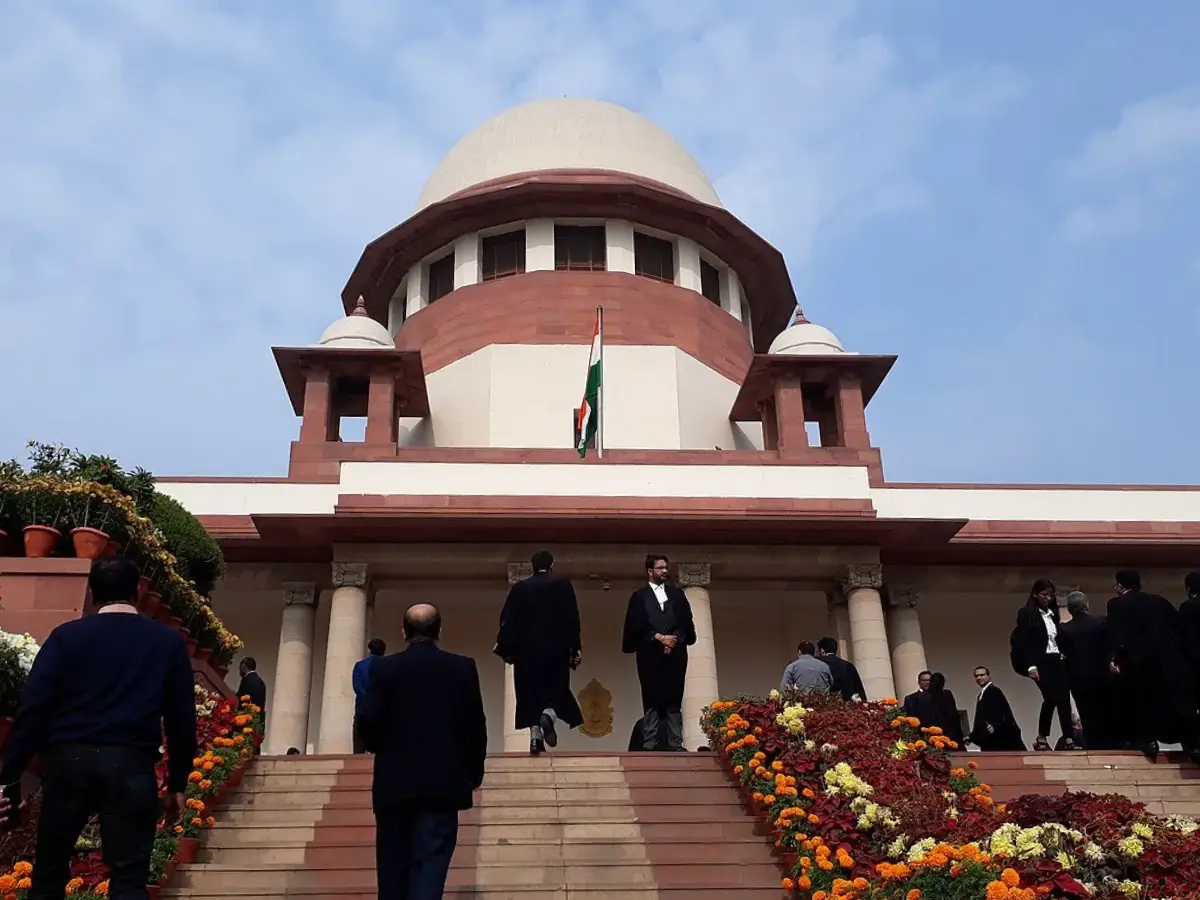
Does prohibition really work? Supreme Court lists 5 consequences of complete liquor bans Photograph: (Wikimedia Commons)
The Supreme Court has raised fresh questions over complete liquor prohibition, pointing to five consequences often linked with such bans. The bench also cited Gujarat’s repeated hooch tragedies while examining Maharashtra’s methanol control rules.
The Supreme Court on Friday (Sep 18) questioned the efficacy of complete prohibition on liquor, pointing to five consequences it said are often associated with such bans, including loss of government revenue, the cost of enforcement, police corruption, illegal distilling and a resulting drug menace.
A bench of Justices JB Pardiwala and K Vinod Chandran made the observations while striking down Rules 18A and 18B of the Maharashtra Poisons Rules, 1972. The provisions restricted the purchase of methanol and required manufacturers to add a bitterant and colourant before selling it to non-drug manufacturers.
The rules were introduced after the 1991 Mumbai hooch tragedy, in which 93 people died after consuming spurious liquor containing methanol.
While allowing petitions filed by several chemical manufacturers, including the Indian Chemical Council, the bench examined whether Maharashtra's safeguards actually addressed the risk of methanol being diverted for making illicit liquor.
Gujarat's prohibition model under scrutiny
Trending Stories
)
)
)
)
&im=FitAndFill=(700,400))
)
)
)
)
)
)
)
)
)
)
)
)
)
)
&im=FitAndFill=(700,400))
)
)
)
)
&im=FitAndFill=(700,400))
)
)
)
&im=FitAndFill=(700,400))
)
)
)
)
&im=FitAndFill=(700,400))
)
The court referred to Gujarat while discussing the broader question of prohibition and its unintended consequences.
“History bears eloquent testimony to the fact that a complete alcohol ban often drives the liquor trade underground, increasing the prevalence of unregulated, lethal brews,” the bench said.
It noted that Gujarat has maintained a strict prohibition policy since its formation in 1960 but has nevertheless witnessed at least 10 major mass hooch tragedies, resulting in more than 600 deaths.
The court also referred to recent incidents in Bhavnagar in Gujarat and Sagar in Madhya Pradesh, where around 13 and 15 people respectively died after consuming illicit liquor. “These should be a reminder for the authorities to wake up and act,” the bench said.
SC rejects Maharashtra government's defence
The Maharashtra government had defended the methanol-related rules as a measure to prevent diversion and reduce the possibility of fatal hooch tragedies. The Supreme Court, however, held that the requirement to add bitterant and colourant lacked a rational and proximate connection with that objective.
“The state failed to indicate that this practice of putting such additives would discourage or rather dissuade continuous usage of methanol or affect its chemical composition so it cannot be used in making spurious liquor,” the bench said.
The court also questioned how the measure would prevent the manufacture of illicit liquor using other adulterants.
It stressed that while the prevention of methanol-related deaths was a legitimate public health objective, measures adopted by the state still had to meet constitutional standards of reasonableness and proportionality.
Also read | Nandigram arrest row: Congress cries vendetta, rival Trinamool says warrants "must be executed"
Rules violate constitutional rights
The bench said financial hardship or commercial inconvenience alone would not be enough to invalidate a law. But in this case, it found that the mandatory addition of colourant and bitterant failed the required constitutional test.
The court held that Rules 18A and 18B violated Articles 14 and 19(1)(g) of the Constitution. It also rejected the Maharashtra government's plea seeking to retain the rules.
Court suggests tighter methanol controls
Instead of relying on mandatory additives, the Supreme Court suggested stronger controls over the methanol supply chain.
These include verifying the licences of purchasers, monitoring consumption, reconciling stocks, ensuring unused methanol is returned, and tightening rules governing its transportation and storage.
The bench also suggested dedicated tankers and tamper-evident seals to reduce the chances of diversion.
The ruling comes against the backdrop of repeated hooch tragedies in several states, highlighting the continuing challenge of preventing methanol from entering illicit liquor networks.

