Budget 2024: Internship scheme, incentive for first-time employees- All top government schemes announced

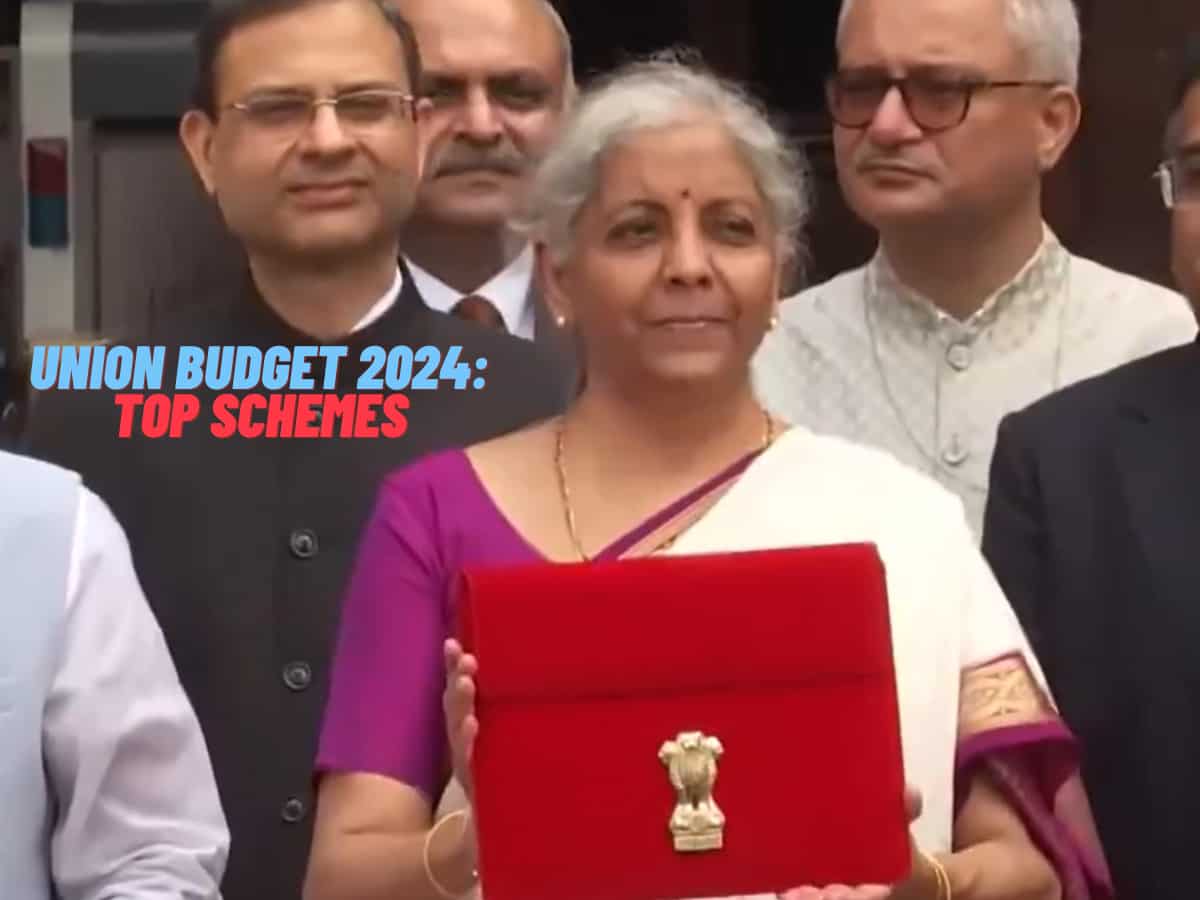
Finance Minister Nirmala Sitharaman
Union Budget 2024: Finance Minister Nirmala Sitharaman presented the budget for fiscal year 2024-25 on Tuesday (Jul 23). The major focus of the entire budget this year was on job creation and how to ease the process of embracing more people into an organised workforce.
Given this, Sitharaman announced three schemes under employment-linked incentives and said the government will allocate Rs 2 lakh crore for job creation over the next five years.
The Finance Minister announceda Direct Benefit Transfer (DBT) of 1 month's salary in 3 instalments of up to Rs 15,000 to first-time employees registered in EPFO.

The government will also create jobs in the manufacturing sector by providing incentives, as per Sitharaman’s speech. The manufacturing incentives will be provided directly to both employees and employers as per their EPFO contribution in the first four years of employment.
Under this scheme, the government will provide reimbursement to employers up to 3,000 per month for 2 years towards their EPFO contribution for each additional employee.
Also Read |India Budget 2024: Sitharaman allocates Rs 1.48 lakh crore for education, employment, & skilling
&imwidth=180&imheight=135&format=webp&quality=medium)
Pakistan to head IMF, World Bank boards after 74 years amid persistent economic crisis
&imwidth=180&imheight=135&format=webp&quality=medium)
'We are not sitting in ivory towers, we are aware': SC issues notice to Rahul Gandhi, Akhilesh Yadav
&imwidth=180&imheight=135&format=webp&quality=medium)
‘I have very severe problems’: Trump fuels health speculation during address to firefighters
&imwidth=180&imheight=135&format=webp&quality=medium)
SC panel launches portal to submit evidence of July Jantar Mantar violence
&imwidth=180&imheight=135&format=webp&quality=medium)
Trump invokes national interest to waive new Russia sanctions, tariffs; India gets relief from 100% tariff threat
&imwidth=180&imheight=135&format=webp&quality=medium)
Lizard people? Ex-US Army sniper claims soldier killed by 'reptilian beings' in battle near Area 51
&imwidth=180&imheight=135&format=webp&quality=medium)
Ankita Bhandari murder case: Parents meet CBI, seek impartial investigation
&imwidth=180&imheight=135&format=webp&quality=medium)
Bangladesh resort fire kills 10 tourists, including a 5-year-old child
&imwidth=180&imheight=135&format=webp&quality=medium)
At least 19 killed in stampede-like situation after part of Kolkata Durga Puja pandal collapses
&imwidth=180&imheight=135&format=webp&quality=medium)
IMF chief warns inflation hurts poor countries, AI optimism risks market correction
&imwidth=180&imheight=135&format=webp&quality=medium)
Iranian woman, 23, handed death sentence for ‘blasphemy’ in social media post; appeals for help
&imwidth=180&imheight=135&format=webp&quality=medium)
'Reason UN has lost credibility': Amid SIR protests India hits out at report alleging 'youth repression'
&imwidth=180&imheight=135&format=webp&quality=medium)
Rain washes out 5th T20I as India-West Indies share honours 2-2
&imwidth=180&imheight=135&format=webp&quality=medium)
Abhijeet Dipke released after fresh arrest, signs peace bond for second time
&imwidth=180&imheight=135&format=webp&quality=medium)
‘My president, I mean my husband’: Trump's new press secretary Katie Zacharia's first briefing goes off the rails in 14 minutes
&imwidth=180&imheight=135&format=webp&quality=medium)
China responds to Trump's Press Secretary Katie Zacharia after toilet remark: 'Visit China more often'
&imwidth=180&imheight=135&format=webp&quality=medium)
COVID-19 pandemic led to increase in divorce cases, observes Madras High Court
&imwidth=180&imheight=135&format=webp&quality=medium)
At least 400 arrested as protests turn violent in France; PM blames far left
&imwidth=180&imheight=135&format=webp&quality=medium)
2026 midterms, 2028 ambitions: Five politicians in focus
&imwidth=180&imheight=135&format=webp&quality=medium)
Israel examines Russia's Shahed-type drones sent by Ukraine to combat Iran | Gravitas
&imwidth=180&imheight=135&format=webp&quality=medium)
WATCH | iPhones, luxury perfumes floating in Hormuz? Iranian fishermen make bizarre discovery
&imwidth=180&imheight=135&format=webp&quality=medium)
China’s ‘dark tourism’ boom: Why are young travelers paying to experience simulated disasters?
&imwidth=180&imheight=135&format=webp&quality=medium)
WATCH | Zelensky gives cheeky response when asked if Trump is making him a scapegoat ahead of US midterms
&im=FitAndFill=(700,400)&imwidth=180&imheight=135&format=webp&quality=medium)
Durga Puja 2026: Kajol, Jaya Bachchan, Mouni Roy and other celebs bring festive glam to pandals
&imwidth=180&imheight=135&format=webp&quality=medium)
US business activity grows in June, but tariffs and inflation cloud outlook
&imwidth=180&imheight=135&format=webp&quality=medium)
No Ravindra Jadeja, Yashasvi Jaiswal in India’s 2027 ODI World Cup plans: Report
&imwidth=180&imheight=135&format=webp&quality=medium)
Kolkata Durga Puja stampede: PM Modi announces Rs 2 lakh ex-gratia for kin of dead, Amit Shah to visit injured
&im=FitAndFill=(700,400)&imwidth=180&imheight=135&format=webp&quality=medium)
Inside Tesla's Roadster: 10 features of Elon Musk's 'flying car' that push the limits of electric vehicles | In Pics
&imwidth=180&imheight=135&format=webp&quality=medium)
Anirudh Ravichander-Kavya Maran wedding: Telangana CM reveals Chennai reception date
&im=FitAndFill=(700,400)&imwidth=180&imheight=135&format=webp&quality=medium)
New Friday OTT releases (October 16, 2026): DC, Sacrifice, Aasha- 6 new movies and TV shows coming on Netflix, Zee 5, Prime Video and more
&imwidth=180&imheight=135&format=webp&quality=medium)
One species, two lineages: Why Sri Lanka’s spectacled cobra differs genetically from Indian variant
&imwidth=180&imheight=135&format=webp&quality=medium)
Oil tanker carrying over 2M barrels of crude hits mine in Strait of Hormuz, catches fire, says Iran
&imwidth=180&imheight=135&format=webp&quality=medium)
'We feel like Mr India': Gujarat’s undercover SHE team guard garba nights at Navratri

US ends automatic work permit extensions; Indian workers lose 540-day safety net: What it means
&imwidth=180&imheight=135&format=webp&quality=medium)
US lawmaker Pramila Jaypal writes to Rubio, urges to raise handling of CJP protest with India
Presenting the Budget in the Lok Sabha, Nirmala Sitharaman also announced ₹1.48 lakh crore for education, employment and skills in the country.
She said the Budget 2024 focuses on employment, skilling, MSMEs and the middle class. “As mentioned in interim budget, we need to focus on the poor, women, youth and farmers,” Sitharaman said.
In a major step towards increasing the skilled workforce, the government announces the launch of a scheme to provide internship opportunities to 1 crore youth in 500 top companies with a Rs 5,000 per month internship allowance and one-time assistance of Rs 6,000.
Sitharaman announced, "An internship allowance of ` 5,000 per month along with a one-time assistance of ` 6,000 will be provided. Companies will be expected to bear the training cost and 10 per cent of the internship cost from their CSR funds."
Sitharaman also emphasised on including more women into workforce through setting up working women hostels.
"We will facilitate higher participation of women in the workforce through setting up of working women hostels in collaboration with industry, and establishing creches," said Finance Minister.
Also Read |Union Budget 2024: Here's what Nitish's Bihar and Naidu's Andhra gets for being key allies
In addition, the partnership will seek to organize women-specific skilling programmes and promotion of market access for women SHG enterprises.
In a new-centrally sponsored scheme, as part of the 4th scheme under the Prime Minister's package, the Finance Minister announced a skilling programme in collaboration with state governments and Industry.
"20 lakh youth will be skilled over a 5-year period. 1,000 Industrial Training Institutes will be upgraded in the hub and spoke arrangements with outcome orientation. Course content and design will be aligned to the skill needs of the industry, and new courses will be introduced for emerging needs," said Sitharaman.
To improve the socio-economic condition of tribal communities, the government will launch the Pradhan Mantri Janjatiya Unnat Gram Abhiyan by adopting saturation coverage for tribal families in tribal-majority villages and aspirational districts. This will cover 63,000 villages benefitting 5 crore tribal people, as per the Finance Minister's speech.
Also Read |Union Budget 2024: FM Sitharaman makes big announcements on Income Tax. Here's all you need to know
In line with the announcement in the interim budget, PM Surya Ghar Muft Bijli Yojana has been launched to install rooftop solar plants to enable 1 crore households to obtain free electricity up to 300 units every month.
The Model Skill Loan Scheme will be revised to facilitate loans up to Rs 7.5 lakh with a guarantee fromgovernment-promoted Fund. This measure is expected to help 25,000 students every year.
To help our youth who have not been eligible for any benefit under government schemes and policies, the government announced financial support for loans up to Rs 10 lakh for higher education in domestic institutions. E-vouchers for this purpose will be given directly to 1 lakh students every year for annual interest subvention of 3 per cent of the loan amount.
(With inputs from agencies)