As global supply chains shift, can India become the next manufacturing hub?

&imwidth=600&imheight=450&format=webp&quality=medium "As global supply chains shift, can India become the next manufacturing hub?")
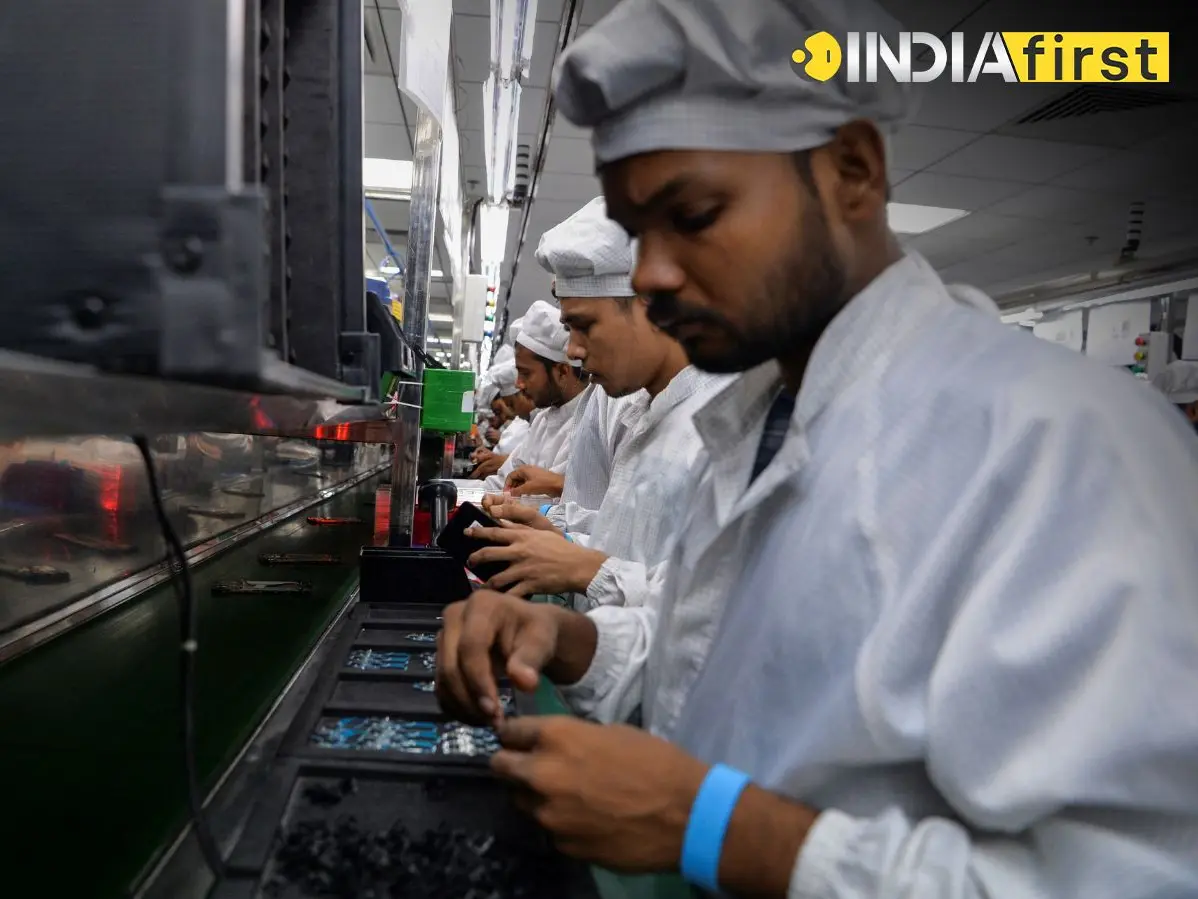
Workers assemble mobile phones at an Indian Lava phone manufacturer factory in Noida on August 22, 2019. Photograph: (AFP)
Global supply chains are shifting from China due to trade tensions and disruptions, with India emerging via China+1 strategy, rising manufacturing, GCC growth, but infrastructure and skills remain challenges.
For decades, China was the world’s most dominant factory hub, offering scale, low cost, and strong logistics in the global manufacturing market. However, in recent years, several disruptions have brought a significant change in the supply chains across the world. The recent US-China trade tensions, COVID-19 pandemic, and geopolitical uncertainty have exposed the extent of dependence on one country. Now, companies are rethinking and expanding their production across different nations, adopting a de-risking strategy.
China+1 shift and India’s opening
Businesses are now transitioning to “China+1”, a strategy where firms keep a base in China but also extend to alternative locations. As global companies seek alternatives, India has emerged as a key player with its large market, young workforce, and policy support.
In recent years, India has become the second-largest producer of mobile phones in the world, with Apple, Samsung, and other firms opening production plants in the country. India’s electronic exports have also significantly grown.
There is also another quieter shift happening through Global Capability Centres (GCCs). These are offices where global companies do higher-value work like design, engineering, finance, and research. It shows that India is not just assembling products anymore—it is slowly moving into more advanced parts of the global production chain.
Exports are also becoming more spread out across countries, which reduces dependence on just a few markets.
Trending Stories
)
)
)
)
)
)
)
)
)
)
)
)
)
)
)
)
)
)
)
)
)
)
)
)
)
)
)
)
)
)
)
)
)
)
&im=FitAndFill=(700,400))
)
)
)
)
Policy push is supporting the shift
The government has been trying to support this transition through schemes like the PLI scheme, PM Gati Shakti, and the National Logistics Policy. The aim is simple – make it easier to move goods, reduce costs, and attract long-term investment. While these reforms may not show results right away, India’s manufacturing environment is gradually gaining momentum.
Still a long road ahead
Even with all this progress, India still has clear challenges. Moving goods is still expensive compared to many competing countries. And India is not yet deeply connected to Global Value Chains (GVCs), which means a lot of work still happens at the assembly stage rather than higher-value production.
Skills are another gap. Modern manufacturing needs trained workers, engineers, and technicians, and India still needs to scale this up. At the same time, countries like Vietnam, Mexico, and Indonesia are moving quickly and already have strong export networks.
A long-term opportunity
The global supply chain shift gives India a real chance, but it will take time. Investment is increasing, and exports are growing, but building a strong manufacturing base is not just about factories.
If India can improve infrastructure, build stronger skills, and move deeper into global value chains, it can become much more than just a “China+1” option. It can become a key part of how the world makes and moves goods in the future.

