

&imwidth=800&imheight=600&format=webp&quality=medium "Ozempic weight-loss trend: What doctors want you to know before taking it")
Nowadays, losing weight is no longer confined to eating less and exercising more, as prescription drugs such as Ozempic and other GLP-1 medicines have become part of the conversation. For someone struggling with their weight, the appeal is easy to understand: a medicine that can reduce hunger, make you feel full for longer and help bring down body weight sounds far easier than another restrictive diet. But does that mean everyone who wants to lose a few kilos should take it?
GLP-1 medicines are prescription drugs and are meant for people who meet specific medical criteria. But as their popularity continues to grow, so does a new concern: are medicines designed to treat medical conditions slowly being turned into lifestyle products?
To understand how these medicines work, and what people need to know before taking them, WION reached out to doctors to separate the medical facts from the growing social-media hype.
Dr Chirag Tandon, Director of Internal Medicine at ShardaCare - Healthcity, says the popularity of Ozempic is linked not only to its effects but also to the attention it has received online.
“The rise of Ozempic, another GLP-1 medicine also used for weight loss, may be attributable to the way these drugs diminish appetite, increase feelings of satiety and help regulate blood sugar levels, in addition to being popularised on social media and discussed by celebrities seeking to lose weight. This medicine is, however, a prescription drug and should not be treated as a shortcut to weight loss.”
Trending Stories
&imwidth=180&imheight=135&format=webp&quality=medium)
'My name has always been Ilhan Omar': Congresswoman hits back at Trump, calls him a 'creep'
&imwidth=180&imheight=135&format=webp&quality=medium)
Gravitas | US attack could trigger WW III: Russian planes in Tehran, Israeli jets, US warships in action
&imwidth=180&imheight=135&format=webp&quality=medium)
Viral video shows cross falling on Colombia priest, no official confirmation | WATCH
&imwidth=180&imheight=135&format=webp&quality=medium)
US Navy, Marine Corps boards defy Trump's transgender military ban, vote to retain troops
&imwidth=180&imheight=135&format=webp&quality=medium)
Will the US attack Iran this weekend? Trump's envoy says, 'absolutely'
&imwidth=180&imheight=135&format=webp&quality=medium)
Fauzi teaser out: Prabhas takes on the British Empire in patriotic avatar | Watch
&imwidth=180&imheight=135&format=webp&quality=medium)
India-China face-off continues near Arunachal’s Taksing, reveals ITBP chief in first official confirmation of tensions
&imwidth=180&imheight=135&format=webp&quality=medium)
Nairobi building collapse: Several feared trapped after 16-storey structure crumbles; rescue operation underway
&imwidth=180&imheight=135&format=webp&quality=medium)
Pakistan airline PIA unveils new crew uniforms, faces online criticism
&imwidth=180&imheight=135&format=webp&quality=medium)
Did Neha Bora call for Bangladesh-like GenZ protest, 'anarchy' in India? WION Fact-checks viral claim
&imwidth=180&imheight=135&format=webp&quality=medium)
'Already tired of his 9-to-5': Baby born with a moustache becomes internet sensation, video goes viral | Watch
&imwidth=180&imheight=135&format=webp&quality=medium)
Horrific video shows the moment 18-year-old fell to her death from Mexico amusement park ride
&imwidth=180&imheight=135&format=webp&quality=medium)
'Black triangle' UFO flying at 1,800mph spotted over sensitive US site: Latest Trump admin UFO file dump
&imwidth=180&imheight=135&format=webp&quality=medium)
IND-W vs ZIM-W, 1st ODI: Rawal, Charani star in India’s nine-wicket win over Zimbabwe
&imwidth=180&imheight=135&format=webp&quality=medium)
Massive 7.2 magnitude quake off Vanuatu triggers tsunami warning for coasts within 300 km
&imwidth=180&imheight=135&format=webp&quality=medium)
French Open: PV Sindhu storms into final with win over Hina Akechi
&imwidth=180&imheight=135&format=webp&quality=medium)
Google Fitbit Air’s new health guardian feature tracks trends: How it works
&imwidth=180&imheight=135&format=webp&quality=medium)
US midterms 2026: Trump revises Canada tariffs as Susan Collins faces tight re-election race in Maine
&imwidth=180&imheight=135&format=webp&quality=medium)
US midterms 2026: Viral video claims Lindsey Graham paid underage men for sex; clip released weeks before his sister's Senate race
&imwidth=180&imheight=135&format=webp&quality=medium)
IND vs NZ 2nd T20I: Shreyas Iyer on brink of breaking Rohit Sharma’s record
&imwidth=180&imheight=135&format=webp&quality=medium)
AI deepfakes are spreading online: Why is removing them so difficult?
&imwidth=180&imheight=135&format=webp&quality=medium)
China's dancing robot turns violent bodyguard, lifts cars and fights intruders - Watch
&imwidth=180&imheight=135&format=webp&quality=medium)
Global cybersecurity alert: PHP flaws trigger website shutdowns as hack attempts surge into millions
&imwidth=180&imheight=135&format=webp&quality=medium)
'You’re a horrible little reporter, aren’t you?': Trump snaps at NBC reporter questioning his support for Ramaswamy's campaign ad
&imwidth=180&imheight=135&format=webp&quality=medium)
Chemical warehouse explosion in Mexico: Several injured in multiple blasts, 1,000 evacuated in León
&imwidth=180&imheight=135&format=webp&quality=medium)
US charges two former FBI officials with lying to Congress about Hunter Biden probes. 'Politically motivated' Trump grievance or something else?
&im=FitAndFill=(700,400)&imwidth=180&imheight=135&format=webp&quality=medium)
How smart robots and AI assemble vehicles in 20 hours
&im=FitAndFill=(700,400)&imwidth=180&imheight=135&format=webp&quality=medium)
New Friday OTT releases (October 23, 2026): Gajab Raat, Dorothy, Chaar Yaar- Watch these 6 new movies and TV shows on Netflix, Prime Video and more
&imwidth=180&imheight=135&format=webp&quality=medium)
Anthropic security chief issues grim cyberattack warning: ‘It’s going to get a lot worse’
&imwidth=180&imheight=135&format=webp&quality=medium)
Tu Hai Meri Kiran film review: Sonakshi Sinha and Zaheer Iqbal's thriller gets tangled in its own twists
&imwidth=180&imheight=135&format=webp&quality=medium)
First Lady Melania Trump secures ceasefire between Russia, Ukraine in Oleshky: White House
&imwidth=180&imheight=135&format=webp&quality=medium)
Negotiators from Ukraine, Russia, United States to meet in Abu Dhabi: Zelensky
&imwidth=180&imheight=135&format=webp&quality=medium)
Farooq Abdullah says Pakistan’s raising of Kashmir issue keeps pressure on Delhi
&imwidth=180&imheight=135&format=webp&quality=medium)
Emmanuel Macron calls Paris suburb shooting a 'racist terrorist attack' after one killed, several injured
How do these medicines actually work?
Semaglutide, the active ingredient in Ozempic, belongs to a group of medicines known as GLP-1 receptor agonists. Rather than simply “burning fat”, it works on several processes involved in hunger, digestion and blood sugar regulation.
Dr Narendra BS, Lead Consultant – Endocrinology & Diabetology at Aster Whitefield Hospitals, explains, "Semaglutide mimics the action of GLP-1, which plays roles like controlling appetite, aiding digestion, and regulating blood sugar levels. The mechanism of weight loss by semaglutide is probably the activation of brain areas that signal satiety and suppress appetite while reducing the desire for food and hunger. This causes calorie intake to go down without the person feeling very hungry. Semaglutide also delays the emptying of the stomach, enhancing the feeling of fullness after the meal. It should not be mistaken for a ‘fat-burning’ compound or one that burns fat and/or energy directly. Rather, it helps people lose weight via an overall decrease in energy or food intake. As both fat and lean mass would get reduced in the body, it is very important for patients to include enough protein and also have regular physical activity during treatment.”
)
GLP-1 medicines are prescription drugs Photograph: (Unsplash)
Dr. (Prof.) Sandeep Aggarwal, Chairman - Manipal Institute of Minimal Access, Bariatric, GI & Robotic Surgery, Manipal Hospital Dwarka, also cautions against viewing these medicines as a quick fix.
"The biggest misconception is that these medicines are simply quick-fix weight-loss solutions and they are supposed to be taken for 6 months only and after stopping weight loss is sustained. Semaglutide and Tirzepatide work by influencing appetite, insulin secretion and gastric emptying, which can help people lose a significant amount of weight. Clinical use has shown average weight loss of around 15% of total body weight with these medications, although the response varies from person to person. However, they are only one part of comprehensive obesity management. Sustainable weight management also requires appropriate dietary and lifestyle changes, and weight regain can occur after treatment is stopped."
Should everyone take Ozempic for weight loss?
This is where the growing popularity of these medicines becomes complicated. Dr Tandon says, "An individual who is otherwise healthy and simply wants to shift a few kilograms ought not take Ozempic without undergoing a medical check-up. A physician will assess your body-mass index (BMI) and waist measurements, check your food preferences and physical activity levels, determine any existing health conditions or take other medications, ask about any medical issues in the family history and examine whether there is a medically determined need for weight loss, and if lifestyle modification would work."
Dr Aggarwal adds that using these medicines for cosmetic weight loss is not entirely separate from treating obesity, but there are clear medical criteria for their use. "There are definite indications for Ozempic use based on weight indicators like BMI with or without metabolic conditions. Semaglutide and Tirzepatide were developed and studied as medicines for metabolic conditions, and a medical professional should guide their use for obesity depending on the case."
What about the side effects?
Nausea, diarrhoea, constipation, stomach discomfort and reduced appetite are among the more common problems patients can experience, particularly when beginning treatment or increasing the dose.
"Among the side effects that are most widely known are nausea, diarrhoea, constipation, stomach ache and low appetite. This will usually appear when you begin taking a dose and will usually diminish with increased time taking the medication, or when the dose increased. More serious health complications may include pancreatitis, gallstones or a very severe dehydration. Some people may be unable to take these medicines for health reasons – not advisable for self medication," Dr Tandon added.
Dr Narendra says GLP-1 medicines can affect different organ systems, "GLP-1 drugs affect multiple organ systems, yet patients should identify the true risks and avoid taking the online exaggerated risks seriously. Semaglutide has a safety notice against thyroid C-cell tumours because these tumours happened in laboratory rodents; the potential of medullary thyroid cancer in humans remains a matter of debate."
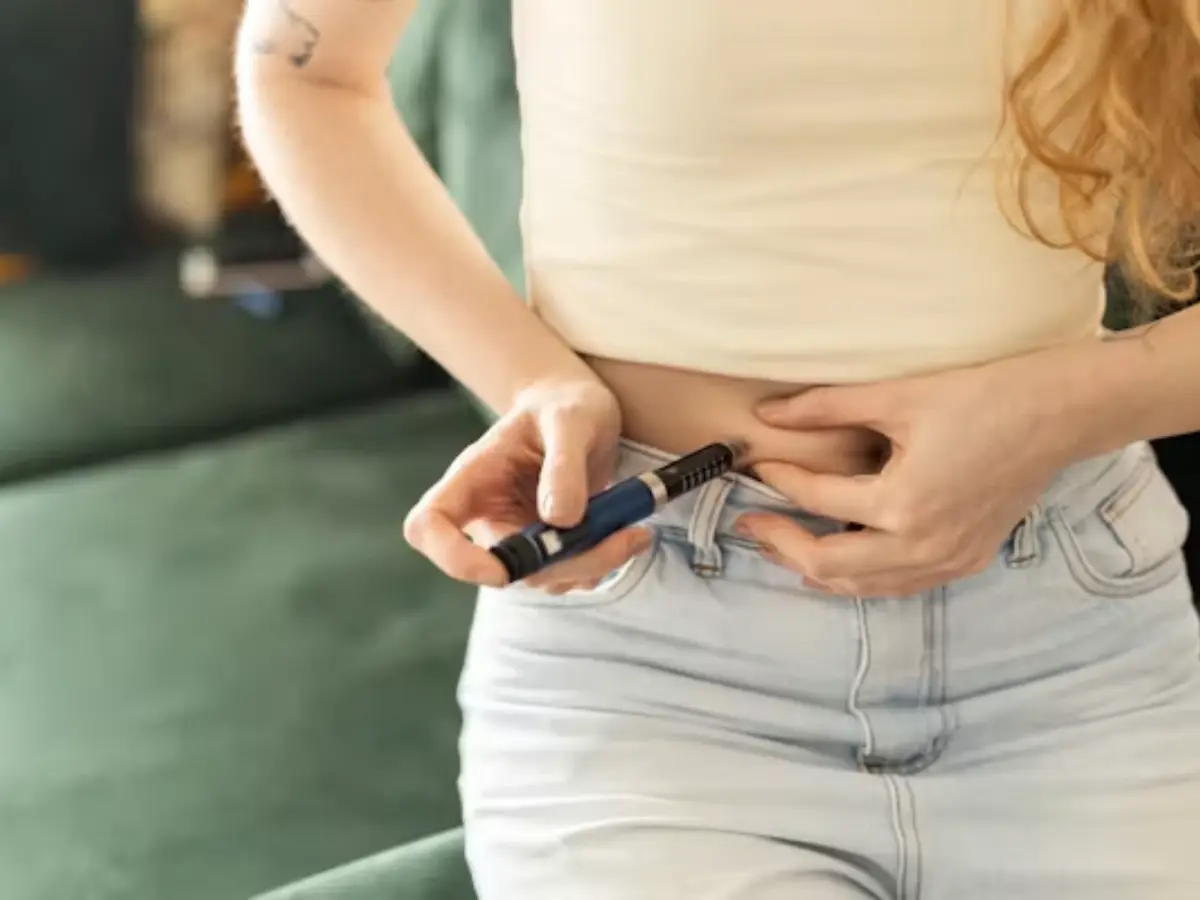)
Side effects of Ozempic Photograph: (Unsplash)
People who have had medullary thyroid carcinoma themselves or have a family history of it, or are MEN2 patients need a particular level of attention. Pancreatitis is one of the documented symptoms and even so it is a rarity, but when symptoms of abdominal pain persist, patients must seek medical evaluation. Gallstones and gallbladder inflammation are known side effects, partly because rapid weight loss itself can promote gallstone formation. Semaglutide typically will not damage the kidneys directly, but severe vomiting or diarrhea and dehydration can indirectly lead to acute kidney failure. Nausea, vomiting, constipation, and diarrhea are the most frequent side effects. These drugs should be used under supervision, with careful patient selection, slowly increased doses and ongoing monitoring. Self-treatment is not acceptable.
There is also one important group for whom semaglutide requires particular caution. Dr Aggarwal is clear about the concern surrounding medullary thyroid cancer.
“A person with a personal or family history of Medullary Thyroid Carcinoma should avoid it.”
The celebrity effect
Celebrities, influencers and social-media users have made GLP-1 drugs highly visible, often alongside dramatic weight-loss transformations. But a photograph rarely tells the full story.
“My biggest concern is the transformation of a powerful prescription medicine into a social-media lifestyle product. Online, people view striking before-and-after photos, yet rarely get to see or understand the actual medical workup that was done before choosing a specific treatment," Dr Narendra said. "It would reveal a great deal about the patient's condition such as diabetes status BMI, medications, gallbladder and pancreatic history, nutritional status, pregnancy plans and possible contraindications. So it looks and feels like all people can take the same drug in the same dosage and have the same result which is the case. At the same time, there is also a big worry about consumers getting medicines from unverified shops or even the Internet, then taking the wrong quantity of the medicine or speeding up the treatment because they desire a faster decrease in weight. We should not, however, swing to the opposite extreme and label GLP-1 medications as inherently dangerous. The real issue is medical supervision. These are pharmacological therapies that require proper indication, dose titration, monitoring and a long-term plan—not quick fixes dictated by social-media trends.”
Not a one-time solution
Another misconception is that a person can take Ozempic for a few months and then simply stop. "It should be understood that GLP-1 medicines were not designed to be a short-term method of weight loss, and that for patients who qualify, weight management may require prolonged use, in conjunction with healthy eating, daily exercise and careful monitoring with a physician. Losing a few kilograms, only to subsequently regain the weight after stopping the medicine and not addressing eating behaviours and lifestyle habits, is not uncommon,” says Dr Tandon.
As per Dr Aggarwal, "There has certainly been a surge of interest in these medicines, and social media and celebrity endorsements have contributed to their visibility. It is a weight loss solution for those who are candidates for this treatment based on defined indicators and metabolic conditions. They can be an effective component of obesity management for appropriately selected patients, but they work best as part of a broader approach involving dietary and lifestyle modifications."
Since obesity is a chronic condition, treatment may need to be long-term, and stopping medication can be followed by weight regain. With multiple treatment options now available, some patients may also consider bariatric surgery when appropriate, particularly if significant weight regain occurs or medical goals are not achieved with other approaches.

