World Organ Donation Day 2023: Checking 1 box can save 7 lives after our demise; here's how

CRPF soldier organ donation
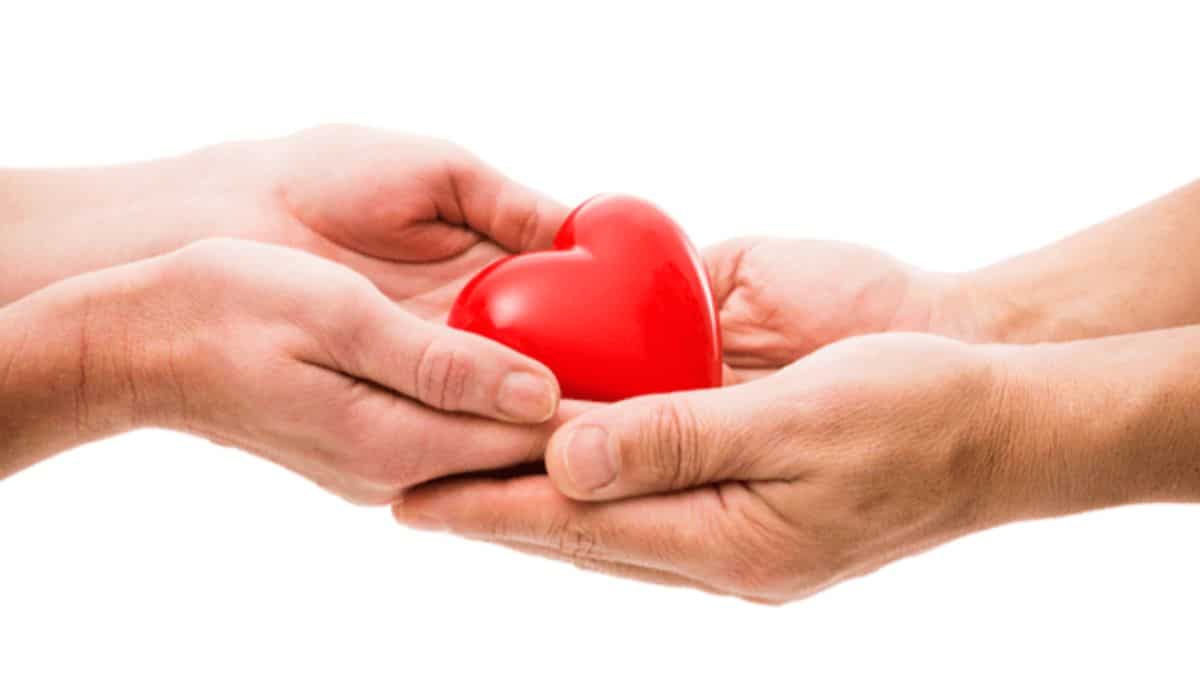
By registering as an organ donor or communicating your wish to donate your organs after death, you can potentially save up to seven lives by providing vital organs like the heart, liver, both kidneys, lungs, pancreas, and small intestine to those in need of transplants. Organ donation is a generous and impactful way to leave a lasting legacy and help others even after passing away.
When we talk about pledging your organs for donation or about organ donation after death, we are talking about Deceased Organ Donation. This is an organ donation from a person who has been declared brain stem dead by a team of authorised doctors at a hospital. A person is said to be brain stem dead when there is an irreversible loss of consciousness, absence of brain stem reflexes and irreversible loss of the capacity to breathe.
A lot of people think that whenever and however they die, their organs can be donated. That is not true. In India, organ donation after death is only possible in the case of brain stem death. Donation after cardiac death is common in the West, but in India, it is rare for donations to take place after cardiac death.

Although it is possible for organs such as the liver and the kidney to be easily donated from a living donor to a recipient, we should work towards an environment where everyone donates their organs after their deaths (if they can), so no living person should have to donate an organ to another.
A brain stem death or brain death results from a severe irreversible injury to the brain or haemorrhage which causes all the brain activity to stop. All areas of the brain are damaged and no longer function, due to which a person cannot sustain his/her own life, but vital body functions may be maintained by an artificial support system. This maintains circulation to vital organs long enough to facilitate organ donation. Patients classified as brain stem dead can have their organs surgically removed for organ donation.
A brain-dead person has absolutely no chance of recovering. Brain death is irreversible. Once brain stem death or brain death has been declared, the person is considered dead, but their organs are still alive through artificial means. This means that if a person dies at home or anywhere else, and their heart stops beating, they cannot donate their vital organs, because the organs of a person who has died a cardiac death will die within minutes of the heart-stopping. Therefore, the only time you can donate your vital organs is if you are in a hospital and have been declared brain dead.
&imwidth=180&imheight=135&format=webp&quality=medium)
'Hell of a beautiful a**': Trump compliments Nicki Minaj as rapper joins him in Michigan rally
&imwidth=180&imheight=135&format=webp&quality=medium)
Telangana unveils AI avatar of IT minister D Sridhar Babu at Hyderabad DevFest 2026
&imwidth=180&imheight=135&format=webp&quality=medium)
Who is Eyal Zamir, Israeli army chief, who reportedly clashed with Netanyahu over Iran?
&imwidth=180&imheight=135&format=webp&quality=medium)
US Midterms: Trump targets Norway over Nobel Peace Prize snub, likens Abdul El-Sayed to 9/11 hijackers
&imwidth=180&imheight=135&format=webp&quality=medium)
Fire breaks out at Delhi’s North Block, thick black smoke seen | VIDEO
&im=FitAndFill=(700,400)&imwidth=180&imheight=135&format=webp&quality=medium)
Armoured vehicles vs main battle tanks: What is the real difference?
&imwidth=180&imheight=135&format=webp&quality=medium)
Pahalgam, Gulmarg record season’s first sub-zero temperatures as winter chill intensifies in Kashmir
&imwidth=180&imheight=135&format=webp&quality=medium)
IND vs NZ: Tilak Varma sets world record with most T20I catches in a year
&imwidth=180&imheight=135&format=webp&quality=medium)
FIR filed against opposition MPs for ‘trespassing’ amid Jamia Millia students’ protest
&imwidth=180&imheight=135&format=webp&quality=medium)
WATCH | Virat Kohli returns to training ahead of New Zealand ODI series
&imwidth=180&imheight=135&format=webp&quality=medium)
Can Putin cheat death? All about his daughter’s billion-dollar quest for immortality
&im=FitAndFill=(700,400)&imwidth=180&imheight=135&format=webp&quality=medium)
How do army night-vision systems see in almost complete darkness?
&imwidth=180&imheight=135&format=webp&quality=medium)
Daler Mehndi controversy: Mika Singh’s team confirms Subodh Uniyal’s apology
&imwidth=180&imheight=135&format=webp&quality=medium)
Netanyahu warns Israelis of ‘existential threat’ from Iran, posts AI image of nuclear strike
&imwidth=180&imheight=135&format=webp&quality=medium)
Brazil re-elects factory worker Lula for fourth term; Indian PM Modi congratulates 'dear friend'
&imwidth=180&imheight=135&format=webp&quality=medium)
Pakistan airline PIA unveils new crew uniforms, faces online criticism
&imwidth=180&imheight=135&format=webp&quality=medium)
‘That is a miss’: Ravi Ashwin questions Sooryavanshi’s demotion to No. 3 in 2nd T20I vs NZ
&im=FitAndFill=(700,400)&imwidth=180&imheight=135&format=webp&quality=medium)
Why does this fighter jet have a golden window that looks like alien technology?
&im=FitAndFill=(700,400)&imwidth=180&imheight=135&format=webp&quality=medium)
New OTT releases this week (October 26-November 1, 2026): Baththa, Akka, The One About Matthew Perry- 7 titles coming on Netflix, Prime Video and more
&imwidth=180&imheight=135&format=webp&quality=medium)
Elon Musk’s Grok releases first AI-generated Odyssey episode, months after promising ‘historically accurate’ full-length film
&imwidth=180&imheight=135&format=webp&quality=medium)
'Already tired of his 9-to-5': Baby born with a moustache becomes internet sensation, video goes viral | Watch
&imwidth=180&imheight=135&format=webp&quality=medium)
Rahul Gandhi’s convoy collides with ambulance on UP expressway | VIDEO
&imwidth=180&imheight=135&format=webp&quality=medium)
Serbia’s student-led movement defeats Vucic’s party after 14 years in power: Why it matters
&imwidth=180&imheight=135&format=webp&quality=medium)
'I promised Gautam & Kotak Sir that...': Tilak Varma opens up on match-winning mindset against NZ
&imwidth=180&imheight=135&format=webp&quality=medium)
‘Saddam Hussein opened a cheesecake factory’: Obama mocks Trump’s White House renovations; defends Abdul El-Sayed
&im=FitAndFill=(700,400)&imwidth=180&imheight=135&format=webp&quality=medium)
Why do some fighter jets have two engines while others use one?
&imwidth=180&imheight=135&format=webp&quality=medium)
Formula 1: Mercedes' Kimi Antonelli one race and ninth spot finish away from title after US Grand Prix win
&imwidth=180&imheight=135&format=webp&quality=medium)
Delhi's new entry rules for vehicles begin November 1. Here's all you need to know about the ban
&imwidth=180&imheight=135&format=webp&quality=medium)
'Clear overkill': Putin rejects claims Russia is behind mass protests in Europe
&imwidth=180&imheight=135&format=webp&quality=medium)
Clayface tops North American box office, Elizabeth Holmes documentary follows close behind
&imwidth=180&imheight=135&format=webp&quality=medium)
Nagpur man fails to pay rent, allegedly prints fake Rs 500 notes worth Rs 37 lakh
&imwidth=180&imheight=135&format=webp&quality=medium)
Why Europe’s protests are about more than austerity and rising costs
&imwidth=180&imheight=135&format=webp&quality=medium)
Donald Trump targets Bill Maher in lengthy post after White House dinner, says ‘Don’t call anymore’
In case of cardiac death, it is possible to donate your corneas and tissues such as bones, skin, veins, blood stem cells, blood and platelets, tendons, ligaments, heart valves, cartilage and even your body.
While the incidence of brain death is obviously less common than cardiac death, it is important to remember that organ donations will take place only if everyone is aware of when and how they can donate organs.
A deceased organ donor is kept on a ventilator after she/he has been declared brain-dead. They will remain on the ventilator until necessary approvals are taken and the organs can be retrieved. A brain stem dead person’s organ may stay alive for a period of time that may range from a few days to a few weeks. The longer it takes to retrieve the organs, the more they will deteriorate inside the body. Therefore, the entire process ofcounselling the family, taking permissions, etc., should be quickly taken care of. For this to happen, families must make adecision soon after the brain death has been declared.
Once the organs have been retrieved, they cannot be kept outside the body for very long and need to be transplanted fast. Within the stipulated time period, they should be implanted in the recipient for proper functioning these are -
For heart – 4-6 hours, lungs – 6-8 hours, small intestine – 6-8 hours,liver and pancreas – 8-12 hours, kidneys – 24-30 hours.
The family of the donor will not receive anything, and the recipient is not charged for the organs. The recipients however will have to pay the costs of transplantation to the hospital where they are being operated. After the donor family gives consent for organ donation, all costs relating to the donor are borne by the hospital.
Unfortunately, mostly due to unawareness and prejudices, there is a huge shortage of organs that are needed for transplants. It has been seen in umpteen situations that relatives are hesitant and unwilling to donate the organs of their loved ones who have been declared brain dead.
Normally the transplant coordinator will approach the relatives with information about organ donation and explain that even in their time of loss, they can help another person to live. It is tough for the relatives at this point to come to a decision especially if they are not familiar with the concept of organ donation. This is the main reason why it is important for all of us to know about organ donation.
It is estimated that the total number of brain stem deaths due to accidents in India is nearly 150 thousand annually. Other causes of brain stem death would potentially add many more numbers. However, our organ donation rate is 0.86 per million population which is the lowest in the world, compared to countries like the USA, where the rate is 31.96 per million and in Spain, 46.9 per million.
The total number of deceased donors in India in 2017 was only 905. There is a need for approximately 5 lakh organs annually. Barely 2-3 per cent of the demand is met, and many people die of organ failure every year across India.
(Inputs byDr Rahul Kendre, Lung transplant Physician and Interventional Pulmonologist, DPU Private Super Specialty Hospital, Pimpri, Pune)
WATCH WION LIVE HERE
You can now write for wionews.com and be a part of the community. Share your stories and opinions with us here.