Exploring the role of genetics in kidney diseases: Unraveling the complexities of inherited disorders

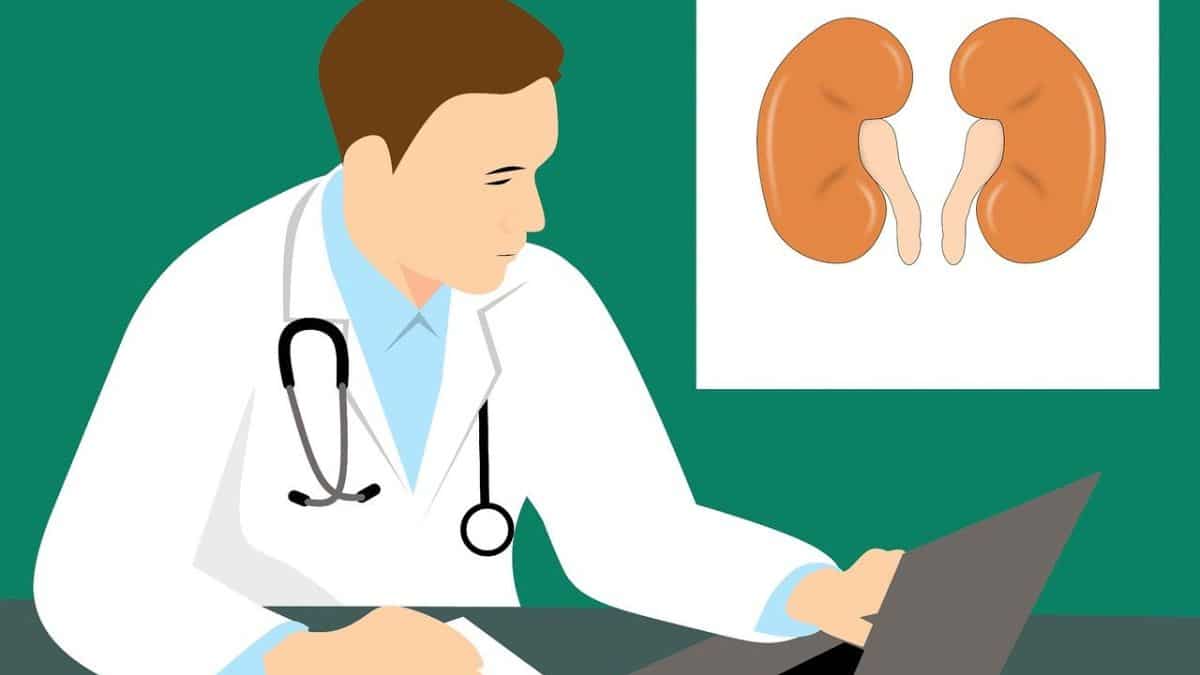
Role of Genetics in Kidney Diseases
In spite of being individually rare, the hundreds of hereditary causes of chronic kidney disease presently known play a sizable role in both adult and pediatric disorders. The diagnosis of genetic kidney illnesses has been mostly based on conventional genetic methods, which significantly relied on the identification of big families with numerous affected members. We can analyse uncommon variants in sizable samples of unrelated individuals, thanks to the growing use of massively parallel sequencing and breakthroughs in genotyping imputation. This enables personalised patient care and major research advancements.
The term "chronic kidney disease" (CKD) refers to a broad category of illnesses marked by abnormalities in kidney structure or function. Kidney disease is a major cause of illness and mortality worldwide, with an estimated prevalence of 9 per cent. The broad-sense heritability estimates for CKD range from 19 per cent to 54 per cent depending on the biomarker used, which is similar to other common diseases.
Numerous uncommon conditions with a known genetic origin fall under the general phrase "genetic kidney disease." Over 600 monogenic diseases with urologic and renal characteristics have been discovered so far.

Fewer than 1 in 2,000 people have almost all of these inherited disorders, yet taken together, they account for the fifth most prevalent cause of renal failure. A significant portion of cases are caused by a small number of monogenic disorders, but the majority are caused by numerous uncommon disorders.
The methods by which inherited disorders are passed down through families:
Autosomal dominant inheritance: There is a 50 per cent probability that each child of a person with an autosomal dominant condition will inherit the changed gene. Additionally, there is a 50 per cent possibility that the changed gene will not be passed on to offspring.In such situations, there are chances that the child's parents are unaffected, but the child might pass the illness on to his or her own offspring.
&imwidth=180&imheight=135&format=webp&quality=medium)
'Hell of a beautiful a**': Trump compliments Nicki Minaj as rapper joins him in Michigan rally
&imwidth=180&imheight=135&format=webp&quality=medium)
'Hire the robot, fire the human': Bill Gates's words hint at a bleak future
&imwidth=180&imheight=135&format=webp&quality=medium)
Telangana unveils AI avatar of IT minister D Sridhar Babu at Hyderabad DevFest 2026
&imwidth=180&imheight=135&format=webp&quality=medium)
Who is Eyal Zamir, Israeli army chief, who reportedly clashed with Netanyahu over Iran?
&imwidth=180&imheight=135&format=webp&quality=medium)
US Midterms: Trump targets Norway over Nobel Peace Prize snub, likens Abdul El-Sayed to 9/11 hijackers
&imwidth=180&imheight=135&format=webp&quality=medium)
Fire breaks out at Delhi’s North Block, thick black smoke seen | VIDEO
&im=FitAndFill=(700,400)&imwidth=180&imheight=135&format=webp&quality=medium)
Armoured vehicles vs main battle tanks: What is the real difference?
&imwidth=180&imheight=135&format=webp&quality=medium)
Pahalgam, Gulmarg record season’s first sub-zero temperatures as winter chill intensifies in Kashmir
&imwidth=180&imheight=135&format=webp&quality=medium)
IND vs NZ: Tilak Varma sets world record with most T20I catches in a year
&imwidth=180&imheight=135&format=webp&quality=medium)
FIR filed against opposition MPs for ‘trespassing’ amid Jamia Millia students’ protest
&imwidth=180&imheight=135&format=webp&quality=medium)
WATCH | Virat Kohli returns to training ahead of New Zealand ODI series
&imwidth=180&imheight=135&format=webp&quality=medium)
Can Putin cheat death? All about his daughter’s billion-dollar quest for immortality
&im=FitAndFill=(700,400)&imwidth=180&imheight=135&format=webp&quality=medium)
How do army night-vision systems see in almost complete darkness?
&imwidth=180&imheight=135&format=webp&quality=medium)
Daler Mehndi controversy: Mika Singh’s team confirms Subodh Uniyal’s apology
&imwidth=180&imheight=135&format=webp&quality=medium)
Netanyahu warns Israelis of ‘existential threat’ from Iran, posts AI image of nuclear strike
&imwidth=180&imheight=135&format=webp&quality=medium)
Brazil re-elects factory worker Lula for fourth term; Indian PM Modi congratulates 'dear friend'
&imwidth=180&imheight=135&format=webp&quality=medium)
Pakistan airline PIA unveils new crew uniforms, faces online criticism
&imwidth=180&imheight=135&format=webp&quality=medium)
‘That is a miss’: Ravi Ashwin questions Sooryavanshi’s demotion to No. 3 in 2nd T20I vs NZ
&im=FitAndFill=(700,400)&imwidth=180&imheight=135&format=webp&quality=medium)
Why does this fighter jet have a golden window that looks like alien technology?
&im=FitAndFill=(700,400)&imwidth=180&imheight=135&format=webp&quality=medium)
New OTT releases this week (October 26-November 1, 2026): Baththa, Akka, The One About Matthew Perry- 7 titles coming on Netflix, Prime Video and more
&imwidth=180&imheight=135&format=webp&quality=medium)
Elon Musk’s Grok releases first AI-generated Odyssey episode, months after promising ‘historically accurate’ full-length film
&imwidth=180&imheight=135&format=webp&quality=medium)
'Already tired of his 9-to-5': Baby born with a moustache becomes internet sensation, video goes viral | Watch
&imwidth=180&imheight=135&format=webp&quality=medium)
Rahul Gandhi’s convoy collides with ambulance on UP expressway | VIDEO
&imwidth=180&imheight=135&format=webp&quality=medium)
Serbia’s student-led movement defeats Vucic’s party after 14 years in power: Why it matters
&imwidth=180&imheight=135&format=webp&quality=medium)
'I promised Gautam & Kotak Sir that...': Tilak Varma opens up on match-winning mindset against NZ
&imwidth=180&imheight=135&format=webp&quality=medium)
‘Saddam Hussein opened a cheesecake factory’: Obama mocks Trump’s White House renovations; defends Abdul El-Sayed
&im=FitAndFill=(700,400)&imwidth=180&imheight=135&format=webp&quality=medium)
Why do some fighter jets have two engines while others use one?
&imwidth=180&imheight=135&format=webp&quality=medium)
Formula 1: Mercedes' Kimi Antonelli one race and ninth spot finish away from title after US Grand Prix win
&imwidth=180&imheight=135&format=webp&quality=medium)
Delhi's new entry rules for vehicles begin November 1. Here's all you need to know about the ban
&imwidth=180&imheight=135&format=webp&quality=medium)
'Clear overkill': Putin rejects claims Russia is behind mass protests in Europe
&imwidth=180&imheight=135&format=webp&quality=medium)
Clayface tops North American box office, Elizabeth Holmes documentary follows close behind
&imwidth=180&imheight=135&format=webp&quality=medium)
Nagpur man fails to pay rent, allegedly prints fake Rs 500 notes worth Rs 37 lakh
&imwidth=180&imheight=135&format=webp&quality=medium)
Donald Trump targets Bill Maher in lengthy post after White House dinner, says ‘Don’t call anymore’
Autosomal recessive inheritance: Two carriers, or unaffected individuals who each have one changed copy of the gene for an autosomal recessive disorder, have a 25 per cent chance of giving birth to a child who is affected by the disorder. With every pregnancy, there is a 50 per cent chance of producing an unaffected child who is a carrier of the disorder, and a 25 per cent chance that the child won't have the disorder and won't be a carrier. If just one parent carries the mutated gene and the other parent doesn't, then none of their offspring will be affected, and there is a 50 per cent chance that each pregnancy will result in a carrier who is not impacted.
Kidney diseases that are inherited
There are more than 60 recognised inherited kidney diseases, ranging from very rare illnesses to prevalent conditions. Some kidney disorders that are inherited include:
1. Autosomal dominant polycystic kidney disease (ADPKD) is characterised by the development of many cysts in the kidneys. The degree of symptoms can vary. In most cases, symptoms appear between the ages of 30 and 40. Since ADPKD is a progressive condition, its signs and symptoms frequently worsen over time.
2. Alport disease is a kidney-damaging hereditary disorder that runs in families. Genes encoding collagen protein undergo alterations (mutations), which result in Alport syndrome. To keep the kidneys operating normally, collagen, an essential protein, is required. Due to damaged microscopic blood arteries in the kidney's glomeruli, people with Alport syndrome cannot filter the body's waste products and extra fluid. Due to mutations in the collagen genes, many persons with Alport syndrome also suffer from hearing issues and ocular anomalies.
3. Cystinosis is an inherited condition that is autosomal recessive and is brought on by receiving a defective copy of the cystinosin gene from each parent. An accumulation of cystine can result in crystal formation in persons with cystinosis. Cystinosis can have major hazardous effects on multiple organs such as kidneys as well as the eyes, muscles, brain, heart, white blood cells, thyroid, and pancreas.
You can opt for a form of medical examination known as genetic testing which looks for changes or differences in genes, chromosomes, or proteins. The findings of a genetic test can either confirm or disprove a suspected genetic problem, or they can be used to estimate a person's risk of contracting or passing on a genetic disorder.
(Authored byDr Sujit Chatterjee, CEO at Dr. LH Hiranandani Hospital, Powai, Mumbai)
WATCH WION LIVE HERE
You can now write for wionews.com and be a part of the community. Share your stories and opinions with us here.