

&imwidth=800&imheight=600&format=webp&quality=medium "Heart Lamp Book Review | Banu Mushtaq and Deepa Bhasthi deliver a fiery critique of patriarchy")
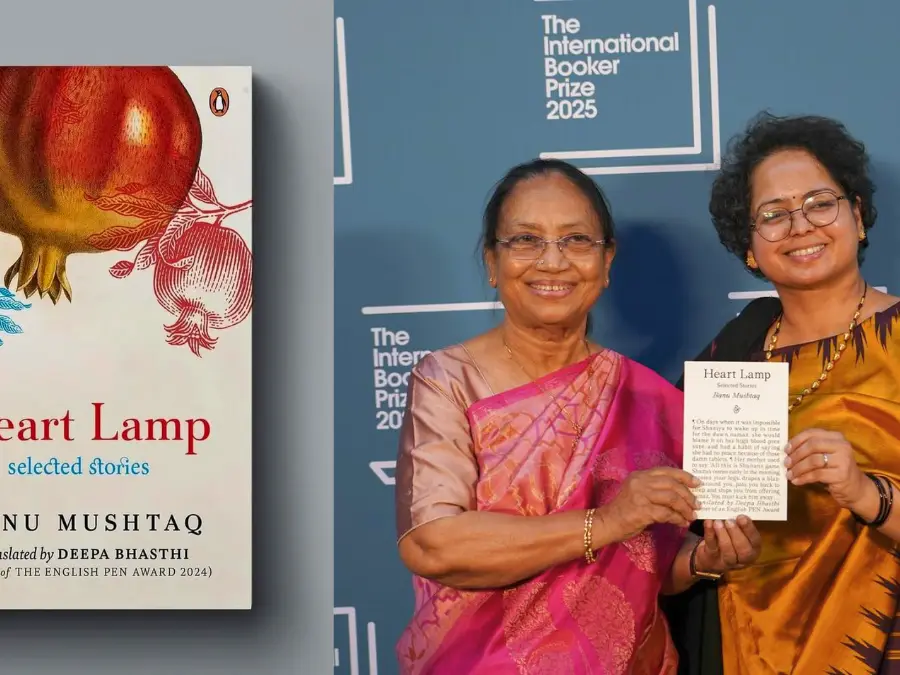
The English translation of a Kannada short-story collection –Hasina Mattu Itara Kathegalu —Heart Lamp, by Banu Mushtaq and translated by Deepa Bhasthi, has won the International Booker Prize for 2025, sparking global interest in Indian literature.
Heart Lampis a collection of twelve short stories detailing the lives of ordinary Muslim women living in Southern India. The stories tackle complex issues of inheritance, female sexual autonomy, divorce, marriage, love and desire in a country that is becoming increasingly restrictive.
Mushtaq, a lawyer and activist by profession, is known in the literary world for her sharp criticism of social structures and championing of social causes. The stories aptly reflect this struggle for a better world.
Here’s why the book is an absolute must-read:
Women written by women
The stories inHeart Lamp, like‘High Heeled Shoe’, ‘Stone-Slabs for Shaista Mahal” and‘Red Lungi, among others, have fully formed female characters and are a testament to the magic of women writing women, as they are devoid of any form of victimisation or demonisation of the gender. The only true villain in the book is patriarchy.
Trending Stories
&imwidth=180&imheight=135&format=webp&quality=medium)
Khawaja Asif flags ‘bureaucratic exodus’ from Pak amid Munir’s growing clout, loss of faith in govt
&imwidth=180&imheight=135&format=webp&quality=medium)
‘I caution the president...’: Trump’s ex-press secretary warns after Zacharia’s exit
&imwidth=180&imheight=135&format=webp&quality=medium)
Hunger makes alcohol more appealing, study finds
&imwidth=180&imheight=135&format=webp&quality=medium)
Trump says end to Ukraine war is 'closer than ever'; Witkoff's Putin remarks spark criticism
&imwidth=180&imheight=135&format=webp&quality=medium)
'You are a dummy, you are a stupid person': Trump loses temper with CNN, ABC reporters after questions about Russia sanctions
&imwidth=180&imheight=135&format=webp&quality=medium)
Russia to send first tanker carrying 40,000 tonnes diesel to US after Trump-Putin deal – What we know
&im=FitAndFill=(700,400)&imwidth=180&imheight=135&format=webp&quality=medium)
What is the real meaning behind Pete Hegseth's tattoos?
&imwidth=180&imheight=135&format=webp&quality=medium)
Trump waves at 'empty space' in viral video,' critics claim 'mental decline getting worse' | WATCH
&imwidth=180&imheight=135&format=webp&quality=medium)
‘Her heart and mind in good shape’: What Helen Haines’ husband said after MP loses both legs in ‘targeted’ attack
&imwidth=180&imheight=135&format=webp&quality=medium)
Priyanka Chopra celebrates Dussehra 2026 with Nick Jonas and daughter Malti Marie | See pics
&imwidth=180&imheight=135&format=webp&quality=medium)
Explosions heard in Iran’s Hormozgan province near Strait of Hormuz: State media
&imwidth=180&imheight=135&format=webp&quality=medium)
Feds obtain DNA evidence that could prove Ilhan Omar married her brother: Report
&imwidth=180&imheight=135&format=webp&quality=medium)
US orders embassy staff, families to leave Saudi Arabia amid Houthi attacks: Report
&imwidth=180&imheight=135&format=webp&quality=medium)
US midterms 2026: What polls and prediction markets indicate about Congress
&imwidth=180&imheight=135&format=webp&quality=medium)
Kim Jong Un death rumors explode | China accused of secretly sending troops to Pyongyang
&imwidth=180&imheight=135&format=webp&quality=medium)
Man marries off wife of 17 years to her lover in Uttar Pradesh
&imwidth=180&imheight=135&format=webp&quality=medium)
Are the US and Israel preparing for another major attack on Iran? Here's what report claims
&imwidth=180&imheight=135&format=webp&quality=medium)
Israel election 2026: Three possible scenarios after October 27 polls
&imwidth=180&imheight=135&format=webp&quality=medium)
US midterms 2026: Trump's approval rating hits record low as Democrats gain ground
&imwidth=180&imheight=135&format=webp&quality=medium)
WATCH | Mysterious haze grips Ohio city as toxic chemical leak forces mass evacuation – What is happening?
&imwidth=180&imheight=135&format=webp&quality=medium)
Meta slapped with $25 billion fine in New Mexico over Facebook data practices, company plans appeal
&imwidth=180&imheight=135&format=webp&quality=medium)
Finance influencer dies by suicide in Chennai; father accuses tech CEO, who denies charge
&imwidth=180&imheight=135&format=webp&quality=medium)
Ramayana promotion takes a funny turn after Ranbir Kapoor's verbal blunder, leaves fans in splits | Watch
&imwidth=180&imheight=135&format=webp&quality=medium)
Macron slams Trump and other foreign leaders' 'stupid comments' on France riots as fresh protests loom
&imwidth=180&imheight=135&format=webp&quality=medium)
US Midterms 2026: Sugar Land, Plano, Irving: How Texas’s Indian-American belt could shape poll outcomes
&imwidth=180&imheight=135&format=webp&quality=medium)
Kolkata airport: CISF detects ₹1.13 crore in US dollars hidden in bags of 2 Bangkok-bound passengers
&imwidth=180&imheight=135&format=webp&quality=medium)
Shock, anger and despair in Bangladesh over the executions
&imwidth=180&imheight=135&format=webp&quality=medium)
US Supreme Court blocks Trump administration's ban on gender-affirming care for Transgender prisoners
&imwidth=180&imheight=135&format=webp&quality=medium)
'I’m not saying it’s extraterrestrial' - 'Mutant' creature forces Mexicans to flee their homes
&im=FitAndFill=(700,400)&imwidth=180&imheight=135&format=webp&quality=medium)
New OTT releases this week (October 19-25, 2026): Gajab Raat to Chaar Yaar-8 titles to watch during Dussehra week on Netflix, Prime Video and more
&imwidth=180&imheight=135&format=webp&quality=medium)
Cattle-feed bran in biscuits, detergent in milk: FSSAI acts against 3 companies
&imwidth=180&imheight=135&format=webp&quality=medium)
Why websites around the world are suddenly going offline? What you need to know about PHP
&imwidth=180&imheight=135&format=webp&quality=medium)
India to develop first indigenous aviation gun for Prachand, Rudra attack helicopters, SSS Defence CEO confirms
&imwidth=180&imheight=135&format=webp&quality=medium)
US Midterms 2026 and money: From Bloomberg to Musk, corporate donors, super PACs and lobbies, it's all about the cash
&imwidth=180&imheight=135&format=webp&quality=medium)
Rafale Marine fighter begins flight trials in Goa ahead of Indian Navy induction
&imwidth=180&imheight=135&format=webp&quality=medium)
US midterms: Democrats sue Trump administration over alleged 'threats and intimidation' ahead of election, Musk issues warning to Dems
&imwidth=180&imheight=135&format=webp&quality=medium)
James Bond auction: Own Daniel Craig's Skyfall suit, Ana de Armas' dress and 300+ rare 007 collectibles
Sharp critique of male privilege
Mushtaq, in her story‘Black Cobras’, delivers witty and sarcastic criticism of male privilege and the different scale on which men and women are judged.
In a rather moving moment, Aashraf, a woman abandoned by her husband for not giving birth to a baby boy, laments that“A man is everybody’s best friend. His past does not rise up to dance in public. The present doesn’t touch him. The future doesn’t move him, nor is it a mystery. He does not have to remain shyly in the shadows. He does not have to say who he belongs to. He does not need to seek forgiveness, not ever at all, because nothing he does is a mistake.”
The skin-deep frustration felt in these words is emblematic of the privilege that many men enjoy, often at the cost of their wives, mothers, sisters and daughters.
Banu Mushtaq has aptly captured male hubris as well. Aashraf’s husband, angry with her demands for equal rights for her dying baby, says,“If you who squat to pee have this much arrogance, how much arrogance should I, who stand to piss, have?”
Unique translation
Books published in non-Western languages often lose their flavour when translated for Western audiences and especially to English. This is very noticeable in other acclaimed books likeOne Part Woman(Mathorupagan) by Perumal Murugan andTomb of Sand (Ret-Samadhi) by Geetanjali Shree.
But Heart Lamp does not suffer from this. In a refreshing take, the authors have chosen not to translate hyper-local words like the Kannada‘seragu’and the Hindi‘Muttawali’ into their bland English versions. No explanations have been offered, too, forcing the reader to go exploring to find the meaning from mere context and narrative itself. It almost feels like a rebellion of sorts by Mushtaq and Bhashti against the hegemony of the West in the literary world.
Acknowledgement of privilege
Deepa Bhasthi, in a fascinating chapter, explains her process of translation and how Mushtaq grew up with theBandaya Sahitya movement in Kannada literature and wrote to rebel against and demand accountability from a world that sees men and chooses to ignore women. Bhasthi also explains her choice of retaining certain linguistic elements from Kannada.
But most importantly, she acknowledges her own privilege as an upper-caste person belonging to a majority religion and how even literature, like all other things in the country, depends on one’s privilege, making Heart Lamp worthy of not just the Booker but also our immediate attention.
