Bayeux Tapestry arrives in London: The 1,000-year-old story that changed England

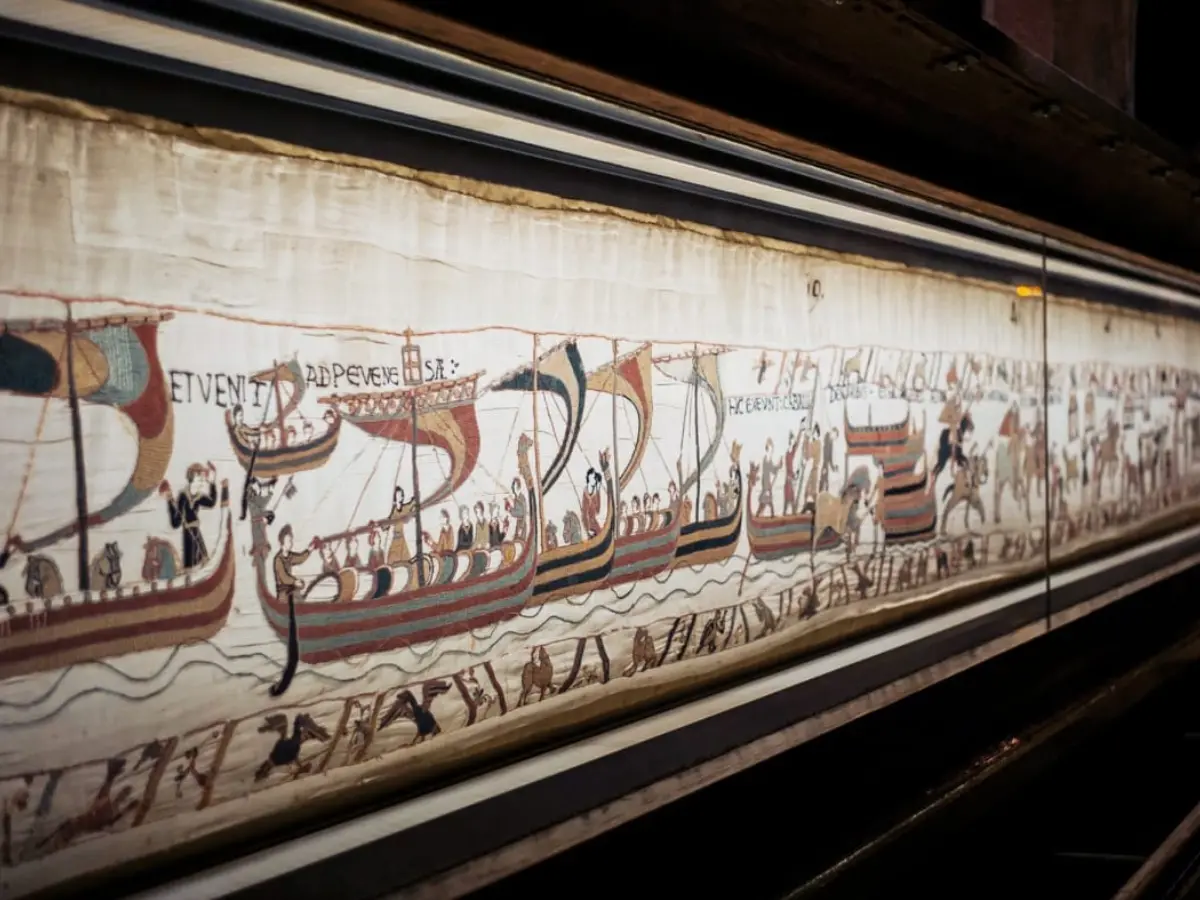&imwidth=600&imheight=450&format=webp&quality=medium "Bayeux Tapestry arrives in London: The 1,000-year-old story that changed England")
Bayeux Tapestry Photograph: (X)
The Bayeux Tapestry exhibition opened at the British Museum following years of planning and an unprecedented loan from France. Read to know more.
Have you ever imagined standing in front of a piece of linen artwork that has survived for nearly 1,000 years? The Bayeux Tapestry, an extraordinary mediaeval embroidery depicting one of the most defining moments in English history, has now arrived in London. It is now open to visitors in England; they can see the 70-metre-long artwork up close as it goes on display at the British Museum.
The Bayeux Tapestry arrives in London after nearly 1,000 years
The British Museum has reportedly opened the doors to one of its most anticipated exhibitions of the year, welcoming the Bayeux Tapestry to London on September 10.
Also Read: The Early Spring viral drink: Want a taste of Luke's osmanthus milk? Here's how to make it
Following a historic agreement with France, the 70-metre-long tapestry, depicting events leading up to the Battle of Hastings and the Norman Conquest of England in 1066, is being loaned to the British Museum from September 2026 to July 2027. For the unversed, there is no other object that is as instantly recognisable, as studied in schools and as copied by artists as the Bayeux Tapestry.
Trending Stories
)
)
)
)
)
)
)
)
)
)
)
)
)
)
)
)
)
)
&im=FitAndFill=(700,400))
)
)
)
&im=FitAndFill=(700,400))
)
&im=FitAndFill=(700,400))
&im=FitAndFill=(700,400))
)
What is the history behind the Bayeux Tapestry?
This monumental embroidery tells the dramatic story of a moment that changed England forever. No year in the country's history is more famous than 1066. Tapestry offers a vision of life in 11th-century England both before and after the Conquest, from castles, warfare and ships to clothing, food and furniture. Likely commissioned by a Norman patron and made by English embroiderers, using manuscript drawings from Canterbury, the tapestry is both a precious historical record and a
remarkable work of art.
Long kept in France, the hanging was publicly rediscovered by scholars in 1729 while being displayed annually in Bayeux Cathedral. Reportedly, in 1803, Napoleon moved it to Paris to promote support for a planned invasion of Britain. During World War II, Nazi official Heinrich Himmler ordered it brought to the Louvre, but Allied forces liberated Paris before it could be taken to Germany.
Britain reportedly had previously requested the fragile artefact for multiple royal occasions (including Queen Elizabeth II's coronation in 1953), but French authorities routinely refused due to conservation risks. President Emmanuel Macron finally approved the current loan for the exhibition running from September 2026 through July 2027 while the museum in Bayeux undergoes renovations.

