
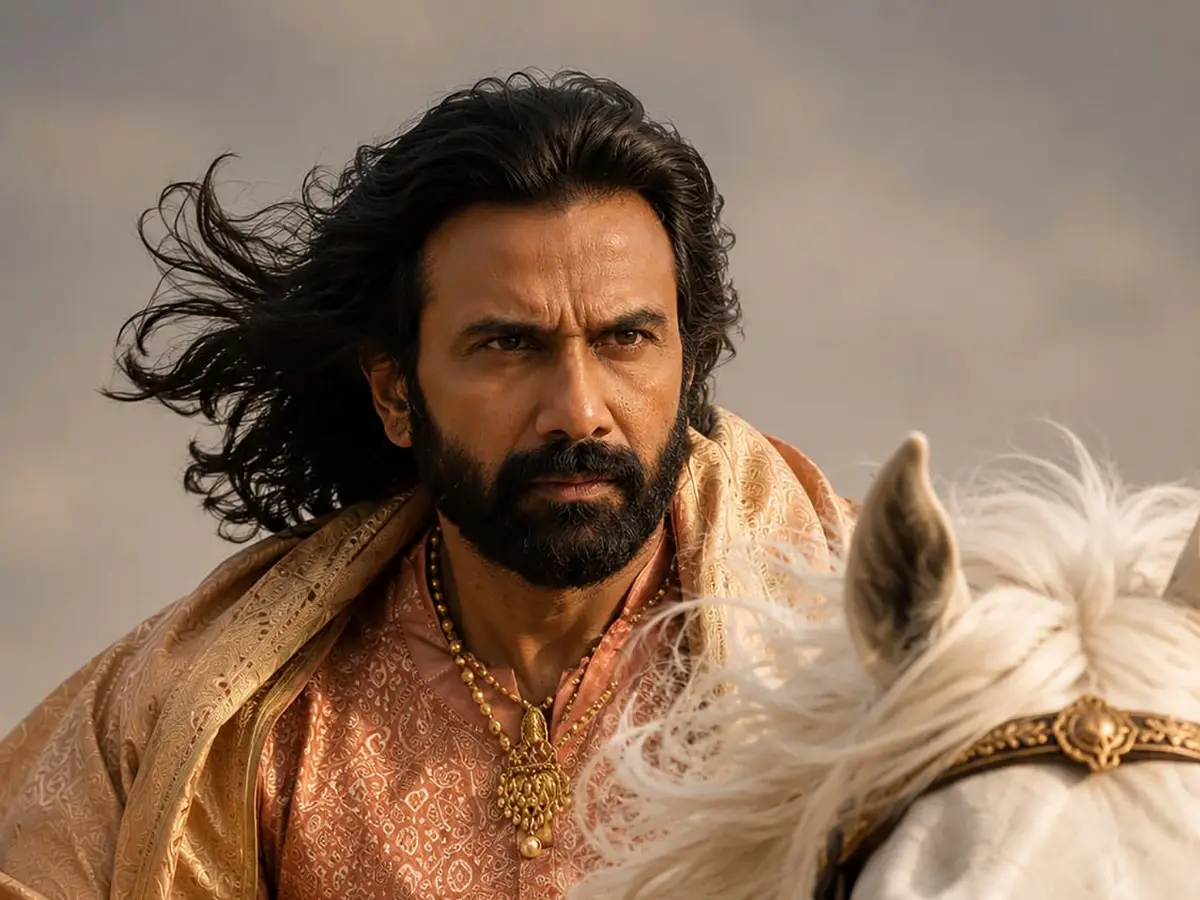
&imwidth=800&imheight=600&format=webp&quality=medium "'I've come so far without an ambition': Mohammad Ali Baig on taking Hyderabad's forgotten stories to the world")
Padma Shri awardee Mohammad Ali Baig has dedicated most of his life to theatre, preserving and embracing India's cultural heritage. He is a celebrated theatre practitioner, actor, director and film-maker, and is best known for pioneering heritage theatre productions that bring history alive in iconic locations across Hyderabad and beyond.
Now, Baig is all set to release his next film, Chaand Tara, which is based on the legendary story of Taramati from the Golconda Kingdom. The film touches upon the themes of art, devotion and cultural heritage and recently garnered international acclaim after its screening at Bharat Pavilion during the Cannes Film Festival.
WION caught up with Mohammad Ali Baig ahead of the film’s release to talk about his journey in theatre, filmmaking and why he continues to bring historical stories to the audience.

Also Read: Tumbbad was shot across four monsoons; For Tumbbad 2, the team is doing something even crazier
WION: You grew up in one of India's most celebrated theatre families. What are your earliest memories of watching your father, Qadir Ali Baig, at work?
Mohammad Ali Baig: He was my childhood hero. Absolutely handsome, charismatic, stylish, impeccably dressed—a rider, a polo player, a man with a baritone voice and perfect etiquette. I wanted to grow up like him. My childhood and adolescence were spent in that hero worship.
Trending Stories
&im=FitAndFill=(700,400))
How fast can the Sukhoi Su-30 fighter jet really fly?
)
Did China ask its people 'not to respond to aliens'? Origin of bizarre claim on social media
)
MS Dhoni-CSK Fallout? Report claims failed stake sale talks triggered rift
)
Scientists reveal the SAFEST COUNTRY when catastrophe strikes the planet
)
Serial killer on the loose in South Korea's Jeju Island? Fourth body found in three days as more than a dozen people go missing
)
2/3rd of glacier detached, collapsed: ISRO satellite images reveal what triggered Nepal floods
)
Trump once again claims without him there would be ‘no Israel right now’
)
Foreign espionage attacks against German companies surge to 37%, Bitkom report reveals
)
Blake Lively wins partial legal fee from Justin Baldoni after $8M request
)
Why is Pakistan deploying Turkish Bayraktar TB2 drones near India border?
)
'OH MY GOD! We've found other agents!': Investigators discover not one or two, almost 700 OpenAI AI agents went rogue, hacked Hugging Face
)
Lunar eclipse 2026: India timings, places to see and more. August Blood moon factsheet
)
RSS chief Mohan Bhagwat on global outreach tour
)
Both pilots killed as training aircraft crashes in Lucknow – What we know
)
16-year-old charged with preparing terror attack on kindergarten in Norway
&im=FitAndFill=(700,400))
How the S-400 protects itself from enemy attacks
)
Nepal floods: Over 165 dead, 400 missing; US, India, China, World Bank mobilise aid
)
India's multi-layered watch: The new surveillance war
)
5 doomsday planes spotted in US skies hours after CIA director's secret trip to Russia
)
9/11 mastermind Khalid Sheikh Mohammed to finally face trial in 2028, nearly 27 years after horrific attacks
)
Islamabad hospital fire: What we know about one of the biggest facility that housed Imran Khan
)
Workers run for life while filming Nepal flash flood: Scary new visuals emerge from Rasuwa
)
Russian military planes enter South Korean air defence zone amid rising tensions with North Korea: What's happening
)
Ron Weasley Is Back! Rupert Grint set to return to Harry Potter universe on Broadway
)
400-year-old 'vampire' grave in Poland reveals non-existent genetic lineage
)
Dolly Parton, global icon and queen of country music, dies at 80
)
Nepal flash floods: Kailash Mansarovar yatra affected, close to 400 pilgrims out of contact
)
'If he is dead, they're putting on a pretty good show': Trump casts fresh doubt over Mojtaba Khamenei's fate
)
Man arrested near US Capitol with guillotine in pickup truck: What happened?
&im=FitAndFill=(700,400))
Why the Su-30MKI cockpit is painted bright turquoise green
There wasn't much pressure on academics, but there was immense emphasis on culture, upbringing and etiquette. We were raised with strict Asif Jahi and Nizamian court manners. The strict decorum shaped me into a disciplined adult, a disciplined theatre maker and now, perhaps, a disciplined filmmaker.
Another important influence was growing up backstage. I spent my childhood in theatre wings and makeup rooms. I witnessed how a play evolved from a script into a production and also saw the struggles behind it—the emotional investment, the financial challenges and the sacrifices.
People often assume I got everything on a platter. I was born in a 250-year-old heritage palace spread across nearly a hundred acres, surrounded by horses, orchards and an insulated lifestyle. I had more ponies to play with than toys. But after my father's passing, the theatre exposed me to entirely different realities and people from diverse social backgrounds. The journey from a feudal upbringing to a democratic adulthood was transformative. It helped me understand life beyond privilege.
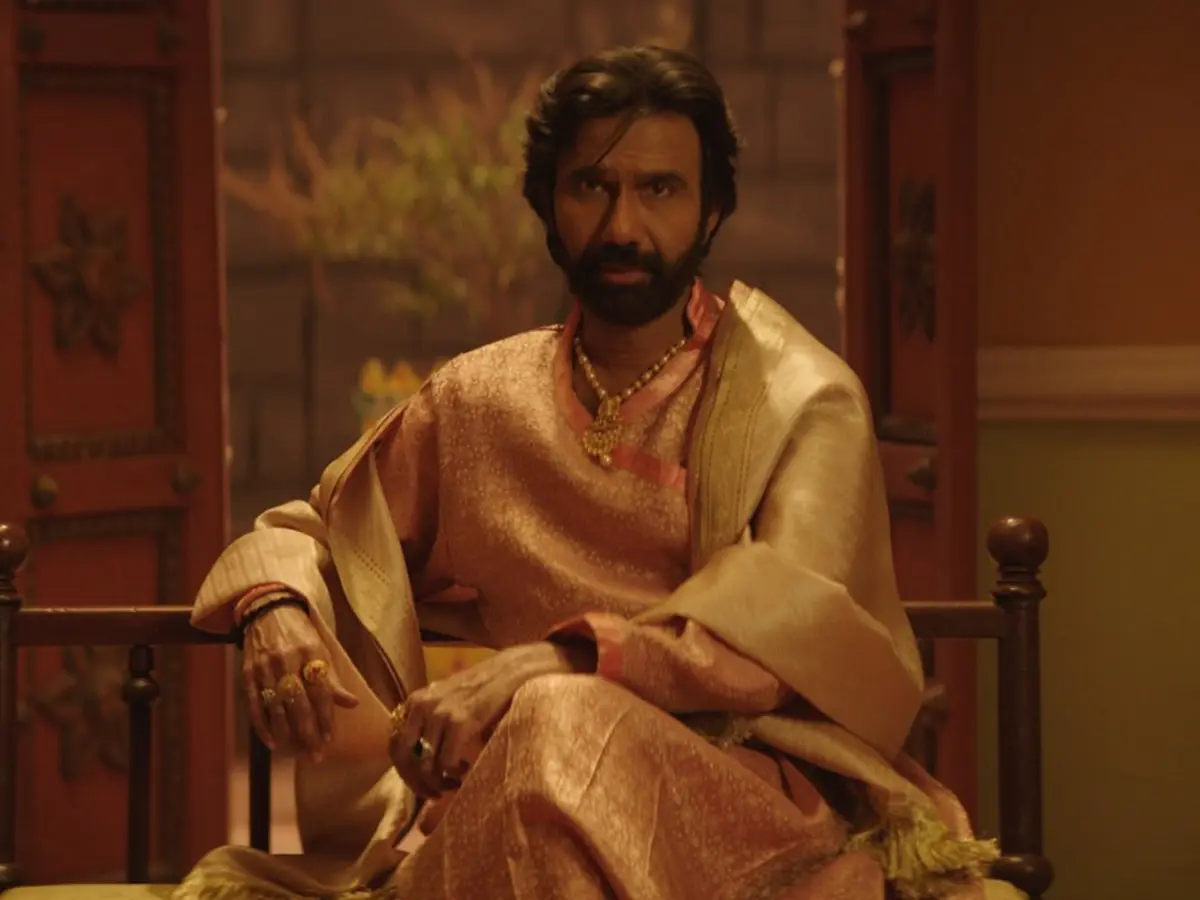)
Padma Shri awardee Mohammad Ali Baig Photograph: (Instagram)
WION: Your autobiographical play Under An Oak Tree explores living under the shadow of a towering legacy. How difficult was it to carve out your own identity?
Mohammad Ali Baig: Because of the looming legacy of being Qadir Ali Baig's son, I actually ran away from theatre. I moved into advertising, started making ad films and stayed away from Hyderabad for nearly fifteen years. I made films in seven countries that were telecast in 72 countries and won around 40 awards. Returning to the theatre later felt like coming home, and that's exactly what Under An Oak Tree explores.
The play examines the privileges, insecurities and emotional complexities of being born under such a towering legacy. It was easier to create my own identity in advertising because there were no expectations attached to me. My flair for design helped me build a career there, while my theatre upbringing gave me an advantage.
When I eventually returned to the theatre, however, the weight of that legacy was waiting for me. It still is. If I cannot measure up, then I shouldn't be doing what he did.
WION: What keeps you motivated after decades in the performing arts?
Mohammad Ali Baig: Performing arts, especially theatre, are a legacy and a responsibility.
What motivates me is paying tribute to Baba, paying tribute to the heroes of the Deccan and paying tribute to the glorious city of Hyderabad where I was born and continue to live.
The challenges of theatre motivate me. The legacy inspires and guides me. People often think I've had everything handed to me, but I had to work hard to expand my father's audience base of 350 people into an audience of nearly 1,500 today.
WION: What first drew you to the story of Taramati, and why did you feel it deserved to be retold?
Mohammad Ali Baig: Taramati is one of the most fascinating legends of Deccan history. If you look at the Taj Mahal, it was built by Emperor Shah Jahan for his queen because he could afford to do so. Charminar was built by Muhammad Quli Qutb Shah for Bhagmati. But Taramati Baradari was built by Sultan Abdullah Qutb Shah in memory of Taramati—a woman who was neither his queen, nor his mistress, nor a romantic interest.
That intrigued me when I first visited Taramati Baradari after being commissioned to create a production around the monument. I was struck by the idea that she must have been an artist of extraordinary stature for a ruler to immortalise her in a monument that still stands more than three centuries later.
She was also a woman ahead of her time. She refused to become a court singer. She declined the security and prestige of royal patronage because she believed her art was her worship and did not wish to limit it to any court or ruler.
That spirit inspired me deeply. For Chaand Tara, I fictionalised and dramatised aspects of the legend, taking cinematic liberties while exploring her relationship with Sultan Abdullah and her unwavering commitment to artistic freedom.
WION: You have spent decades preserving Hyderabad's heritage through theatre. How does cinema allow you to expand that mission?
Mohammad Ali Baig: Carrying the heritage aspect of my theatre into cinema felt like a natural progression. For over two decades, I have staged heritage productions at some of the world's most respected venues and arts festivals. Those experiences provided a strong foundation.
When it came to Chaand Tara, much of the research, understanding and artistic approach had already been developed through my theatre work. Cinema simply gave me a larger canvas to tell these stories.
WION: How different was the experience of bringing a historical narrative alive on screen compared to on stage?
Mohammad Ali Baig: For me, bringing history to the screen was actually easier. I've made around 500 advertising films around the world, and advertising teaches you that you can make anything compelling because the product itself is the hero. That experience gives you confidence in visual storytelling.
Theatre is far less forgiving. Everything happens in real time. Mistakes cannot be hidden. On stage, especially in forts and palaces where I often perform, you are constantly battling logistics, weather and technical limitations.
Cinema, on the other hand, allows for refinement. You can revisit scenes, improve them and use technology to enhance the final result. I enjoyed the process immensely and was fortunate to work with a team that trusted my vision completely. Whether it was the actors, musicians, cinematographer, editor or technical crew, everyone believed in the project. That trust allowed us to create what I believe is a beautiful piece of cinema.
WION: Is there a dream project that you still haven't accomplished?
Mohammad Ali Baig: I'm not sure I've ever fully understood what a dream is. I've come this far without a fixed ambition. I never wanted to be on stage, never wanted to be on screen, never planned to be on OTT platforms. I consider myself an accidental actor and an accidental director.
I've simply enjoyed the journey and remain grateful to the Almighty, to Baba's legacy and to my mother, Begum Razia Baig, whose support has guided me throughout these years as chairperson of the Qadir Ali Baig Theatre Foundation.
I may not have had a grand ambition, but I have always been focused. I treat theatre with the seriousness that a doctor, architect or bureaucrat brings to their profession. For me, the process is 90 percent planning and 10 percent execution. By the time I step onto a stage or onto a film set, the groundwork is already complete. I arrive prepared to execute the vision, and the results reflect that discipline.

