An elephant rises at Sea: Meet INS Samarthak

&imwidth=600&imheight=450&format=webp&quality=medium "An elephant rises at Sea: Meet INS Samarthak")
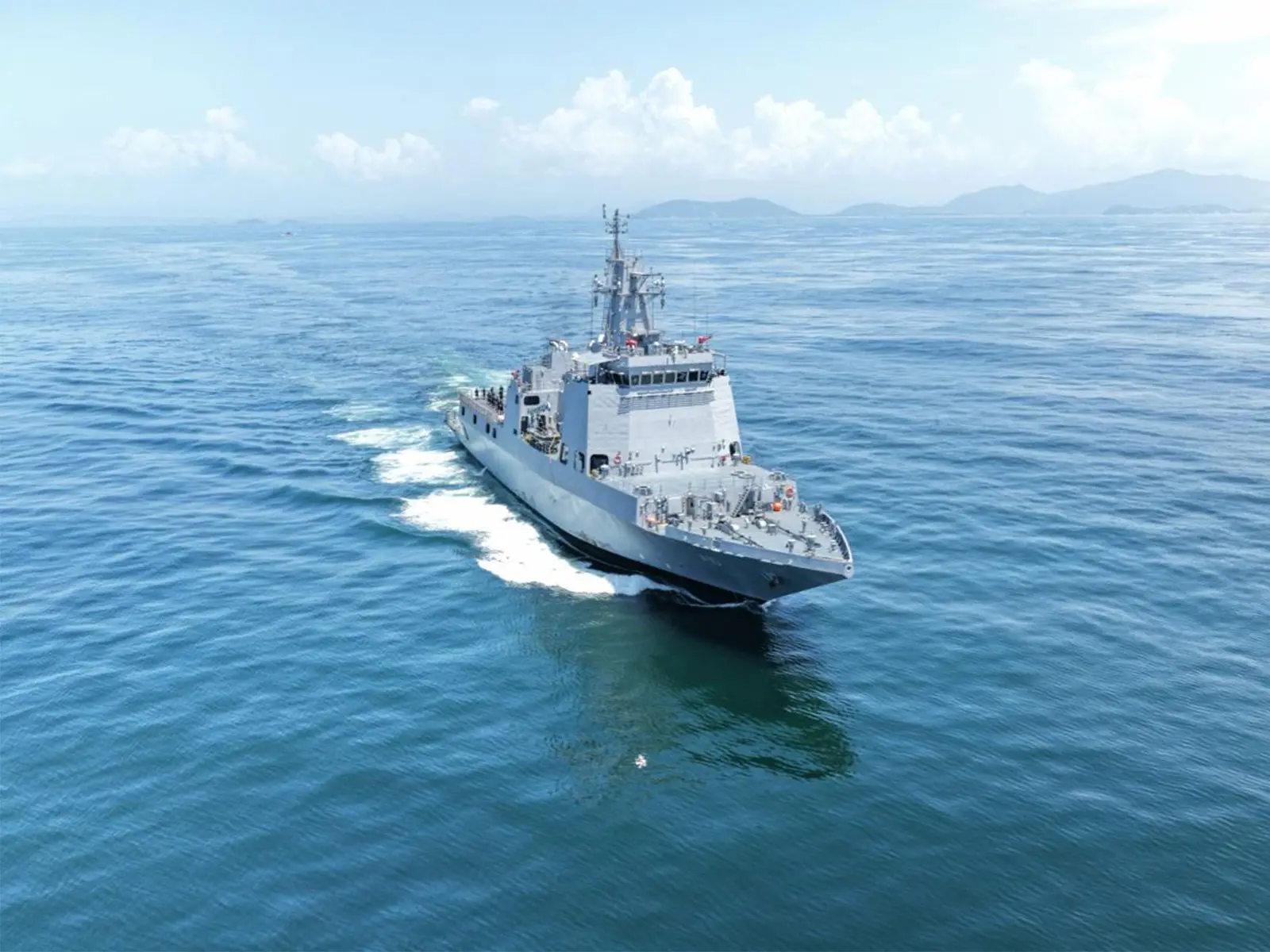
An elephant rises at Sea: Meet INS Samarthak Photograph: (Credit: ANI)
While most warships specialise, Samarthak is the fleet's generalist—the first in its class built for vital, unheralded naval support roles.
Somewhere off the coast, a fishing boat has no business being where it is. A patrol vessel must shadow it without starting a war. Elsewhere, a cyclone has torn through a coastal district and survivors need doctors before roads reopen. In a third place, a new radar must be tried at sea before the Navy trusts it on a frontline warship. Three unrelated problems, one answer: INS Samarthak, commissioned at the Karwar Naval Base on October 16, 2026.
Most warships are specialists. Samarthak is the fleet's generalist, the first of two vessels in its class, built to take on the jobs that keep a navy functioning but rarely make headlines. Larsen & Toubro constructed it under the Make in India initiative after the Ministry of Defence signed a ₹887 crore contract on March 25, 2022, for a pair of such ships. Its twin, INS Utkarsh, was launched on January 14, 2025, and is now going through technical checks and sea trials, the demanding examinations that confirm a ship behaves as designed before the Navy formally accepts it. Together they advance a long-term plan to build the fleet's support ships at home rather than abroad.
Consider first the quiet work of testing. Every radar, sonar or missile must prove itself somewhere, and Samarthak is that somewhere. Radars find objects by bouncing radio waves off them; sonars do the same beneath the surface using sound. The Defence Research and Development Organisation and private firms can bring such systems aboard and watch how they perform in real waves and real weather, catching faults long before they reach a ship in combat.
Testing needs targets, and Samarthak provides those too. It launches, tows and recovers fast-moving targets on the surface and in the air, giving crews across the fleet live practice in gunnery, in beating back aircraft and in hunting submarines. The ship can also act as a mothership for unmanned craft, sending out, directing and retrieving robotic boats and aerial drones. The human cost of this is zero: machines go into hazardous waters while every sailor remains on board.
Then there is the work of watching. Samarthak monitors sea traffic, patrols sensitive stretches of water and handles small security missions, such as intercepting suspicious boats or confronting pirates, that fall short of outright battle and are classified as Low Intensity Maritime Operations. It can tow heavy or crippled vessels, pull lost ships and equipment from the seabed, and clean up oil spills and other pollution. When disaster strikes a coastline, it turns to Humanitarian Assistance and Disaster Relief, carrying rescue and relief operations ashore, and it can even be reconfigured as a small hospital ship with limited medical facilities.
Trending Stories
&im=FitAndFill=(700,400)&imwidth=280&imheight=210&format=webp&quality=medium)
&imwidth=280&imheight=210&format=webp&quality=medium)
&imwidth=280&imheight=210&format=webp&quality=medium)
&imwidth=280&imheight=210&format=webp&quality=medium)
&imwidth=280&imheight=210&format=webp&quality=medium)
&imwidth=280&imheight=210&format=webp&quality=medium)
&imwidth=280&imheight=210&format=webp&quality=medium)
&imwidth=280&imheight=210&format=webp&quality=medium)
&imwidth=280&imheight=210&format=webp&quality=medium)
&imwidth=280&imheight=210&format=webp&quality=medium)
&imwidth=280&imheight=210&format=webp&quality=medium)
&imwidth=280&imheight=210&format=webp&quality=medium)
&imwidth=280&imheight=210&format=webp&quality=medium)
&imwidth=280&imheight=210&format=webp&quality=medium)
&imwidth=280&imheight=210&format=webp&quality=medium)
&imwidth=280&imheight=210&format=webp&quality=medium)
&imwidth=280&imheight=210&format=webp&quality=medium)
&imwidth=280&imheight=210&format=webp&quality=medium)
&im=FitAndFill=(700,400)&imwidth=280&imheight=210&format=webp&quality=medium)
&im=FitAndFill=(700,400)&imwidth=280&imheight=210&format=webp&quality=medium)
&imwidth=280&imheight=210&format=webp&quality=medium)
&im=FitAndFill=(700,400)&imwidth=280&imheight=210&format=webp&quality=medium)
&imwidth=280&imheight=210&format=webp&quality=medium)
&imwidth=280&imheight=210&format=webp&quality=medium)
&imwidth=280&imheight=210&format=webp&quality=medium)
&imwidth=280&imheight=210&format=webp&quality=medium)
&imwidth=280&imheight=210&format=webp&quality=medium)
&imwidth=280&imheight=210&format=webp&quality=medium)
&imwidth=280&imheight=210&format=webp&quality=medium)
&im=FitAndFill=(700,400)&imwidth=280&imheight=210&format=webp&quality=medium)
&imwidth=280&imheight=210&format=webp&quality=medium)
&imwidth=280&imheight=210&format=webp&quality=medium)
&imwidth=280&imheight=210&format=webp&quality=medium)
&imwidth=280&imheight=210&format=webp&quality=medium)
&im=FitAndFill=(700,400)&imwidth=280&imheight=210&format=webp&quality=medium)
&imwidth=280&imheight=210&format=webp&quality=medium)
&imwidth=280&imheight=210&format=webp&quality=medium)
&imwidth=280&imheight=210&format=webp&quality=medium)
None of this would be possible if the ship could not defend itself, and its defences are built in layers. A single combat system binds Indian-made sensors, weapons and electronics into one coordinated whole. Against surface threats it fires a 76 mm main gun, the OTO Melara, supported by fast-firing 30 mm cannons called CRN-91. A Stabilised Remote Controlled Gun lets operators aim and shoot from safety inside the hull, its barrel staying level while the deck heaves beneath it. Against submarines it launches guided torpedoes, the Indian-made Varunastra and Shyena, and fires RBU-6000 rockets that explode in the water above a lurking enemy.
The electronic layer guards against threats no eye can see. SANKET Mk III, an Electronic Support Measures system, listens for radar and other signals from nearby vessels, the way a watchman recognises an unfamiliar engine in the dark. Should a radar-guided missile approach, the Kavach system fires chaff rockets that fill the sky with reflective fragments, creating false targets so the missile loses the real one. A stern deck hosts the HAL Dhruv Advanced Light Helicopter, another Indian design. A Dynamic Positioning System uses engines and thrusters to pin the ship to one exact spot despite wind, waves and current, vital when a task cannot tolerate drift.
The numbers describe a sturdy, long-legged vessel. Samarthak displaces 3,750 tonnes, the weight of water it pushes aside while floating. It measures 107 metres long and 18.6 metres wide, reaches 15 knots, about 28 kilometres an hour, and ranges 4,500 nautical miles, roughly 8,334 kilometres, on one fuelling. It houses 116 crew, eight of them officers.
Its crest shows an Indian elephant rising from the waves, a symbol of strength, intelligence and nimble movement. Its motto, "विजयार्थम एकनिष्ठता," means "Victory is Our Sole Aim." For a ship whose victories will mostly be quiet ones, that is a promise worth keeping.
