US regulators poised for significant cut in Basel capital demands amid intense Wall Street opposition

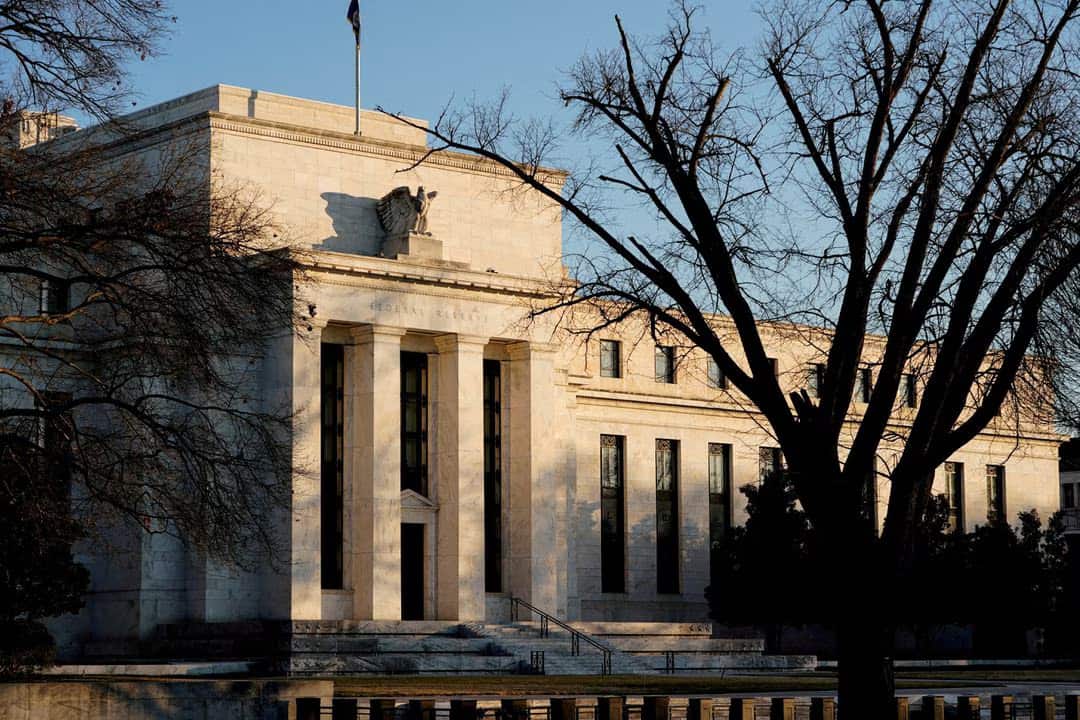
The Federal Reserve building is seen in Washington, U.S.
US regulators are reportedly gearing up for a huge reduction in the additional capital requirements that banks must maintain under the proposed "Basel III" rule.
The proposal, unveiled by bank regulators led by the Federal Reserve in July, aims to overhaul how banks with assets exceeding $100 billion calculate the cash reserves needed to absorb potential losses.
However, Wall Street has launched an aggressive pushback against the rule, prompting regulatory officials to consider significant alterations.

Anticipated capital reduction
Industry insiders, comprising eight executives in regular contact with regulatory agencies, revealed that discussions are underway to significantly decrease the proposed capital burden.
The initial proposal suggested an aggregate capital increase of around 16 per cent for the affected lenders.
)
Gaza under attack: Health chief's son killed in IDF strikes
)
Cochin shipyard starts building Indian Navy's next-gen missile vessels
)
Russia holds first parliamentary elections since the beginning of the Ukraine war
)
China may have gained access to US's classified F-35 jets; parts meant for repairs diverted to Hong Kong, sparking Pentagon inquiry
)
Mark Carney mimics Trump in hilarious moment over C$70 billion clean-energy investment; room erupts in laughter
)
9 women found dead near Johannesburg: South Africans rally, demand 'enough' to femicide
)
Pentagon revives mandatory testosterone testing for male troops aged 30 and above
)
Russia extends ban on Western food imports for two more years in extended sanctions countermeasure
)
Iran sets 7 conditions to end war with US: What are Tehran’s demands?
)
Flying cars in UAE: Ras Al Khaimah signs deal with Chinese company to test new transport
)
Africa is splitting, and a lot sooner than estimated, giving way to a new ocean
&im=FitAndFill=(700,400))
‘Not the US or China’: These are the countries leading the world in arable land
)
The Verdict | When precision fails: US commits war crime in Minab school strike, UN finds
)
FACT CHECK: Why did PM Modi ask Xi ‘is it okay’ at BRICS Summit? New video reveals...
)
‘Will go to any extent’: Pakistan vows to defend Saudi Arabia amid Houthi attacks
)
Trump defends AI amid growing alarm, announces new 'AI force' and promises an 'AI czar'
)
Reacher star Alan Ritchson opens up about alleged blackmail, suicide attempt during difficult period
)
Trump 2.0: Dark days ahead for America’s ‘imperial presidency’
)
Nigeria: Protesters take to the streets, police fire shots
)
Tirupati Laddu ghee adulterated with chemicals, says ED, supplier arrested
)
Arvind Kejriwal, family members, Delhi CM Rekha Gupta get SIR notices
)
Ed Sheeran addresses Macklemore's removal, Gaza conflict during Philadelphia concert: 'I cannot hide how I feel'
)
Brigitte Bardot’s private collection set for Paris auction; key items and prices revealed
)
Harry Brook targets long reign at top of T20I rankings after Sri Lanka sweep
&im=FitAndFill=(700,400))
How many F-35s does Britain, Japan and Israel have?
)
US-Iran war: Tehran draws red lines — seven demands before any peace talks
)
Trump wants to rename ‘Artificial Intelligence’, gives 3 options: Which one would you pick?
)
Trump announces ‘AI Force’ as debate grows over AI risks and regulation
66 years of the Indus Waters Treaty: How India and Pakistan settled a bitter river dispute
)
Raphinha hat-trick powers Barcelona to 3-1 win over Sevilla in La Liga
)
Trump bans CNN, MS NOW and Politico from White House over ‘FAKE NEWS’
&im=FitAndFill=(700,400))
Ananya Panday to Sharvari: 5 actresses serving major princess vibes
&im=FitAndFill=(700,400))
Meet top 5 Indian batters with fastest T20I centuries
)
How did an Australian river with 500 crocodiles pass the Olympic test? Here's how
)
Pak: A series of counter terrorism operations in Khyber Pakhtunkhwa
)
However, this figure is expected to see a sharp decline as regulators delve into a comprehensive revision of the draft.
The focus is on recalibrating the calculation of potential losses from operational risks, particularly in fee income related to lending services.
Operational risk and mortgage adjustments
The most highest capital savings are expected to arise from adjustments in how banks calculate potential losses from operational risks, a costly aspect of the proposal.
Wall Street has been advocating for reduced risk weights for fee income linked to lending services.
Additionally, regulators are contemplating the elimination or reduction of higher risk weights on mortgages for low-income borrowers and renewable energy tax credits.
These potential changes are part of the ongoing rewriting led by Fed Vice Chair for Supervision Michael Barr, in collaboration with Fed Chair Jerome Powell.
Regulatory response and opposition
Regulatory discussions, still in their early stages, indicate a willingness to address concerns raised by industry players.
Powell, during congressional testimony, acknowledged the intense opposition, stating that "broad, material" changes are anticipated in the rewritten rule.
The unprecedented intensity of Wall Street's efforts to quash the proposal involves advertising, grassroots campaigns, lobbying, and potential legal action.
Despite the opposition, officials have not confirmed whether the rule will be reproposed, leaving the timeline for its completion uncertain.
Dissent and legal challenges
The Basel III proposal, aligning with international capital standards, has encountered dissent from within the Fed's board.
Governors Michelle Bowman and Christopher Waller, along with Vice Chair Philip Jefferson, expressed reservations about the potential adverse impact on borrowers.
The Bank Policy Institute has even hired former Labour Secretary Eugene Scalia to explore the possibility of a lawsuit, highlighting the unexpected intensity of opposition faced by regulators.
This dissent may play a crucial role in any legal battles, showcasing divisions among experts.
Industry engagement and timeline concerns
Federal Reserve officials, including Powell and Barr, have engaged in over 50 meetings or calls with hundreds of industry executives since September.
Despite these discussions, a consensus has not been reached, and challenges remain in reaching an agreement with the FDIC, chaired by Martin Gruenberg, a known Wall Street critic.
While some hope to finalise the rule by summer, concerns linger that the timeline may prove overly ambitious.
(With inputs from Reuters)