US manufacturing continues slump amid tariff impact; factory employment hits 5-year low

&imwidth=600&imheight=450&format=webp&quality=medium "US manufacturing continues slump amid tariff impact; factory employment hits 5-year low")
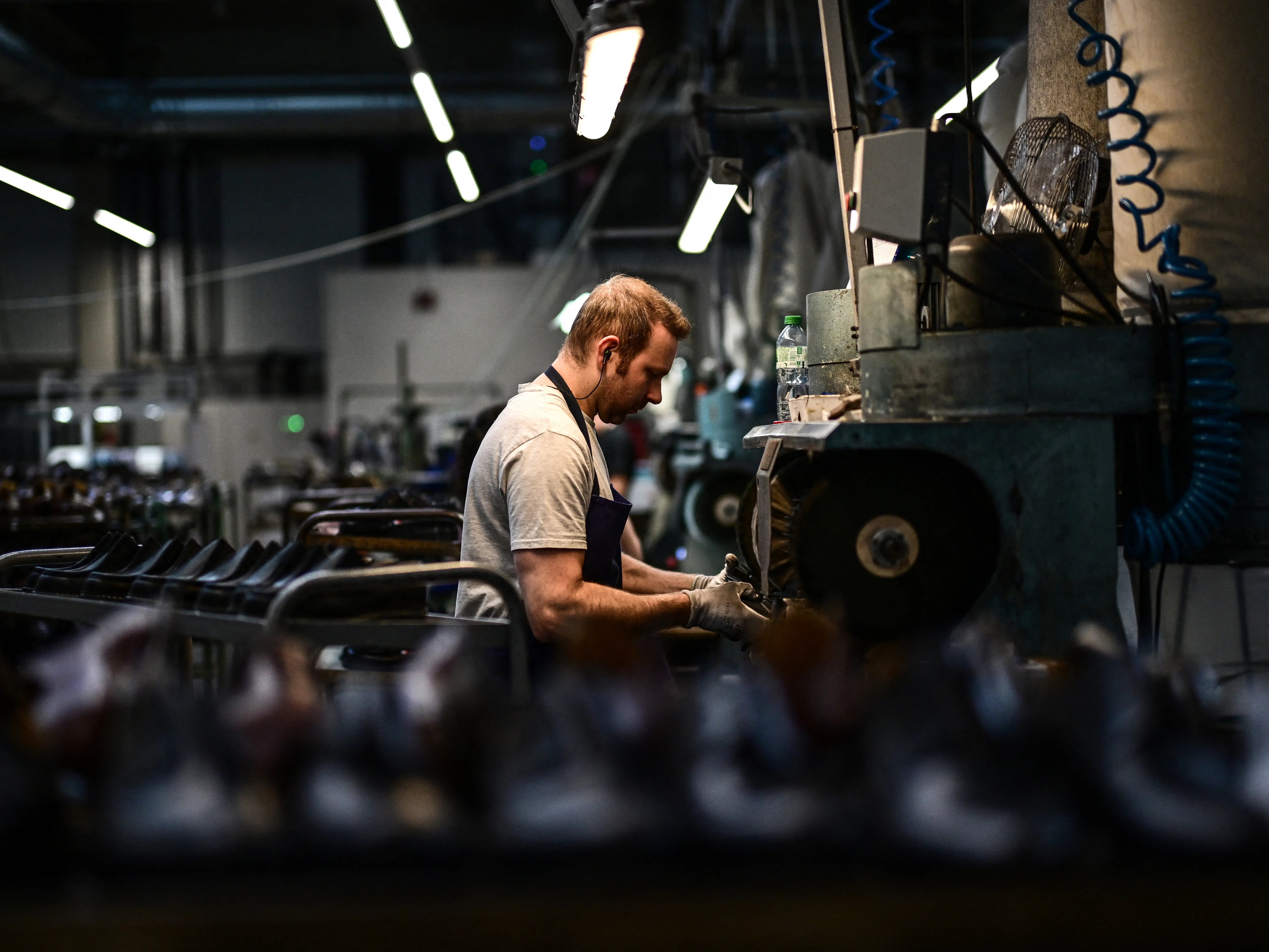
An employee works at the Paraboot shoe factory in Saint-Jean-de-Moirans, near Grenoble, on May 27, 2025. Photograph: (AFP)
The contraction in manufacturing was exacerbated by declining demand for factory goods, which has contributed to six consecutive months of reduced new orders. The new orders sub-index rose slightly to 47.1 from 46.4, but it remained in contraction territory.
US manufacturing activity contracted for the fifth straight month in July, with factory employment hitting its lowest level in over five years, according to new data from the Institute for Supply Management (ISM). The ISM’s Manufacturing Purchasing Managers' Index (PMI) fell to 48.0 in July from 49.0 in June, signalling continued contraction in the sector. A PMI reading below 50 indicates that manufacturing activity is shrinking, which is a critical signal for the economy since manufacturing makes up about 10 per cent of US GDP.
The sharp decline in factory employment was a major contributor to the weak PMI reading. The ISM’s manufacturing employment index dropped to 43.4, its lowest level since July 2020. This marks a significant slowdown in hiring as companies face rising raw material costs, partly driven by tariffs imposed earlier in the year. The survey highlighted an “acceleration of headcount reductions due to uncertain near- to mid-term demand,” suggesting that manufacturers are focusing more on cost control rather than expansion.
Weak demand and persistent tariff challenges
The contraction in manufacturing was exacerbated by declining demand for factory goods, which has contributed to six consecutive months of reduced new orders. The new orders sub-index rose slightly to 47.1 from 46.4, but it remained in contraction territory. The overall outlook for the sector remains bleak, with the ISM pointing to an ongoing slowdown in production. While the production index rose to 51.4 from 50.3, indicating a slight improvement in output, many industries continued to report lower demand, leading to staff reductions.
In addition to the ongoing demand challenges, rising tariffs on imported raw materials have increased the cost pressures on manufacturers. Prices for factory inputs remained high in July, though the pace of increase slowed. The ISM’s supplier deliveries index fell to 49.3 from 54.2, the first time since November 2022 that it dropped below 50, indicating improvements in delivery times. Despite the easing in delivery delays, the price gauge for input costs remained elevated at 64.8, down from 69.7 in June.
Uncertainty ahead as tariffs impact inflation
Trending Stories
)
)
)
)
)
)
)
)
)
)
)
)
)
)
)
)
)
)
)
)
)
)
)
)
)
)
)
)
)
)
)
)
)
)
&im=FitAndFill=(700,400))
)
)
)
)
The ongoing tariff-driven inflation continues to be a major concern for manufacturers. Government data released earlier this week showed that goods prices in June rose at their fastest rate in five months, with economists predicting that the rise in goods inflation would persist through the second half of 2025. While the tariffs imposed by US President Donald Trump have not increased in intensity, producers remain anxious about potential new duties on crucial imports such as pharmaceuticals, semiconductors, and critical minerals, which could further disrupt supply chains.
The manufacturing slump, marked by falling employment and production slowdowns, signals a tough road ahead for the US economy, with uncertain demand and rising input costs making it increasingly difficult for companies to navigate the challenges of a volatile global trade environment.
(With inputs from agencies)