

&imwidth=800&imheight=600&format=webp&quality=medium "US consumer spending falters in April as inflation cools and savings rise")
US consumer spending barely rose in April as households tightened their wallets and diverted funds into savings. This reportedly reflects growing unease over the country’s economic trajectory amid erratic tariff policies and legal roadblocks to US President Donald Trump’s sweeping trade duties.
According to Reuters, citing data from the US Commerce Department, consumer spending, the backbone of the US economy climbed just 0.2 per cent in April, a steep slowdown from March’s 0.7 per cent gain.
The deceleration suggests that Americans, rattled by recent tariff shocks and broader uncertainty, are preparing for leaner times.
Spending weakens as tariff anxiety rises
While services spending held firm—buoyed by housing, utilities, healthcare, and hospitality—goods spending softened considerably.
Shoppers cut back on vehicles, apparel, and recreational goods, which had seen a pre-emptive boost in March due to stockpiling before new tariffs, Reuters reported.
Trending Stories
&imwidth=180&imheight=135&format=webp&quality=medium)
Shreyas Iyer blames dew for West Indies' record run chase in 2nd T20I in Ranchi
&imwidth=180&imheight=135&format=webp&quality=medium)
100,000 strikes in 3 years: How October 7 redefined Israel's war
&im=FitAndFill=(700,400)&imwidth=180&imheight=135&format=webp&quality=medium)
Happy Birthday Rekha: Watch these 7 evergreen Bollywood hits on Netflix, Prime Video and more
&imwidth=180&imheight=135&format=webp&quality=medium)
'I am not going to be watching it': JD Vance on livestream of Nidal Hasan's firing squad execution
&imwidth=180&imheight=135&format=webp&quality=medium)
UK navy hit by espionage scandal: Sailor accused of spying for Russia | Gravitas
&imwidth=180&imheight=135&format=webp&quality=medium)
Katie Zacharia likely to succeed Karoline Leavitt as Trump's White House press secretary
&imwidth=180&imheight=135&format=webp&quality=medium)
Delhi on high alert for CJP protest: Delhi police to use body cams to 'prove whether we did anything’; Pink Force, RAF, 35,000 personnel deployed
&imwidth=180&imheight=135&format=webp&quality=medium)
‘Never-ending flow of cheap labour’: JD Vance hits back at Indian-origin Congresswoman over US green card curbs for major tech companies
&imwidth=180&imheight=135&format=webp&quality=medium)
Panama president declares ‘major disaster’ after powerful 7.7-magnitude earthquake; over 80 aftershocks recorded
&imwidth=180&imheight=135&format=webp&quality=medium)
‘250? Cool.’: Shai Hope takes swipe at Shubman Gill’s Instagram caption after Ranchi T20I masterclass
&imwidth=180&imheight=135&format=webp&quality=medium)
'Jantar Mantar not the story of India': BJP's Sambit Patra claims 'anarchists' tried to hold Delhi captive
&imwidth=180&imheight=135&format=webp&quality=medium)
BJP MP Ravi Shankar Prasad slams CJP protests, calls it 'shadow boxing for AAP'
&imwidth=180&imheight=135&format=webp&quality=medium)
'I ended 8 wars': Trump slams Nobel Peace prize decision, claims award was his due
&imwidth=180&imheight=135&format=webp&quality=medium)
Dhurandhar: The Revenge album submitted for Grammy consideration; But what does it mean?
&imwidth=180&imheight=135&format=webp&quality=medium)
J&K Government orders major police reshuffle, transfers 100 officers across UT
&imwidth=180&imheight=135&format=webp&quality=medium)
New York protests erupt as Trump administration defends ICE shooting
&imwidth=180&imheight=135&format=webp&quality=medium)
Delhi protest: Metro curbs, train cancellations, traffic diversions as protesters seek CEC Gyanesh Kumar’s resignation
&imwidth=180&imheight=135&format=webp&quality=medium)
'Spent Rs 2,000 cr to elect Trump': Elon Musk bought US President's loyalty by writing the biggest political cheque in human history
&imwidth=180&imheight=135&format=webp&quality=medium)
Powerful 7.7 magnitude earthquake strikes Panama, tsunami warning issued
&imwidth=180&imheight=135&format=webp&quality=medium)
Adéla gives KATSEYE’s Lara Raj and Megan Skendiel a shout-out at Fonda Theatre in LA
&imwidth=180&imheight=135&format=webp&quality=medium)
'Modi is a dictator': Abhijeet Dipke claims govt 'scared' of youth, slams stringent measures ahead of CJP Jantar Mantar protest
&im=FitAndFill=(700,400)&imwidth=180&imheight=135&format=webp&quality=medium)
New Friday OTT releases (October 9, 2026): Reporting Live, Animals, Take Charge of My Heart- 6 new titles coming on Netflix, JioHotstar and more
&imwidth=180&imheight=135&format=webp&quality=medium)
Two-thirds of competitive GOP candidates split with trump ahead of November midterms
&imwidth=180&imheight=135&format=webp&quality=medium)
'Ouch!!! That must hurt': Kangana Ranaut hails Kamal Haasan's sharp reply to Elon Musk over Starlink row
&imwidth=180&imheight=135&format=webp&quality=medium)
‘Right to protest must be protected, but...’: Delhi Police reveals why it denied CJP permission for October 10 Jantar Mantar protest
&imwidth=180&imheight=135&format=webp&quality=medium)
Trump announces Russian diesel deal as Zelensky criticises move
&imwidth=180&imheight=135&format=webp&quality=medium)
Pakistan denies reports of PAF jets being used in attacks against Iran-backed Houthis in Yemen
&imwidth=180&imheight=135&format=webp&quality=medium)
All 22 Indian seafarers safe in attack on Panama-flagged tanker off UAE coast
&imwidth=180&imheight=135&format=webp&quality=medium)
Ryan Reynolds’ private messages reveal his blunt views on Justin Baldoni from Blake Lively’s legal case
&im=FitAndFill=(700,400)&imwidth=180&imheight=135&format=webp&quality=medium)
Rakul Preet Singh birthday special: 7 times the Ramayana actress served glamorous looks

Kamal Haasan slams Elon Musk over Starlink delay row: 'Indian people, will decide our own future - not Western'
&im=FitAndFill=(700,400)&imwidth=180&imheight=135&format=webp&quality=medium)
Food shortages, suicide attempts and more: USS Abraham Lincoln returns to US after 321 day deployment — What happened aboard the US carrier?
&imwidth=180&imheight=135&format=webp&quality=medium)
Thai queen becomes first reigning monarch to fly jet solothailand #queen #wion
&imwidth=180&imheight=135&format=webp&quality=medium)
SC questions closure of 57 Delhi Metro stations, asks Centre to resume services in regulated manner
&imwidth=180&imheight=135&format=webp&quality=medium)
Rahul Gandhi calls Modi, Shah ‘cowards’ amid CJP protest crackdown in Delhi
&imwidth=180&imheight=135&format=webp&quality=medium)
Flydubai co-pilot developed extremist views while studying in Australia: UAE prosecutors
&imwidth=180&imheight=135&format=webp&quality=medium)
Why was CJP founder Abhijeet Dipke detained? What Delhi Police said
&imwidth=180&imheight=135&format=webp&quality=medium)
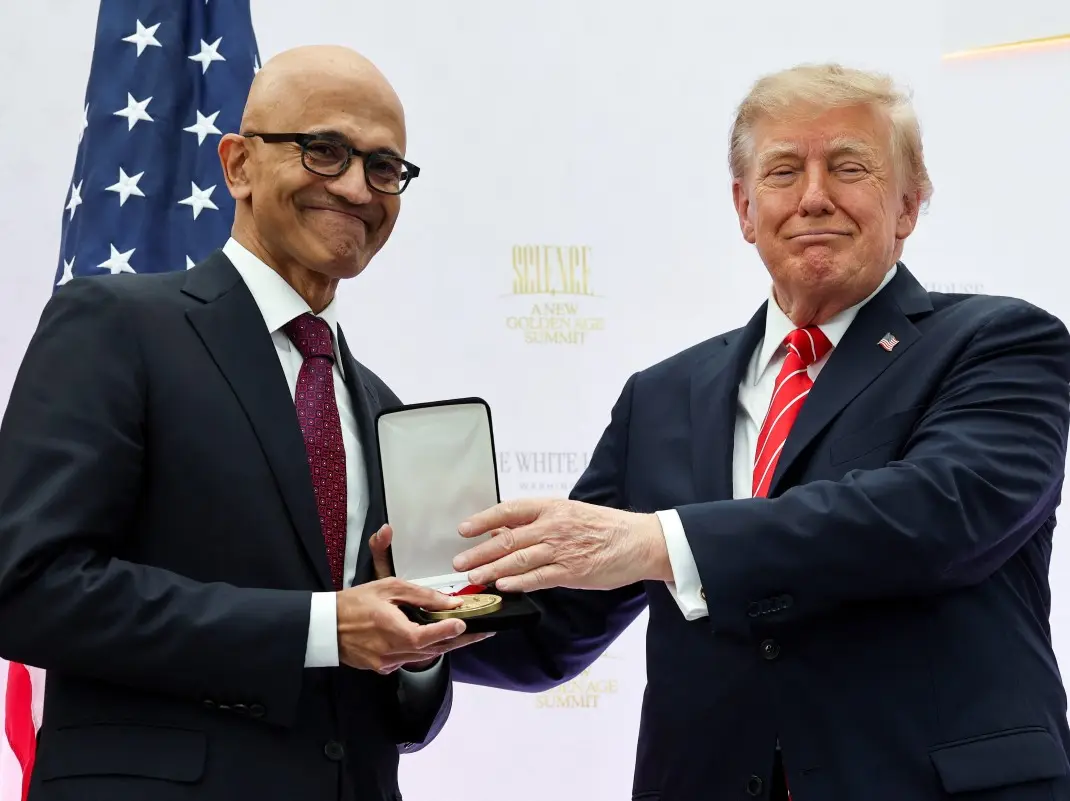
Trump honours Microsoft CEO Satya Nadella with top technology honour amid immigration scrutiny
President Trump’s new import duties, largely targeting Chinese goods, had been slashed to 30 per cent from 145 per cent through mid-August, following a ruling by a US trade court, as per Reuters.
The court found that the president had overstepped his authority. However, a federal appeals court temporarily reinstated most of the duties the next day, plunging the economic outlook into further ambiguity.
“The Liberation Day tariff shock clearly spooked consumers,” said Scott Anderson, Chief US Economist at BMO Capital Markets, in a statement to Reuters. “They’re now saving for a rainy day.”
Savings jump to one-year high
That caution was reflected in the personal saving rate, which jumped to 4.9 per cent in April, the highest since March 2024, from 4.3 per cent in March, according to the US Commerce Department’s Bureau of Economic Analysis (BEA), as cited by Reuters.
Adding to the economic unease, the US economy shrank at an annualised rate of 0.2 per cent in Q1 2025, the first contraction in three years. This decline was mainly attributed to a surge in imports before tariffs kicked in, according to Reuters, referencing official government data.
In a separate report, the US Census Bureau stated that the goods trade deficit shrank by 46 per cent to $87.6 billion in April. This was due to a sharp decline in imports, which fell by $68.4 billion to $276.1 billion, while goods exports rose by $6.3 billion to $188.5 billion.
Inflation eases, but Fed remains on edge
Inflation remained subdued in April. The PCE Price Index, the Federal Reserve’s preferred inflation measure, rose 0.1 per cent in April after remaining flat in March, as per the BEA data cited by Reuters.
On a yearly basis, overall PCE inflation increased 2.1 per cent, while core PCE, which excludes food and energy, climbed 2.5 per cent, marking the smallest increase since March 2021, as per Reuters.
Despite these modest gains, the Federal Reserve remains cautious. According to minutes from its May 6–7 meeting, reviewed by Reuters, Fed officials highlighted concerns about rising short-term inflation expectations.
Some policymakers had reportedly warned that these expectations could influence businesses to raise prices and push long-term inflation even higher.
Trade deficit shrinks but sentiment deteriorates
According to the US Census Bureau, the collapse in imports and slight export gains contributed to the shrinking trade deficit.
However, economists interviewed by Reuters cautioned that the downturn in imports may be temporary and tied to the unpredictable implementation of trade tariffs.
Markets reacted nervously. As per Reuters, US stocks opened lower, Treasury yields rose slightly, and the dollar strengthened against major global currencies on Thursday.
Outlook clouded by policy unpredictability
With Trump’s tariffs caught in a legal tug-of-war and inflation trending downward but unstable, the economic recovery remains fragile.
Economists quoted by Reuters suggested that while softer inflation offers some relief, uncertainty surrounding tariff rulings is expected to weigh heavily on both consumer confidence and business investment in the months ahead.