
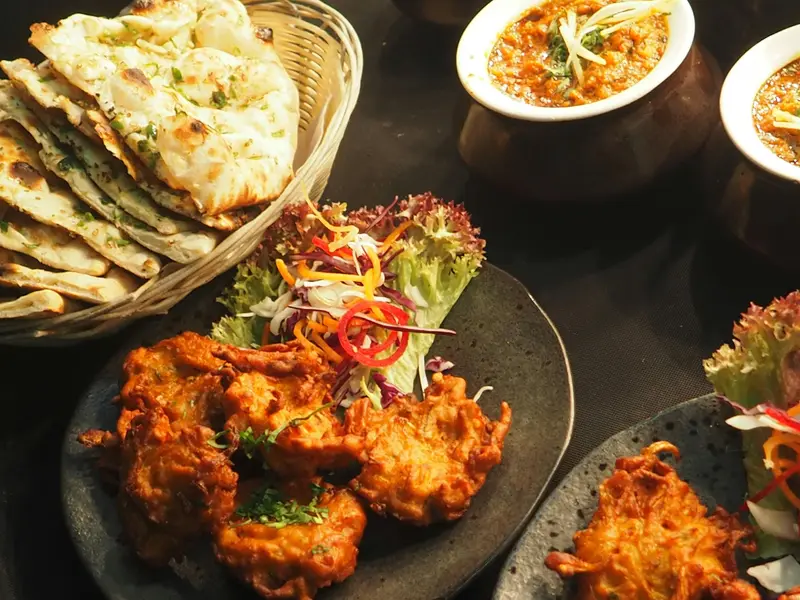
Urban India isn’t cooking, it’s ordering. Whether it’s stacked burgers or millet bowls, city dwellers are increasingly trading in their chapati dinners for convenience cuisine.
According to a new Deloitte-FICCI report, nearly 50 per cent of urban consumers’ food budgets now go toward prepared foods, dining out, and deliveries, a striking reflection of how deeply lifestyle, income, and convenience are reshaping the nation’s foodscape.
What the Deloitte-FICCI report highlights

The report doesn’t just capture a passing trend; it paints a picture of a profound economic shift. With rising incomes and accelerating urbanisation, the average Indian consumer regardless of income bracket and is choosing more varied, processed, and protein-rich diets over traditional staples.
“Consumers across income groups are moving beyond traditional staples toward more varied, protein-rich, processed diets,” the report states, signalling a future were convenience trumps custom.
One of the most notable shifts is the emergence of premiumisation. Higher-income groups are no longer settling for basics they’re actively seeking better quality, indulgent, and health-conscious foods, even if that means shelling out more for it. But this appetite for innovation isn’t restricted to metros.
Trending Stories
)
'She married her brother': Ilhan Omar faces criminal probe over immigration fraud claims
)
Bitter Zelensky snubs Trump for playing politics with Ukraine war | Gravitas
)
UPI rule change: 0.4% MDR on merchant payments above ₹2,000; consumers unaffected
)
India’s imports from Russia jump 57% in five months; China remains top import source
&im=FitAndFill=(700,400))
Why European Meteor missiles use ramjet engines compared to standard US solid rockets
)
‘US military task force aiding Saudi Arabia forces with intel, planning support’: Official
)
Top military commanders from US, Israel, and 7 Arab nations held secret meeting on Iran War
)
Exclusive - Directors of Declassified: Operation Sindoor reveal how they got Ajit Doval and what was the trickiest part
)
A big shift in modern air power & control
)
'Definitely feel bad for yourself': Kuldeep Yadav opens up on India Test snubs
)
Delhi schools receive bomb threats in Punjabi, security checks find nothing suspicious
&im=FitAndFill=(700,400))
Why Chinese PL-15 air-to-air missiles use dual-pulse motors compared to European interceptors
)
China's property crisis deepens as investment plunges nearly 20%
)
What is Hyrox, in news for athlete who soiled herself, but kept running and using common equipment?
)
‘We are sharing some difficult news’: Oracle begins fresh round of job cuts
)
800 million years old - Scientists discover 'fingerprints' of supercontinent Gondwana in ancient rocks
)
Russia proposes to build 360 kmph Ivolga FG trains in India: What happened on sidelines of BRICS
)
Saudi turns to Israel for intelligence help as Houthi attacks intensify: Report
)
Trump's name cannot return to Kennedy Center, US judge rules
)
Amid AI safety fears, OpenAI, Anthropic and Google move to create standards body
)
471 years ago, a prophecy warned of 'immortal lone brain'. Some think it was about AI
)
2026 El Niño will create new extreme weather patterns. Worse, no one can predict them
)
1,200 Indian and US troops begin high-altitude and desert drills
)
Ex-CIA officer caught with gold bars worth $40 million seeks plea deal | Gravitas
)
Imran Khan’s sons accuse Asim Munir of holding ‘personal grudge’ against imprisoned father
)
Trump Calls AI Security Concerns A 'Hoax' | Verdict
&im=FitAndFill=(700,400))
New OTT releases this week (September 14-20, 2026): Lust Stories 3, Waiting Hai, Irumudi- 5 new titles coming on Netflix, Prime Video and more
)
US Treasury yields cross 5% as Scott Bessent warns of ‘global issues’ impacting bonds
)
Who is Kalyan Bainsla, accused in the Gurugram hit-and-run case involving woman biker?
)
Saudi Arabia discovers 110 million tonnes of Uranium-rich ore in Madinah region
)
3 wild dogs, 1 epic journey: African brothers trek 4,000 km through Zambia to find a partner
)
Elephants hide behind trees, stage surprise attack on poachers targeting rhinos in South Africa
)
West Bengal IPS officer Bushra Bano transferred after objections to ‘Assalamualaikum’, ‘Inshallah’
)
Spanish officer sent home from NATO base over affair with 'Russian spy' | Gravitas
)
IND vs AFG, 2nd T20I: Reddy, Samson shine as India defeat Afghanistan by 7 wickets to clinch series
)
Extreme warming in Indian Ocean added 695 billion tons of ice to Antarctica ice sheet
Rural India, too, is undergoing a quiet food revolution. Since the early 2000s, rural spending on core staples like cereals, vegetables, and pulses has seen a steady decline.
For the first time, expenditure on beverages and processed foods in rural households has overtaken that on cereals. This pivot is largely fuelled by smaller, affordable SKUs and better market penetration by food companies.
“As rural prosperity increases, consumer behaviours are converging,” said Anand Ramanathan, Partner and Consumer Industry Leader, Deloitte South Asia. “Tier 2, Tier 3 cities and beyond are emerging as key growth powerhouses.”
The report points to a massive, untapped opportunity for India’s food processing sector, noting that with 52 per cent of India’s land area suitable for agriculture, the sector is poised for a boom.
Health is the new hunger
Wellness is no longer a niche, it’s mainstream. According to the Deloitte-FICCI report, urban consumers are actively seeking high-protein, low-sugar, gut-friendly, and organic food options.
Traditional Indian superfoods like millets and makhana have made a comeback, celebrated for their nutritional punch and cultural resonance.
“The urban youth population is increasingly becoming health-conscious and shifting towards millet consumption,” the report notes. This trend has sparked the rise of start-ups focused on millet-based snacks, breakfast options, and beverages, and it’s not slowing down anytime soon.
Clean eating is becoming a priority for the urban Indian. The survey found that over 90 per cent of consumers consider clean labels — products made with minimal, natural, and recognisable ingredients — important while making food purchases. Nearly 31 per cent of these consumers are even willing to pay over 10 per cent more for items that carry organic or natural claims.
This has given rise to functional foods, with growing adoption of products enriched with probiotics, prebiotics, and other nutritional fortifications. From gut-friendly yoghurts to fortified juices and superfood bars, the market is expanding rapidly. Start-ups and global brands are reformulating traditional products for Indian palates while enhancing their health benefits.
“As India moves towards a $5 trillion GDP by FY28 and aims to become a developed country by 2047, a larger and more affluent consumer base will demand better, safer and more convenient food options,” the report adds.
Dining out surge post-pandemic
India’s restaurant sector may have taken a hit during the pandemic, but it’s bouncing back with force. The India Food Services Report 2024 by the National Restaurant Association of India (NRAI) shows just how robust this rebound is.
The sector is expected to grow at a compound annual growth rate (CAGR) of 8.1 per cent, reaching ₹7.76 trillion by FY28. The organised food services segment, which includes dine-in restaurants, cloud kitchens, and QSRs is projected to grow even faster at 13.2 per cent CAGR, capturing over 52.9 per cent of the total market share by the same period.
As of now, the food services industry employs around 8.5 million people, a number forecast to surpass 10.3 million by FY28.
The reasons behind this boom are multifaceted. The rise of quick-commerce platforms delivering everything from restaurant meals to gourmet snacks in under 30 minutes has reportedly made dining out (or in) easier than ever. Additionally, a young, aspirational population is increasingly dining out not just for sustenance but for social capital and lifestyle.
This demand is not limited to metros; tier 2 and 3 cities are emerging as hotbeds of dining culture, driven by better infrastructure, rising incomes, and a desire to emulate urban habits.