UK jobless rate hits 4.7%, highest since 2021 amid tax-driven layoffs

&imwidth=600&imheight=450&format=webp&quality=medium "UK jobless rate hits 4.7%, highest since 2021 amid tax-driven layoffs")
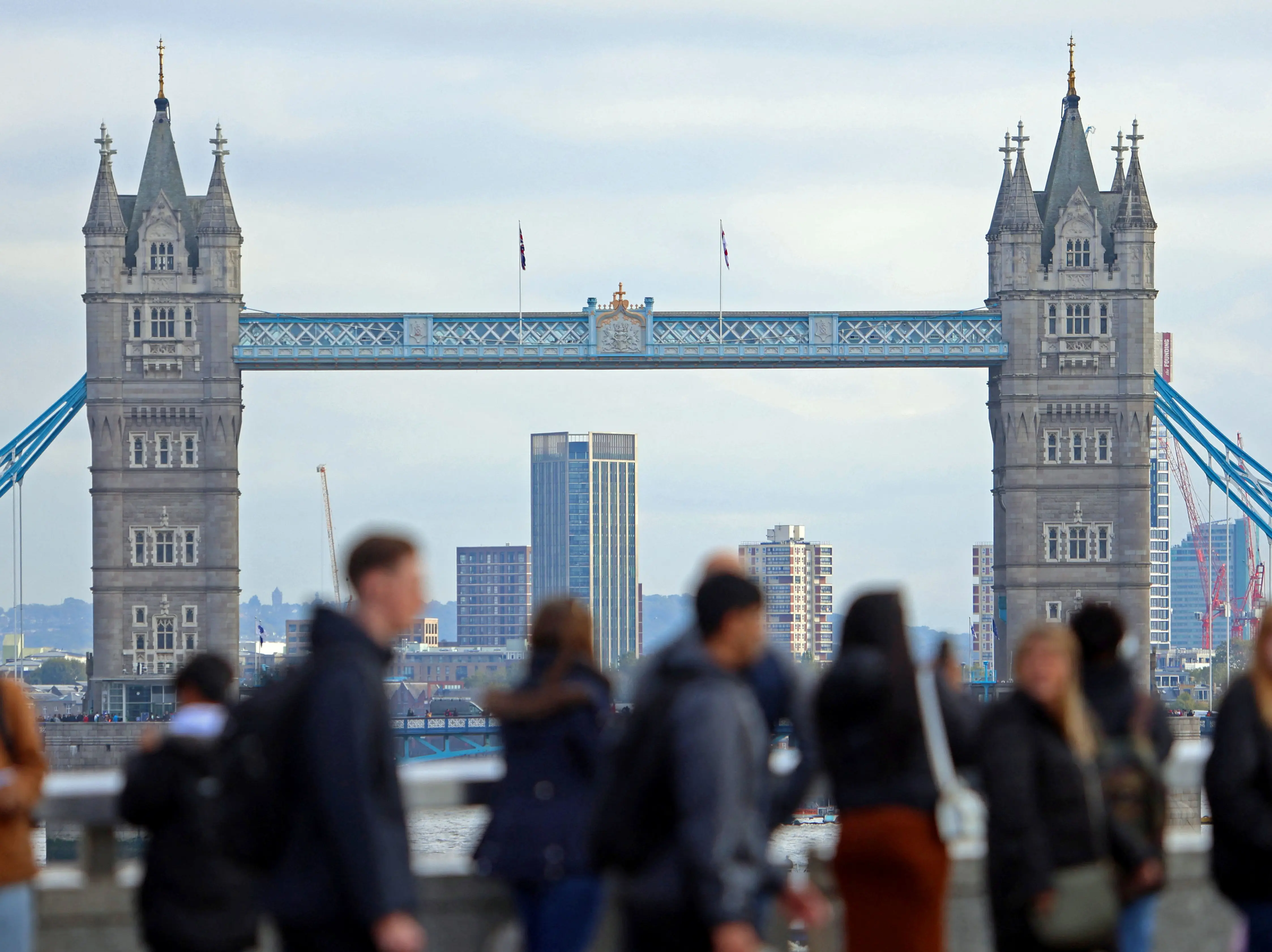
People walk over London Bridge looking at a view of Tower Bridge in the City of London financial district in London. Photograph: (Reuters)
The UK’s unemployment rate has risen to 4.7%, the highest in over four years, as businesses reduce hiring amid Chancellor Rachel Reeves’s tax increases and wage mandates.
The UK’s unemployment rate has surged to 4.7 per cent, the highest level in more than four years, as businesses scale back hiring and cut jobs in response to Chancellor Rachel Reeves’s fiscal tightening, including sharp tax hikes and wage mandates. As per the Office for National Statistics (ONS), the jobless rate rose in the three months to May, exceeding economists’ expectations of 4.6 per cent. It now stands at the highest level since early 2021, signalling a slowdown in a labour market once considered tight.
The number of payroll employees dropped by 41,000 in June, while job vacancies declined for a third consecutive year to 727,000, highlighting broad-based hiring fatigue. Wage growth also cooled, with average regular pay excluding bonuses easing to 5 per cent, down from 5.3 per cent in the previous quarter. Notably, private sector pay growth slipped to 4.9 per cent, its weakest reading since February 2022.
Tax hikes and wage pressure trigger job cuts
Economists and business lobbies are pointing to April’s tax-and-wage reforms as the trigger. The government rolled out a £26 billion ($35 billion) payroll tax hike, alongside a 7 per cent increase in the minimum wage, in a bid to boost revenues and household incomes.
“Payroll employment has fallen in seven of the eight months since the Chancellor announced the rises in National Insurance contributions (NICs) and the minimum wage,” said Paul Dales, Chief UK Economist at Capital Economics, as quoted by The Telegraph. “Clearly, businesses are offsetting the rise in costs by reducing headcounts.”
According to Bloomberg, this jobs downturn is aligned with broader economic weakness, including back-to-back GDP contractions in April and May. Meanwhile, inflation ticked up to 3.6 per cent in June, further straining consumer and business sentiment.
Trending Stories
&imwidth=280&imheight=210&format=webp&quality=medium)
&imwidth=280&imheight=210&format=webp&quality=medium)
&imwidth=280&imheight=210&format=webp&quality=medium)
&imwidth=280&imheight=210&format=webp&quality=medium)
&imwidth=280&imheight=210&format=webp&quality=medium)
&imwidth=280&imheight=210&format=webp&quality=medium)
&imwidth=280&imheight=210&format=webp&quality=medium)
&imwidth=280&imheight=210&format=webp&quality=medium)
&imwidth=280&imheight=210&format=webp&quality=medium)
&imwidth=280&imheight=210&format=webp&quality=medium)
&imwidth=280&imheight=210&format=webp&quality=medium)
&imwidth=280&imheight=210&format=webp&quality=medium)
&imwidth=280&imheight=210&format=webp&quality=medium)
&imwidth=280&imheight=210&format=webp&quality=medium)
&imwidth=280&imheight=210&format=webp&quality=medium)
&imwidth=280&imheight=210&format=webp&quality=medium)
&imwidth=280&imheight=210&format=webp&quality=medium)
&imwidth=280&imheight=210&format=webp&quality=medium)
&imwidth=280&imheight=210&format=webp&quality=medium)
&imwidth=280&imheight=210&format=webp&quality=medium)
&imwidth=280&imheight=210&format=webp&quality=medium)
&imwidth=280&imheight=210&format=webp&quality=medium)
&imwidth=280&imheight=210&format=webp&quality=medium)
&imwidth=280&imheight=210&format=webp&quality=medium)
&imwidth=280&imheight=210&format=webp&quality=medium)
&im=FitAndFill=(700,400)&imwidth=280&imheight=210&format=webp&quality=medium)
&imwidth=280&imheight=210&format=webp&quality=medium)
&imwidth=280&imheight=210&format=webp&quality=medium)
&im=FitAndFill=(700,400)&imwidth=280&imheight=210&format=webp&quality=medium)
&imwidth=280&imheight=210&format=webp&quality=medium)
&imwidth=280&imheight=210&format=webp&quality=medium)
&imwidth=280&imheight=210&format=webp&quality=medium)
&imwidth=280&imheight=210&format=webp&quality=medium)
&imwidth=280&imheight=210&format=webp&quality=medium)
&im=FitAndFill=(700,400)&imwidth=280&imheight=210&format=webp&quality=medium)
Bank of England rate cut now likely
With unemployment rising and wage pressures receding, financial markets are increasingly betting on a Bank of England (BoE) rate cut in August. Traders are now pricing in an over 80 per cent probability of a 25-basis point cut.
BoE Governor Andrew Bailey, speaking to The Times earlier this week, noted that policymakers were “watching for signs of slack opening up more quickly” in the labour market. This latest data “adds critical weight to that view,” said Paige Tao, economist at PwC UK, as quoted by The Telegraph.
Bailey had earlier stated that the BoE would move “gradually and responsibly”, balancing the risks of persistent inflation with those of faltering growth and rising joblessness.
Employers retreat from hiring
According to ONS director Liz McKeown, the figures confirm a marked cooling: “The labour market continues to weaken, with the number of employees on payroll falling again… Job vacancies have now been dropping continuously for three years,” she told the BBC.
Sectors like hospitality and retail, which are highly sensitive to wage and cost changes, saw the sharpest losses. Over the past year, the hospitality industry shed 108,000 payroll jobs, while retail and wholesale posted declines of over 65,500, as per ONS data.
Conversely, the health and social care sector recorded hiring gains, adding 67,000 jobs over the same period, reflecting strong demand and public-sector resilience.
Political and business backlash
The Labour government now faces growing criticism from opposition leaders and business groups.l “Unemployment is the only thing growing under Labour,” said Shadow Business Secretary Andrew Griffith, highlighting the rise in joblessness and falling labour demand.
Alex Hall-Chen, a policy adviser at the Institute of Directors, also criticised the policy impact. In a statement quoted by The Telegraph, she said: “This continued slump in labour demand is the predictable result of policy blows… The increase in employer NICs, the Employment Rights Bill, and above-inflation hikes to the National Living Wage have significantly increased the costs and risks of hiring staff.” She urged the government to undertake “a significant rethink” to support jobs and growth.
At the same time, Home Office Minister Jess Phillips, speaking to Sky News, acknowledged the data was “worrying”, but defended Labour’s approach. “Fourteen years of stagnant growth is not something that changes overnight… We are fiercely focused on creating long-term investment and economic growth,” she said.
Markets react
Markets responded with cautious optimism on hopes of faster monetary easing. The FTSE 100 rose 0.3 per cent to 8,950.09, while the FTSE 250 also gained 0.3 per cent.
The British pound slipped 0.2 per cent to $1.338, reflecting market confidence that interest rates will fall. Sterling rose slightly against the euro as traders braced for potential policy action in the comingweeks.