South Korea’s exports surge in July amid tariff rush and chip demand

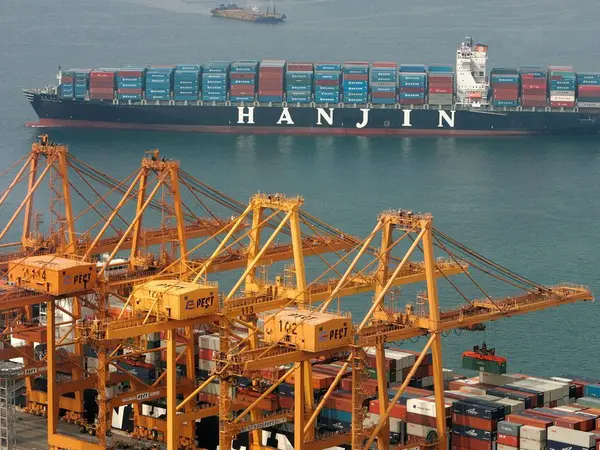
A container ship carrying cargo containers for export leaves Busan port, in Busan, about 420 km southeast of Seoul, July 14, 2008. Photograph: (Reuters)
South Korea’s outbound shipments climbed 5.9 per cent year-on-year to $60.82 billion, the highest July figure on record and the strongest monthly performance since December 2024. The figure exceeded a Reuters poll forecast of 4.6 per cent growth and outpaced June’s 4.3 per cent gain.
South Korea’s exports rose for the second consecutive month in July, boosted by a surge in semiconductor demand and front-loading of shipments ahead of higher US tariffs. According to government data released on August 1, outbound shipments climbed 5.9 per cent year-on-year to $60.82 billion, the highest July figure on record and the strongest monthly performance since December 2024. The figure exceeded a Reuters poll forecast of 4.6 per cent growth and outpaced June’s 4.3 per cent gain.
This jump was largely driven by exporters hurrying to meet the August 1 deadline for increased US tariffs. US President Donald Trump signed an executive order last week implementing reciprocal tariffs ranging from 10 per cent to 41 per cent, including a 15 per cent levy on South Korean goods, lower than the threatened 25 per cent but still higher than the previous 10 per cent. In response, South Korean manufacturers advanced shipment schedules to avoid the harsher rates. While this supported July’s numbers, economists warned that the impact could be short-lived.
Chips and ships lead the charge
Semiconductors were the standout performer, jumping 39.3 per cent year-on-year to $14.71 billion, marking the biggest annual increase since October 2024. High global demand for memory products, including high-bandwidth memory (HBM) and DDR5 chips, contributed to the surge. A government official noted the chip sector’s resilience, saying US tariffs may have limited impact since “Korean companies manufacture high-value semiconductors that US firms cannot make.”
Exports of automobiles rose 8.8 per cent, particularly in non-US markets such as the EU, Latin America, and CIS countries, despite a steep 97.7 per cent drop in electric vehicle (EV) exports to the US caused by the 25 per cent tariff on imported cars. A new trade deal cut that to 15 per cent, aligning Korean auto tariffs with those for Japan and Europe. Ship exports soared 107.6 per cent to $2.24 billion, driven by demand for LNG tankers and other high-value vessels. Cosmetics (up 18.1 per cent) and agro-fisheries products (up 3.8 per cent) also hit record July highs, as global interest in Korean culture and consumer goods continued to grow.
Mixed outlook amid global uncertainty
Trending Stories
&imwidth=280&imheight=210&format=webp&quality=medium)
&imwidth=280&imheight=210&format=webp&quality=medium)
&im=FitAndFill=(700,400)&imwidth=280&imheight=210&format=webp&quality=medium)
&imwidth=280&imheight=210&format=webp&quality=medium)
&imwidth=280&imheight=210&format=webp&quality=medium)
&imwidth=280&imheight=210&format=webp&quality=medium)
&imwidth=280&imheight=210&format=webp&quality=medium)
&imwidth=280&imheight=210&format=webp&quality=medium)
&imwidth=280&imheight=210&format=webp&quality=medium)
&imwidth=280&imheight=210&format=webp&quality=medium)
&imwidth=280&imheight=210&format=webp&quality=medium)
&imwidth=280&imheight=210&format=webp&quality=medium)
&imwidth=280&imheight=210&format=webp&quality=medium)
&im=FitAndFill=(700,400)&imwidth=280&imheight=210&format=webp&quality=medium)
&imwidth=280&imheight=210&format=webp&quality=medium)
&imwidth=280&imheight=210&format=webp&quality=medium)
&im=FitAndFill=(700,400)&imwidth=280&imheight=210&format=webp&quality=medium)
&imwidth=280&imheight=210&format=webp&quality=medium)
&imwidth=280&imheight=210&format=webp&quality=medium)
&imwidth=280&imheight=210&format=webp&quality=medium)
&imwidth=280&imheight=210&format=webp&quality=medium)
&imwidth=280&imheight=210&format=webp&quality=medium)
&imwidth=280&imheight=210&format=webp&quality=medium)
&imwidth=280&imheight=210&format=webp&quality=medium)
&imwidth=280&imheight=210&format=webp&quality=medium)
&imwidth=280&imheight=210&format=webp&quality=medium)
&imwidth=280&imheight=210&format=webp&quality=medium)
&imwidth=280&imheight=210&format=webp&quality=medium)
&imwidth=280&imheight=210&format=webp&quality=medium)
&imwidth=280&imheight=210&format=webp&quality=medium)
&imwidth=280&imheight=210&format=webp&quality=medium)
&imwidth=280&imheight=210&format=webp&quality=medium)
Despite the positive headline numbers, South Korea’s factory activity contracted for the sixth consecutive month, and the central bank maintains a conservative 0.8 per cent GDP growth forecast for 2025. Trade by destination revealed a 1.4 per cent rise in exports to the US, thanks to robust demand for chips and electronics, though the US fell to third place among Korea’s trading partners for the first time in over a year. Exports to China dipped 3 per cent amid weak demand for petrochemicals and communications gear, while shipments to the EU and ASEAN rose 8.7 per cent and 10.1 per cent, respectively. With a trade surplus of $6.61 billion, down from June’s $9.08 billion, policymakers remain cautiously optimistic.
(With inputs from agencies)