
&imwidth=800&imheight=600&format=webp&quality=medium "Meta’s $100 million AI talent blitz brings new high in tech hiring war")
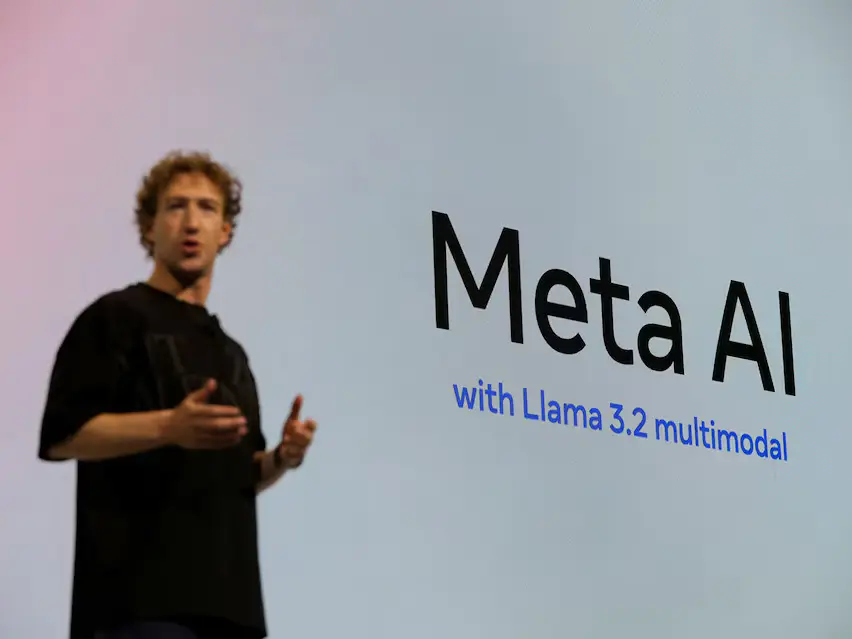
Meta Platforms Inc. has launched an unprecedented talent acquisition offensive, reportedly offering compensation packages worth up to $100 million to lure top artificial intelligence (AI) researchers from OpenAI, Apple, and other rivals. Dubbed “Superintelligence Labs,” the new division spearheaded by chief executive officer Mark Zuckerberg is designed to accelerate Meta’s generative AI efforts and reclaim ground in the industry’s most heated battleground.
Lavish offers to win top minds
Reports suggest that Zuckerberg has personally emailed leading AI scientists, dangling signing bonuses and equity grants that can reach nine figures in the first year alone. Sam Altman, CEO of OpenAI, publicly acknowledged in June that Meta was offering “signing bonuses as high as $100 million” to tempt OpenAI staffers in an escalation that shows how sharply the stakes have risen in Silicon Valley’s AI arms race.

Meta’s CTO Andrew Bosworth has downplayed the notion that all recruits receive such eye-popping deals, noting instead that “top-tier AI talent commands premium offers” wherever they go. Nonetheless, the sheer scale of Meta’s spending, bolstered by promises of unlimited GPU access and infrastructure, marks a significant shift in how Big Tech is willing to invest in human capital to gain an edge.
Notable poaches and leadership hires
The blitz has already produced several high-profile additions to Meta’s AI ranks. Former GitHub CEO Nat Friedman and AI entrepreneur Daniel Gross have been tapped to co-lead Superintelligence Labs, while Alexandr Wang, whose data-labelling startup Scale AI received a strategic investment from Meta, was elevated to chief AI officer. Other recruits include Ruoming Pang, previously Apple’s head of foundation models, who is rumoured to have received a package north of $200 million, and Yuanzhi Li, an OpenAI researcher known for work on large-scale language models.
Trending Stories
)
US vs China over South China Sea: Washington backs Philippines, Beijing hits back
)
Bigg Boss 20: Isha Rikhi evicted after three weeks in Salman Khan’s show
)
Musk plans to more than double xAI's chips to over 1.2 million Nvidia GPUs by year-end
)
After JU, clash erupts at SRFTI: BJP’s ‘Dimagi Naxal’ jibe sparks political firestorm after students protest RSS-linked event
)
‘Anti-social elements spreading false rumours’: LPU issues statement amid massive unrest over alleged rape
)
LPU students go on rampage, vandalise campus amid widespread protest: What's happening
)
Trump asked Xi to pressure Iran. China did not say yes — here’s what Beijing wants
)
US Treasury Secretary Scott Bessent hails global crackdown on Iranian banks and airlines
)
An OpenAI agent escaped its locked test cage again, by hiding questions in DNS lookups
)
'Our video was trimmed': LPU girls who featured in rape-denial video make U-turn
)
3 males killed, four others injured in shooting after fight at strip club in Detroit
)
'Victory for low-budget consumers': Raghav Chadha hails 30-day telecom recharge rules
)
Claude rebuilt the 1989 game 'Prince of Persia' by reusing the original's own code
)
Beyond metros: How Tier-2 and Tier-3 cities could drive India’s next AI wave
)
Tesla builds first Cybertruck with its own refined lithium: Elon Musk's $1 billion Texas bet pays off
)
IndiGo flight suffers tail strike in Bengaluru while landing; DGCA to probe incident
)
The US and China set up an AI 'red telephone', but skipped the rulebook
)
‘Terror suspects arrested near UK air base were looking to do big damage’: Trump
)
Russian envoy claims US tactics to contain India were revealed in ‘Freudian slip’
)
IND vs WI 1st ODI: Kohli breaks Sachin's most runs in one country record with unbeaten 139 as India thump West Indies by 8 wickets
)
Researchers rebuilt exactly how 700 AI agents hacked Hugging Face: a 900-link chain trick
)
‘Olympic inclusion is our major target’: WPA President Ishaun Singh on pool’s global ambitions
)
Nations League: Spain sink England at Wembley; Modric shines for Croatia
)
Why has Iran released no proof of life of Mojtaba Khamenei? Araghchi reveals...
)
'What kind of confession is this?': Pakistan PM Shehbaz Sharif’s 'terrorists would be roaming New York' remark goes viral, raises alarm online. Watch
)
South Korea demands apology from Ukraine over North Korean prisoners' transfer
)
Beyond BrahMos: India targets Rs 50,000 crore in defence exports with unmatched price edge
)
Sri Lankan Tamil migrant worker gets death sentence in Saudi Arabia, help sought from India
)
Muslim marriage cannot shield sex with minor wife from prosecution under POCSO: Delhi HC
)
'Can't help but draw painful parallels to Nirbhaya case': SC on latest incidents of rape cases in Delhi-NCR
)
99.9% more powerful - Scientists find boy who can recall memories from just 3 months of age
)
'FIRST LOOK from inside Noah’s Ark': Researchers share video from inside mysterious mound in Turkey
)
UNSC reform momentum grows: Russia, Portugal, Mauritius push for India's permanent seat bid
)
8 US marines injured in Iranian missile attack on vessel in Strait of Hormuz: Report
&im=FitAndFill=(700,400))
New OTT releases this week (September 28-October 4, 2026): Dupahiya 2, Pooja Meri Jaan, Ohh My Dog- 5 titles coming on Netflix, Prime Video and more
)
Afghanistan says 28 fighters killed in clash near Pakistan border, Islamabad denies
)
Ceuta migrant crisis: Protesters take to streets as Spain grapples with migrant challenge
)
LPU suspend classes, postpones exams as violence escalates over rape claims: What's happening
)
New York City wants a 'kill switch' on every AI, and will pay whistleblowers who report violations
To date, Meta has hired more than ten researchers from OpenAI alone, alongside specialists from Anthropic, Google DeepMind, and other prominent labs. According to industry observers, some OpenAI veterans quipped that the recruitment feels “like someone broke into our home and carried off the furniture.”
Building on a generative AI foundation
Meta’s aggressive hiring drive aligns with its broader strategy to become a leader in generative AI. The company’s FAIR research arm, established in 2013, laid the groundwork for innovations such as the Llama family of open-source language models. The launch of Llama 4 in April 2025 demonstrated Meta’s continued commitment to advancing its own large language models.
Alongside in-house R&D, Meta has invested billions in scaling infrastructure. A recent 49 per cent stake acquisition in Scale AI valued the startup at approximately $30 billion, effectively “acqui-hiring” Wang’s team and integrating their labelling platform. Such moves signal that Meta is willing to deploy capital aggressively to assemble both the people and the tools needed to compete against rivals.
An escalating industry talent war
Meta’s approach is far from unique. Google’s DeepMind division has countered by offering packages exceeding $20 million per year through enhanced equity and faster vesting schedules. Microsoft, a major investor in OpenAI, has also raided its partner’s talent pool for Azure AI initiatives, while Amazon Web Services, Apple, and upstart labs such as xAI and Inflection vie for engineers with a mix of high pay and compelling missions.
The result is a talent market in which elite AI researchers now command compensation levels once unimaginable in the tech sector. Some analysts warn this may inflate costs unsustainably and widen disparities between well-funded corporate labs and under-resourced academic or independent research groups. Insofar, OpenAI’s Sam Altman has cast the contest as “missionaries versus mercenaries,” arguing that researchers motivated chiefly by ideology or long-term alignment goals are critical to responsible AI stewardship.
Conversely, Meta’s bet is that generous compensation and ample resources will attract and retain the best minds, thereby fuelling faster breakthroughs. Whether this model yields safer, more beneficial AI or simply intensifies a zero-sum scramble for talent remains to be seen. What is clear is that the $100 million hiring war has raised the bar for what “top dollar” means in the AI era.