
&imwidth=800&imheight=600&format=webp&quality=medium "Mark Zuckerberg faces $8 billion lawsuit over data privacy and alleged corporate mismanagement")
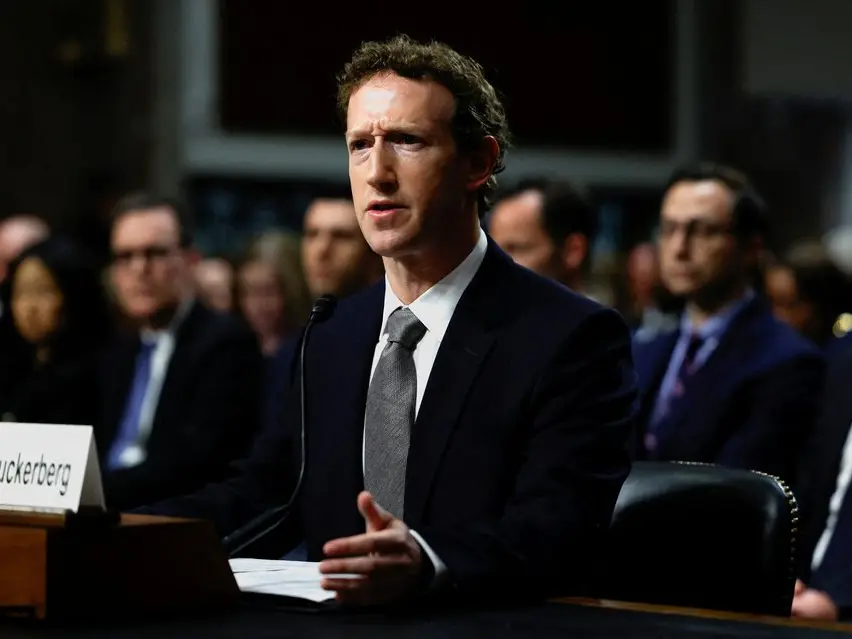
Meta Platforms Inc., the parent company of Facebook, is embroiled in a high-stakes $8 billion lawsuit brought by its own shareholders, including major institutional investors. The legal action, filed in Delaware’s Chancery Court, accuses CEO Mark Zuckerberg and other top executives, including former COO Sheryl Sandberg, of failing to oversee the company’s handling of user data. The lawsuit stems from the fallout of the Cambridge Analytica scandal, which saw Facebook users’ private information harvested and used for political targeting without consent.
The plaintiffs claim that Zuckerberg and other senior leaders violated their fiduciary duties and were complicit in illegal data practices that led to significant regulatory fines and legal costs for the company. At the heart of the suit is an allegation that Facebook’s leadership allowed the company to breach a 2012 Federal Trade Commission (FTC) consent order. This order required Facebook to cease the collection and sharing of user data without consent. Despite this, the lawsuit alleges that Facebook continued to sell user data to third parties, failing to disclose these practices adequately to the public.
The Cambridge Analytica scandal and its aftermath

The case dates back to 2018 when it was revealed that Cambridge Analytica, a now-defunct political consulting firm, improperly harvested data from millions of Facebook users without their consent. The firm then allegedly used this data to craft targeted political ads for Donald Trump’s 2016 presidential campaign. The revelation sparked a global outcry, leading to investigations and fines from regulators around the world.
In 2019, Meta (then Facebook) settled with the FTC for $5 billion over the data privacy violations stemming from the scandal. Additionally, the company faced significant fines in Europe and reached a $725 million settlement with affected users. However, shareholders are now suing to recover more than $8 billion in damages, including the FTC fine and other legal costs, claiming that Zuckerberg and other executives were directly responsible for the company’s failure to properly protect user privacy.
Neil Richards, a privacy expert from Washington University School of Law, testified for the plaintiffs, stating that Facebook’s privacy disclosures were “misleading” and failed to adequately inform users of the risks associated with their data. The trial, which began on July 16, is expected to include testimony from several high-profile figures, including Zuckerberg himself, former COO Sheryl Sandberg, and other board members such as Marc Andreessen and Peter Thiel.
Trending Stories
)
Justice eludes Air India 1985 bombing victims as Canada probe goes 'inactive' | Gravitas
)
Trump revives India-Middle East-Europe economic corridor as India emerges central to West Asia’s future: What is it?
)
Erdogan again raises Kashmir issue at UNGA, calls for dialogue under UN Charter
)
Major League Soccer referee sacked for sexist comment about female match referee
)
Trump signs Greenland security deal with Denmark, paving way for two new US military bases
)
IND vs JPN T20I: How an overturned wide became point of difference between India's win and a tie
)
Trump-Xi summit: From trade to Taiwan, what will the US and Chinese presidents discuss in Washington?
)
Cyclone Arnab: Landfall expected before midnight tomorrow as IMD issues orange alerts across six states
)
ICC plans T20I expansion and fewer ODIs in 2027–2031 FTP cycle: Report
)
US-China tech war: Businesses in the front line
)
Gravitas | Boosting NHS productivity could save 20,600 lives in UK annually: Report
)
Nor'easter could batter 13 US states this week. What you should know
)
WION Iconic Tourism Summit: Seychelles envoy says India partnership is important for Seychelles
)
US and China vie for AI dominance as calls grow for regulation | Gravitas
)
Yemen clashes kill 154 people in two days as cornered Saudi battles Houthi offensive | Gravitas
)
China to test supersonic jet that moves at Mach 2, double the speed of sound
)
Bomb scare in New York amid UNGA: Suspicious suitcase found near UN headquarters
)
IND vs JPN, one-off T20I: Japan captain Kendel on pushing India to the brink - ‘It was special’
)
Mikel Arteta verbally agrees to three-year extension with Arsenal after title-winning Premier League season
)
WION Iconic Tourism Summit and Awards 2026: Key voices to discuss India’s tourism future
)
WION Iconic Tourism Summit and Iconic Awards 2026: India's travel economy leaders gather in Delhi
&im=FitAndFill=(700,400))
New OTT releases this week (September 21-27, 2026): Shaque: Trust No One, Hunkkaar, Don’t Be Shy- 5 new titles coming to Netflix, Prime Video and more
)
81st UN General Assembly: Burnham announces UK-US AI defence tie-up
)
Trump calls on nations to quit ‘rogue’ and ‘out-of-control’ International Criminal Court, rips UN
)
Infections transmitted from pregnant woman linked to autism risk
)
'What kind of confession is this?': Pakistan PM Shehbaz Sharif’s 'terrorists would be roaming New York' remark goes viral, raises alarm online. Watch
)
Elephants hide behind trees, stage surprise attack on poachers targeting rhinos in South Africa
)
IIT Bombay professor Suryanarayana Doolla sent on leave amid Sahil Wakode death probe
&im=FitAndFill=(700,400))
National Film Awards 2026: Kartik Aaryan, Mammootty, Yami Gautam, Randeep Hooda and other key winners
)
El Niño 2026 heats up to become strongest in 1,000 years
)
Anne Hathaway to run in supporting race for Nolan's epic
)
Over 4,200 books withdrawn from circulation in J&K colleges, 94% from Kashmir
)
From Gaddafi tearing up UN Charter to Trump’s ‘escalatorgate’: Most unforgettable UNGA moments
)
Explainer: Why rare-earth export licences and Board of Trade are US priorities ahead of Trump-Xi summit
)
Asia prepares for record El Nino, food shock
)
Forget apps: Qualcomm CEO says AI agents will change how we use smartphones
)
Four female students raped during 'Red Zone' at California university. What we know
Board’s role in the scandal and governance failures
The lawsuit argues that Meta’s board failed to fulfil its duty of oversight, allowing Zuckerberg and his team to oversee a “data harvesting operation” that violated privacy laws and led to massive financial and reputational harm. Shareholders allege that Meta’s board ignored repeated warnings and did not take sufficient action to prevent the misuse of personal data.
Meta’s corporate governance structure also came under scrutiny during the trial. Zuckerberg controls 61 per cent of Meta’s voting shares, a dual-class share structure that gives him significant power over the company’s direction. Shareholders argue that this structure undermines checks and balances, giving Zuckerberg the ability to act unilaterally and allowing the board to fail in holding him accountable for the scandal.
The court case also touches on claims of insider trading. Zuckerberg allegedly anticipated the fallout from the Cambridge Analytica scandal and sold a portion of his Facebook shares before the stock price plummeted. The plaintiffs claim that Zuckerberg’s actions were motivated by insider information, though the defendants have denied this and assert that Zuckerberg followed a pre-established stock-trading plan designed to avoid such conflicts.
Implications for Big Tech and executive accountability
The outcome of the case could have broad implications for executive accountability in the tech industry, especially concerning issues of data privacy and corporate governance. The lawsuit is seen as one of the most significant shareholder actions against a major tech company, as it alleges not only privacy violations but also failures in corporate oversight.
Meta, which remains incorporated in Delaware despite recent tensions with the state’s corporate laws, has not commented on the trial. The company has continued to emphasise its commitment to user privacy, stating that it has invested billions of dollars in improving its data protection practices since 2019. For now, the case serves as a reminder of the growing scrutiny Big Tech companies face regarding their handling of user data and the broader question of how much responsibility executives should bear when their companies are implicated in privacy violations.