Japan’s exports shrink as Trump tariffs hit autos, recession risks rise

&imwidth=600&imheight=450&format=webp&quality=medium "Japan’s exports shrink as Trump tariffs hit autos, recession risks rise")
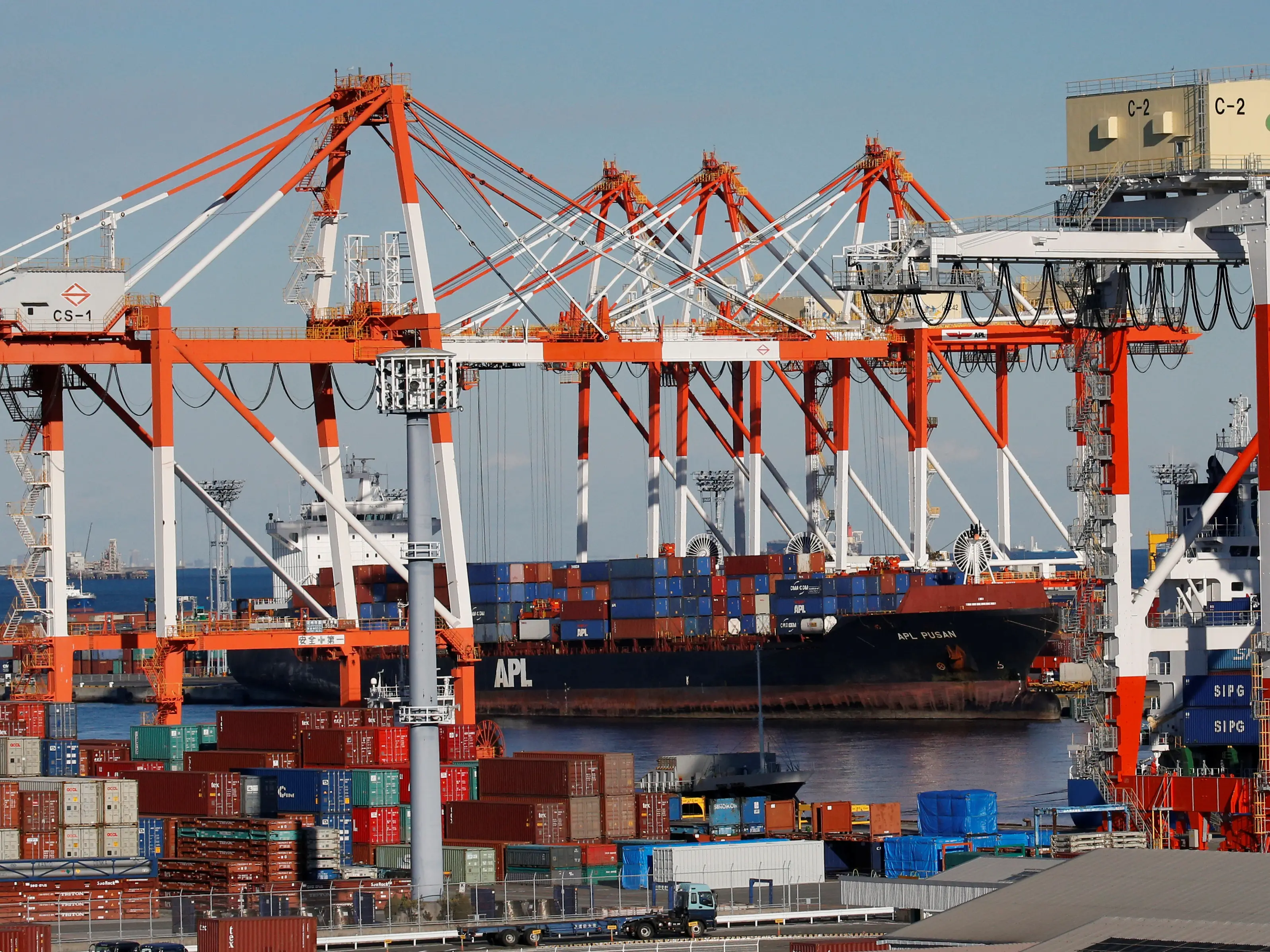
Containers are seen at an industrial port in Yokohama, Japan. Photograph: (Reuters)
Japan's exports are facing a downturn, with trade data indicating a second consecutive monthly decline. Exports decreased by 0.5% year-on-year in June, falling short of economists' expectations.
Japan’s export engine is spluttering. Fresh trade data released Thursday showed a second consecutive monthly decline in exports, a direct blow to the country’s fragile economy as US President Donald Trump’s tariffs hit key sectors such as automobiles and steel. According to Japan’s Finance Ministry, exports fell 0.5 per cent year-on-year in June, missing economists’ expectations for a 0.5 per cent rise.
As reported by Bloomberg, the drop was driven by an 11.4 per cent fall in shipments to the United States, Japan’s largest trading partner. Vehicle exports to the US dropped 27 per cent in value, and steel exports plunged 29 per cent. Despite the sharp decline in value, Bloomberg noted that the number of passenger cars exported actually rose 4.6 per cent, a sign that Japanese carmakers are slashing prices to remain competitive under Washington’s escalating tariffs.
No deal in sight, tariffs to climb on August 1
Tokyo has failed to reach a trade agreement with the United States, despite seven trips to Washington by Japan’s trade envoy Ryosei Akazawa. As reported by Bloomberg, Japan is currently facing a 25 per cent tariff on cars and car parts, a 50 per cent levy on steel, and a baseline 10 per cent tariff on all other goods, set to rise to 25 per cent on August 1 unless a deal is struck.
President Trump has signalled that the US may enforce the tariff hike as scheduled. “I think probably we’ll live by the letter with Japan,” Trump told reporters on Wednesday, as quoted by Bloomberg. Reuters reported that Japanese negotiators are now racing against time, with Akazawa holding a call with US Commerce Secretary Howard Lutnick on Thursday morning. However, hopes for a resolution before Japan’s upper house elections on Sunday remain slim.
Carmakers absorb pain — for now
Trending Stories
)
)
)
)
)
)
)
)
)
)
)
)
)
)
)
)
)
)
)
)
)
)
)
)
)
)
)
)
)
)
)
)
)
)
&im=FitAndFill=(700,400))
)
)
)
)
The sharp fall in the value of auto exports despite higher volumes reflects a deliberate strategy by Japanese automakers to absorb tariff costs. “Exports to the US, particularly autos, have fallen significantly. Carmakers are cutting costs and sacrificing their profits to absorb the impact of the tariffs,” said Takeshi Minami, chief economist at Norinchukin Research Institute, in an interview with Bloomberg.
A similar assessment was offered by Koya Miyamae, senior economist at SMBC Nikko Securities, who told Reuters, “Japanese automakers have so far kept production levels by sacrificing margins, so the tariff impact on their production activities has been limited.”
But the longer trade negotiations drag on, the harder it becomes to keep prices down. “The tariff impact is likely to intensify in coming months, when the tariff rate is finalised and Japanese companies begin to fully pass on costs to consumers in the US, which would hamper competitiveness of Japanese products there,” said Koki Akimoto, economist at Daiwa Institute of Research, as quoted by Reuters.
Trade hit spreads beyond US
The trade pain isn’t limited to the US. As per Reuters, exports to China also declined 4.7 per cent in June, although shipments to Europe managed to rise 3.6 per cent. On the import side, Japan saw a marginal 0.2 per cent rise in June, defying expectations for a 1.6 per cent drop.
As a result, Japan recorded a trade surplus of ¥153.1 billion ($1.03 billion), its first in three months, but still well below market forecasts of ¥353.9 billion, according to Reuters.
The yen averaged 144.04 against the dollar in June, about 8 per cent stronger than the same month a year ago, which further reduced the value of dollar-denominated exports when converted back into yen.
Recession fears mount, BoJ likely to hold rates
Japan’s economy contracted in the first quarter, and the latest trade figures suggest that a second consecutive contraction in Q2 is increasingly likely, meeting the definition of a technical recession.While some economists expect modest growth, others are more pessimistic. “Given the fluctuating statements from President Trump, uncertainty is likely to persist,” said Norinchukin’s Minami, as quoted by Bloomberg. “If reciprocal tariffs are raised to 25 per cent, the impact on exports other than automobiles would also be significant, potentially putting pressure on corporate profits and weighing on winter bonuses and next year’s wage increases.”
As per Reuters, the Bank of Japan is expected to keep its monetary policy steady in the face of rising downside risks, as prolonged tariff uncertainty clouds the outlook for trade, corporate earnings, and consumer demand. With no deal in sight and tariffs climbing, Japan’s export-dependent economy is buckling under US trade pressure. Auto firms are already bleeding margins, and broader sectors may be next in line, setting up a high-stakes summer for both Tokyo and the Bank ofJapan.