Japan’s inflation at two-year high intensifies pressure on rate hike, but US trade tensions cloud outlook

&imwidth=600&imheight=450&format=webp&quality=medium "Japan’s inflation at two-year high intensifies pressure on rate hike, but US trade tensions cloud outlook")
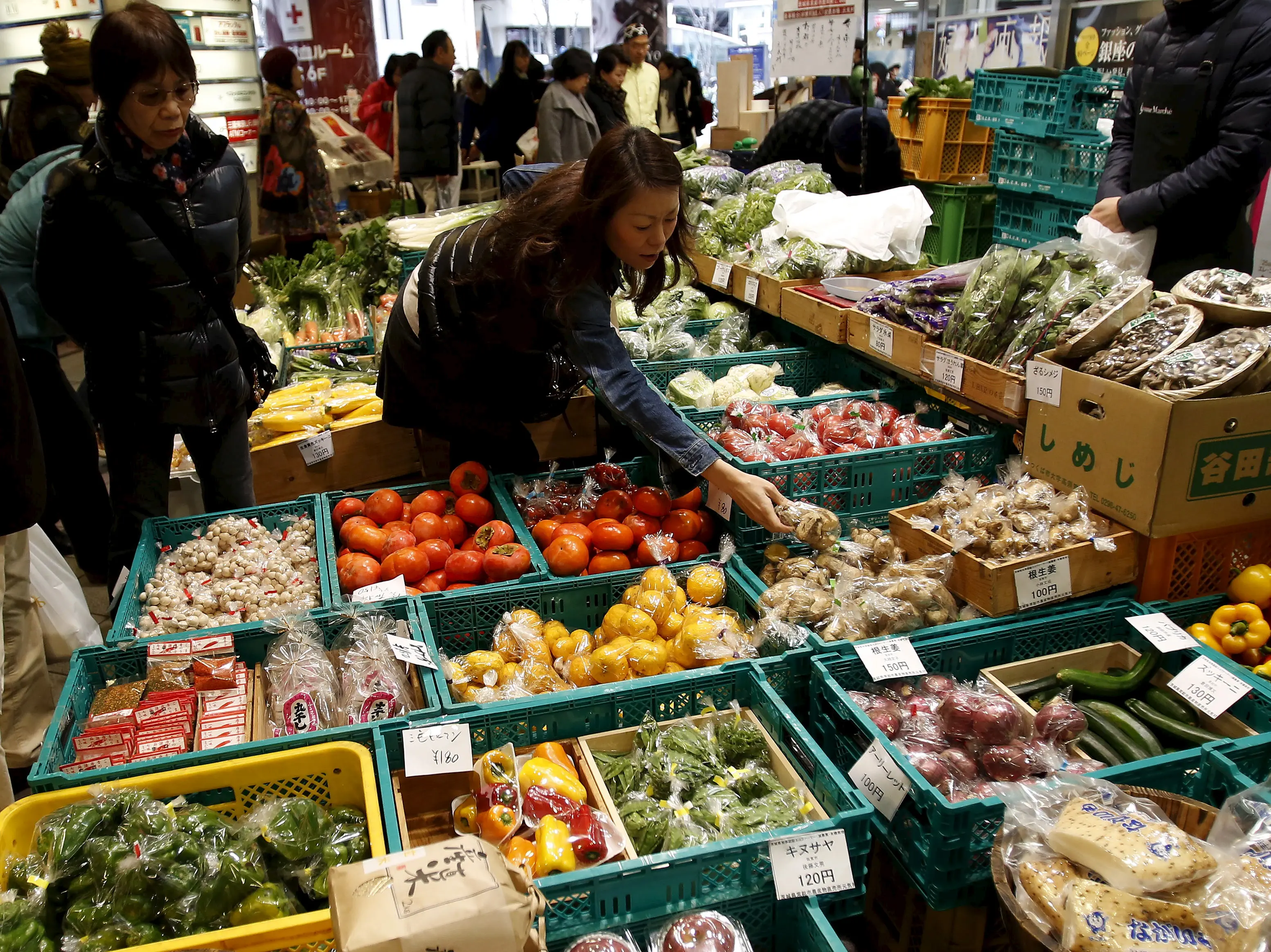
JAPAN FOOD MARKET Photograph: (REUTERS)
Japan's core inflation in Tokyo reached its highest level in over two years, causing expectations of a rate hike by the Bank of Japan (BOJ).
Japan’s core inflation in its capital has surged to the highest level in more than two years, fuelling expectations of a rate hike by the Bank of Japan (BOJ).
However, the central bank’s path forward remains fraught, as the economy grapples with a slump in factory output and intensifying trade tensions with the United States.
According to Reuters, the Tokyo core consumer price index (CPI), which excludes fresh food costs, rose by 3.6 per cent in May from a year earlier, higher than market forecasts of 3.5 per cent and up from 3.4 per cent in April. This is the fastest rate of increase since January 2023, when inflation peaked at 4.3 per cent.
A broader inflation gauge that excludes both fresh food and fuel, and is closely tracked by the BOJ, climbed 3.3 per cent in May. It had risen 3.1 per cent the previous month, indicating that price pressures are deepening beyond just food and energy.
Marcel Thieliant, head of Asia-Pacific at Capital Economics, told Reuters: “The Tokyo CPI showed a further broad-based acceleration in inflation, which suggests that the BOJ may hike even earlier than our current forecast of October.”
Factory slowdown raises red flags
Trending Stories
)
)
)
)
)
&im=FitAndFill=(700,400))
)
)
&im=FitAndFill=(700,400))
)
)
)
)
)
)
)
)
)
)
)
)
)
)
)
)
)
)
)
)
)
)
&im=FitAndFill=(700,400))
&im=FitAndFill=(700,400))
)
&im=FitAndFill=(700,400))
)
)
)
)
)
While inflation surges, Japan’s manufacturing sector shows signs of weakening. As reported by Reuters, factory output dropped by 0.9 per cent in April from the previous month. Manufacturers anticipate a 9.0 per cent rebound in May, followed by a projected 3.4 per cent dip in June, suggesting volatility and uncertainty within the sector.
The BOJ is now confronted with a delicate balancing act: containing inflation without choking off growth at a time when global demand is waning.
US tariffs create additional economic headwinds
Complicating the picture further is Japan’s deteriorating trade relationship with the United States. President Donald Trump’s administration recently imposed steep tariffs on key Japanese exports, including vehicles, steel components, and electronic goods. Some duties reportedly exceed 24 per cent.
Reuters notes that while Japan’s overall exports rose by 2 per cent in April, shipments to the US reportedly dropped by 1.8 per cent year-on-year. This decline signals that Trump’s tariff regime is beginning to take a toll on Japan’s external sector.
Adding to the uncertainty, the Japanese government has lowered its global growth outlook and acknowledged that the trade friction with Washington could hinder the country’s post-pandemic recovery. The BOJ itself has already revised down its growth forecasts for the year, citing the impact of these tariffs.
Rising food and service costs keep inflation expectations alive
Food inflation remains a major driver of Japan’s price rise. Reuters reports that non-fresh food prices soared by 6.9 per cent in May, while the cost of rice skyrocketed by 93.2 per cent.
Additionally, services inflation, which the BOJ closely monitors, rose to 2.2 per cent from 2.0 per cent in April, suggesting firms are beginning to pass labour costs onto consumers.
A survey by Teikoku Databank, cited by Reuters, revealed that Japanese companies plan to increase prices on 1,932 food and beverage items in June, triple the number from a year earlier.
BOJ Governor Kazuo Ueda told parliament on Friday that the central bank remains attentive to wage hikes and corporate pricing strategies, both of which are crucial to sustained inflation.
“Japan may face a tricky situation where public attention to rising food prices heightens inflation expectations, which have so far been stable,” said Tsutomu Watanabe, professor at the University of Tokyo’s graduate school of economics, in an interview with Reuters.
A cautious road ahead for the BOJ
The BOJ exited its ultra-loose monetary stance last year and raised short-term rates to 0.5 per cent in January. However, the timing of the next move remains uncertain.
While inflation has clearly exceeded the 2 per cent target, the broader economic environment, including shrinking factory output and external shocks from US protectionism, could restrain the bank’s hand.
For now, expectations of another rate hike remain on the table, but the path ahead is far from clear. As Japan contends with internal price pressures and external trade risks, the BOJ will need to weigh its next steps with caution and flexibility.