India’s interests in West Asia to go beyond oil, gas for firmer influence

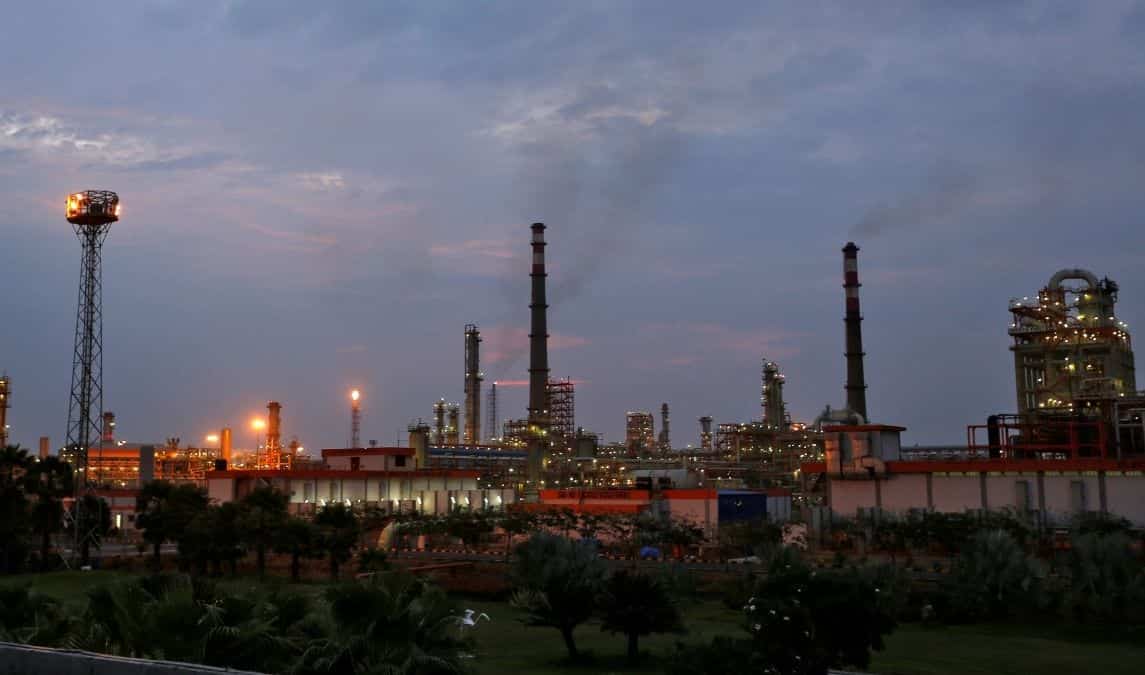
An oil refinery of Essar Oil , which runs India's second biggest private sector refinery, is pictured in Vadinar in the western state of Gujarat, India
For decades, the relationship between India and the Gulf has been defined by oil. However, for firmer influence, the country is ready to itsinterests in West Asia beyond oil andgas.
India imports 53 per centof its oil and 41 per cent of its gas from West Asia and over 8.5 million Indians work in the region.
In 2018, India's total remittances was around 78.6 billion dollars. Out of this,48.6 billion dollars had come from the 6 Gulf Cooperation Council countries (GCC).

While these numbers are big, India's ties with West Asia cannot be anchored on oil and diaspora alone. And because of the coronavirus pandemic itis the perfect opportunity to tapavenues and newer opportunities.
The pandemic has triggered a lot of turbulence in this region.While new alliances are being builtGulf nations are looking within too.
As per an estimate,Arab states of the Gulf could have a deficit of about 490 billion dollars between 2020 and 2023. Their government debt could surgeby a record 100 billion this year.
Sovereign wealth funds
India should invest insovereign wealth funds, which are worth billions. In such an investmentgovernment invests its surplus reserves in the country and outside.
The Abu Dhabi investment authority is worth 579.6 billion dollars and the Kuwait investment authority- 533.6 billion dollars.
WhileWest Asia has spending capacity, India on the other handhas investment opportunities and unmatched potential.
Saudi Arabia's 347 billion dollars sovereign wealth fund is very crucial to crown prince- Mohammad bin Salman's vision 2030.
As India eyes a 5 trillion dollar economy, it can attract sovereign wealth funds in several just growing companies-- across sectors
India can expand its cooperation with West Asia with trade.The total bilateral trade between India and the GCCstood at 121.34 billion dollars in 2018-19.
At 60 billion dollars, the United Arab Emirates was India's third-biggest trade partner in the year 2018-19.
Saudi Arabia was the fourth biggest trade partner with bilateral trade amounting to 34.03 billion dollars.
Energy trade
Energy tradeisthe anchor of India-West Asia economic relations butthetrade basket needs to be diversified especially due to the Wuhan virusand the fall in energy demands.
Goods like precious metals, food and agriculture products, chemicals, gems and jewellery, textile must all be included in the trade basket.
Sector-specific investment
Major oil companies of West Asia are already developing a strategic partnership with the Indian companies both in the public and private sector.
A 15 billion dollar deal was announced between Saudi Aramco and Reliance industry.India's ONGC Videsh has acquired a 10 per cent stake in offshore oil concession in Abu Dhabi.
Sebacic Oman, which is an Indo-Oman venture, is setting up West Asia largest sebacic acid plant for 1.2 billion dollars.
A senior official from India's ministry of external affairs saidIndia and the Gulf can explore forging of partnerships to develop oil and gas reserves in various parts of the country.
The official named- Kutch, Cauvery basin, Mahanadi basin, and offshore locations in the bay of Bengal as possible venues for joint hydrocarbon production.
The topic of expanding cooperation came up during the discussion between India's external affairs minister- s. Jaishankar, and his counterpart in Bahrain.
They agreed to further strengthen Bahrain-India ties in the areas of defence and maritime security, space technology, trade and investment, infrastructure, it, fin-tech, health, hydrocarbon and renewable energy.