

&imwidth=800&imheight=600&format=webp&quality=medium "Indian techies coding the American dream: Until AI and MAGA hit delete")
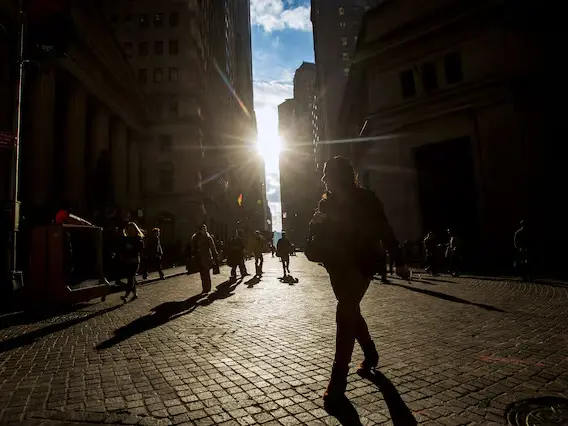
For decades, Indian tech professionals have been the backbone of America’s digital revolution, filling critical roles in software development, data analysis, and IT services. But in 2025, the landscape is shifting dramatically.
A wave of AI-powered automation and the “Make America Great Again” (MAGA) politics are threatening to unravel the American Dream for thousands of Indian techies.
Across major tech firms including Google, Meta and Amazon, thousands of layoffs have rippled through the workforce, with H-1B visa holders disproportionately impacted. As AI tools like ChatGPT, Anthropic’s Claude, and Google's Gemini take over coding, debugging, and testing tasks, entry- and mid-level roles are rapidly disappearing.
According to a report by Axios, white-collar workers, particularly in tech, marketing, and administration, are bearing the brunt of automation. Anthropic CEO Dario Amodei recently warned that AI could wipe out up to 50 per cent of entry-level white-collar jobs within the next five years.
This technological disruption has collided with an increasingly hostile political narrative. Several conservative factions aligned with the MAGA movement have begun targeting foreign workers, especially Indian nationals on H-1B visas, as scapegoats for job losses. A Financial Express report highlights a growing sentiment among some Americans urging Indian tech workers to “leave the US” as layoffs increase.
Caught in a perfect storm
Trending Stories
&imwidth=180&imheight=135&format=webp&quality=medium)
100,000 strikes in 3 years: How October 7 redefined Israel's war
&im=FitAndFill=(700,400)&imwidth=180&imheight=135&format=webp&quality=medium)
Happy Birthday Rekha: Watch these 7 evergreen Bollywood hits on Netflix, Prime Video and more
&imwidth=180&imheight=135&format=webp&quality=medium)
‘Your people don’t even let us near it’: IAF chief’s blunt response on US F-35; India yet to decide on Russia’s Su-57
&imwidth=180&imheight=135&format=webp&quality=medium)
Real or fake? PIB fact-checks protest videos; Delhi Police clarifies on Gurdwara Bangla Sahib clip
&imwidth=180&imheight=135&format=webp&quality=medium)
Delhi on high alert for CJP protest: Delhi police to use body cams to 'prove whether we did anything’; Pink Force, RAF, 35,000 personnel deployed
&imwidth=180&imheight=135&format=webp&quality=medium)
‘Never-ending flow of cheap labour’: JD Vance hits back at Indian-origin Congresswoman over US green card curbs for major tech companies
&imwidth=180&imheight=135&format=webp&quality=medium)
Panama president declares ‘major disaster’ after powerful 7.7-magnitude earthquake; over 80 aftershocks recorded
&imwidth=180&imheight=135&format=webp&quality=medium)
'Jantar Mantar not the story of India': BJP's Sambit Patra claims 'anarchists' tried to hold Delhi captive
&imwidth=180&imheight=135&format=webp&quality=medium)
BJP MP Ravi Shankar Prasad slams CJP protests, calls it 'shadow boxing for AAP'
&imwidth=180&imheight=135&format=webp&quality=medium)
US midterm elections: Why Zohran Mamdani's influence could become a headache for Democrats and Republicans
&imwidth=180&imheight=135&format=webp&quality=medium)
Riyadh airport hit in missile attack, dozens injured; 5 in intensive care
&imwidth=180&imheight=135&format=webp&quality=medium)
'Spent Rs 2,000 cr to elect Trump': Elon Musk bought US President's loyalty by writing the biggest political cheque in human history
&imwidth=180&imheight=135&format=webp&quality=medium)
Powerful 7.7 magnitude earthquake strikes Panama, tsunami warning issued
&imwidth=180&imheight=135&format=webp&quality=medium)
US mid-term elections: What are PACs - Unique American System that lets corporates shape voting
&imwidth=180&imheight=135&format=webp&quality=medium)
Elon musk & India clash over Starlink's market entry terms
&imwidth=180&imheight=135&format=webp&quality=medium)
INDIA bloc plans mega protest on Monday amid Delhi crackdown, Wangchuk's warns to launch 'padyatra'
&imwidth=180&imheight=135&format=webp&quality=medium)
Who is Ajinkya Shinde, announced to lead CJP protest after Dipke, Das and Ranka's detention?
&imwidth=180&imheight=135&format=webp&quality=medium)
'Ouch!!! That must hurt': Kangana Ranaut hails Kamal Haasan's sharp reply to Elon Musk over Starlink row
&imwidth=180&imheight=135&format=webp&quality=medium)
‘Right to protest must be protected, but...’: Delhi Police reveals why it denied CJP permission for October 10 Jantar Mantar protest
&imwidth=180&imheight=135&format=webp&quality=medium)
Hamas used double agents, deceived Israel to carry out October 7 massacre
&imwidth=180&imheight=135&format=webp&quality=medium)
NIA files FIR in Flydubai hijack attempt and attack on Smit Machchhar, probes ‘larger conspiracy’
&imwidth=180&imheight=135&format=webp&quality=medium)
Portugal Federation confirms Cristiano Ronaldo’s return to national team despite suspension
&imwidth=180&imheight=135&format=webp&quality=medium)
All 22 Indian seafarers safe in attack on Panama-flagged tanker off UAE coast
&imwidth=180&imheight=135&format=webp&quality=medium)
‘Time for Ukraine to get a new president’: Trump lashes out at Zelensky over Russia strikes
&im=FitAndFill=(700,400)&imwidth=180&imheight=135&format=webp&quality=medium)
Food shortages, suicide attempts and more: USS Abraham Lincoln returns to US after 321 day deployment — What happened aboard the US carrier?
&imwidth=180&imheight=135&format=webp&quality=medium)
Thai queen becomes first reigning monarch to fly jet solothailand #queen #wion
&imwidth=180&imheight=135&format=webp&quality=medium)
‘Every game against Liverpool is special’: Erling Haaland ahead of Anfield clash
&imwidth=180&imheight=135&format=webp&quality=medium)
Rahul Gandhi calls Modi, Shah ‘cowards’ amid CJP protest crackdown in Delhi
&imwidth=180&imheight=135&format=webp&quality=medium)
Four years, 3 licenses, zero launch: Why is Elon Musk’s Starlink still struggling to crack Indian market? EXPLAINED
&imwidth=180&imheight=135&format=webp&quality=medium)
Drishyam: The Conclusion week 1 box office report: With no competition, Ajay Devgn's film crosses Rs 400 crore mark
&imwidth=180&imheight=135&format=webp&quality=medium)
AUS vs SA 1st Test, Day 2: Renshaw shines with 190 as Australia dominate South Africa
&imwidth=180&imheight=135&format=webp&quality=medium)
Why was CJP founder Abhijeet Dipke detained? What Delhi Police said
&imwidth=180&imheight=135&format=webp&quality=medium)
Putin conveys Iran’s proposal to Trump, offers to take Tehran’s enriched uranium
&imwidth=180&imheight=135&format=webp&quality=medium)
'It’s been 12 hours': CJP writes to Delhi Police, demands release of Dipke, Saurav Das and Ranka
For many Indian professionals, the dual forces of automation and nationalism have created a precarious situation. Job security has evaporated almost overnight, while immigration status hangs by a thread. The US H-1B system ties a worker’s legal status to employment. If someone is laid off, they typically have just 60 days to secure another job or leave the United States.
Social media platforms like LinkedIn and TeamBlind are flooded with posts from Indian tech workers seeking leads, legal advice, or emotional support. A viral LinkedIn post by Indian professional Movin Jain about why Indians in the US are being replaced by Indians in India sparked debate, reflecting a growing sense of displacement and frustration among highly skilled immigrants.
The post mentions that the cost of tech talent in India is much lower; the salary for software engineers in India is around 20 per cent of what the company has to pay an employee in the US. India's strong pool of tech talent definitely makes it an attractive option for companies looking to cut expenses while maintaining output.
On the other side, many American citizens, particularly in swing states like Pennsylvania and Ohio, view foreign workers as competitors in an increasingly tight job market. Trump-era policies and the MAGA movement have tapped into this resentment, pushing for stricter immigration controls and the elimination of perceived “job theft” by visa holders.
AI raises the stakes
While MAGA rhetoric is loud, AI is quietly reshaping the fundamental structure of white-collar employment. A recent news report from the Economic Times noted that managers and mid-tier engineers are now being replaced by AI systems that not only code but also manage workflows, analyse large datasets, and even conduct performance reviews.
DeepMind CEO Demis Hassabis, speaking to students earlier this month, warned, “The world you’re entering will look nothing like the one you were trained for.” Former President Barack Obama also sounded the alarm, stating in an interview that AI could erase “millions of white-collar jobs within years”.
Analysts predict that the first to go will be those in support and entry-level roles, the very positions Indian H-1B professionals often occupy early in their careers in the US. Although many of these workers are highly educated, their vulnerability lies in their visa dependence and the speed at which automation is rendering certain roles obsolete.
What lies ahead
Some Indian workers are considering returning home or looking to Canada, Germany, or Australia, where immigration policies may offer greater flexibility. Others are doubling down on upskilling, pivoting toward AI, cybersecurity, or product leadership roles that are harder to automate.
However, the path ahead remains uncertain. Many are caught in legal limbo, struggling to find new jobs within a shrinking market while navigating complex visa rules. The US tech industry, once a beacon of opportunity for international talent, now appears less welcoming.
Despite the bleak outlook, some industry voices are calling for reform. Tech CEOs and immigrant advocacy groups are urging lawmakers to decouple visas from employers, offer grace periods, and invest in re-skilling displaced workers. But with MAGA populism surging, meaningful change may be hard to come by.
The convergence of AI disruption and MAGA-fuelled anti-immigration sentiment has put Indian tech professionals in the US at a unique disadvantage. As companies streamline their operations and politics grow more polarised, the very workers who helped build America’s digital future now find themselves questioning whether they have a future in the country at all.