Guyana delays $1.9 billion gas-to-power project until 2025 due to delays and challenges

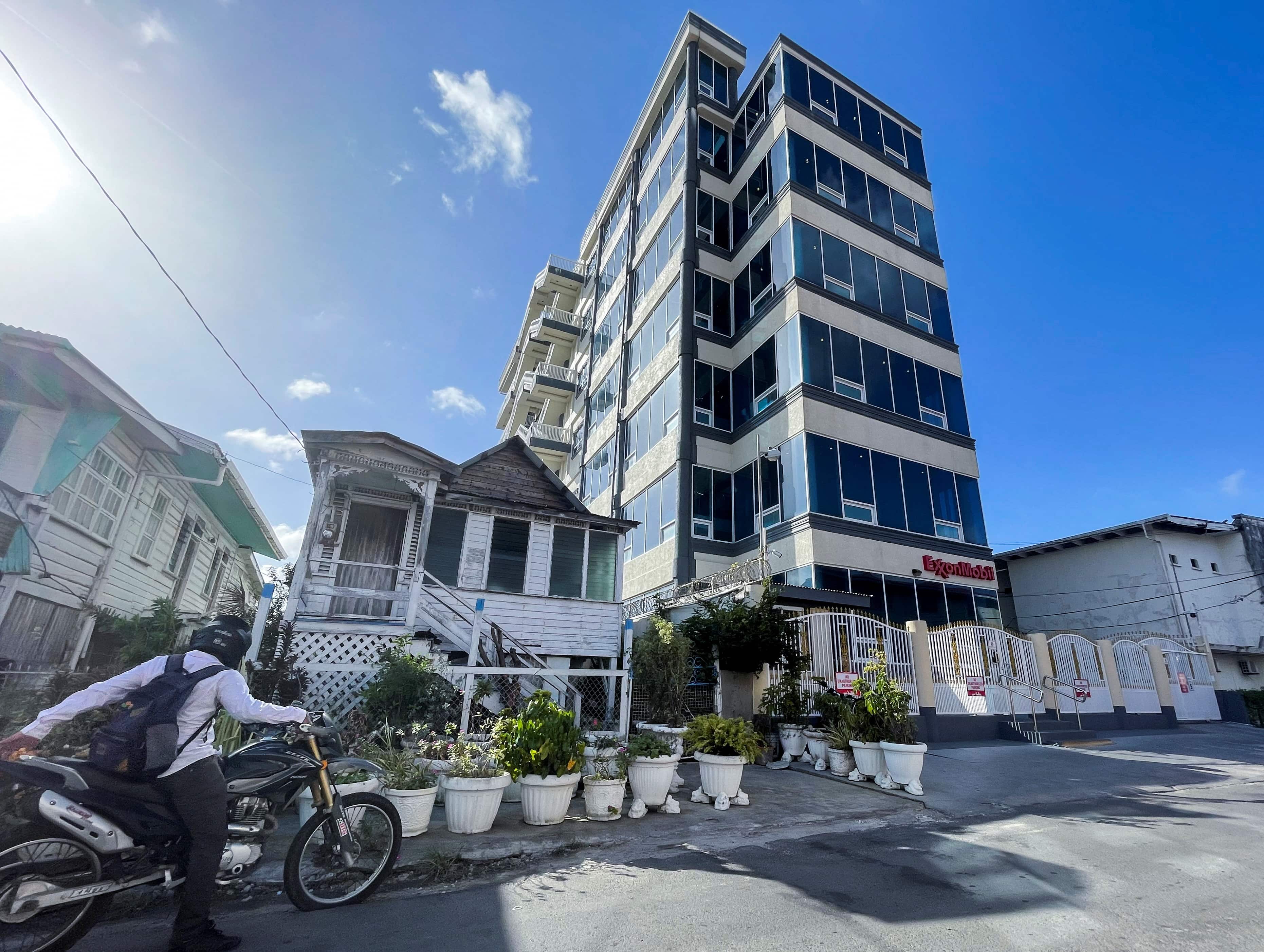
The Exxon Mobil Corp building is pictured in Georgetown, Guyana
Guyana's efforts to capitalise on its energy bounty, a significant project aimed at reducing electricity costs through a gas-to-power initiative will be delayed until 2025.
The project, valued at $1.9 billion, was initially slated to commence this year but has encountered delays due to various factors including work delays, late equipment deliveries, and issues with the project's foundation.
Winston Brassington, a government consultant involved in the project, revealed that the combined-cycle power plant will not achieve full operation until the fourth quarter of 2025.

The project, which was a pledge made to Guyana's residents to reduce energy costs by 50 per cent this year, has faced setbacks despite efforts to secure financing. Guyana is requesting a $646 million loan from the US Export-Import Bank to fund the onshore facilities.
Meanwhile, ExxonMobil, currently constructing a $1 billion pipeline, will be reimbursed by proceeds from the country's offshore production. The gas pipeline is expected to be completed by the end of this year, according to Alistair Routledge, Exxon Guyana country chief.
However, despite these delays, the government remains optimistic about the project's progress. It expects the power plant to start delivering 200 MW by June 30 next year, with project completion and delivery of 300 MW on a combined cycle by the end of 2025.
)
Gaza under attack: Health chief's son killed in IDF strikes
)
Cochin shipyard starts building Indian Navy's next-gen missile vessels
)
Russia holds first parliamentary elections since the beginning of the Ukraine war
)
China may have gained access to US's classified F-35 jets; parts meant for repairs diverted to Hong Kong, sparking Pentagon inquiry
)
Mark Carney mimics Trump in hilarious moment over C$70 billion clean-energy investment; room erupts in laughter
)
9 women found dead near Johannesburg: South Africans rally, demand 'enough' to femicide
)
Pentagon revives mandatory testosterone testing for male troops aged 30 and above
)
Russia extends ban on Western food imports for two more years in extended sanctions countermeasure
)
Iran sets 7 conditions to end war with US: What are Tehran’s demands?
)
Flying cars in UAE: Ras Al Khaimah signs deal with Chinese company to test new transport
)
Africa is splitting, and a lot sooner than estimated, giving way to a new ocean
&im=FitAndFill=(700,400))
‘Not the US or China’: These are the countries leading the world in arable land
)
The Verdict | When precision fails: US commits war crime in Minab school strike, UN finds
)
FACT CHECK: Why did PM Modi ask Xi ‘is it okay’ at BRICS Summit? New video reveals...
)
‘Will go to any extent’: Pakistan vows to defend Saudi Arabia amid Houthi attacks
)
Trump defends AI amid growing alarm, announces new 'AI force' and promises an 'AI czar'
)
Reacher star Alan Ritchson opens up about alleged blackmail, suicide attempt during difficult period
)
Trump 2.0: Dark days ahead for America’s ‘imperial presidency’
)
Nigeria: Protesters take to the streets, police fire shots
)
Tirupati Laddu ghee adulterated with chemicals, says ED, supplier arrested
)
Arvind Kejriwal, family members, Delhi CM Rekha Gupta get SIR notices
)
Ed Sheeran addresses Macklemore's removal, Gaza conflict during Philadelphia concert: 'I cannot hide how I feel'
)
Brigitte Bardot’s private collection set for Paris auction; key items and prices revealed
)
Harry Brook targets long reign at top of T20I rankings after Sri Lanka sweep
&im=FitAndFill=(700,400))
How many F-35s does Britain, Japan and Israel have?
)
US-Iran war: Tehran draws red lines — seven demands before any peace talks
)
Trump wants to rename ‘Artificial Intelligence’, gives 3 options: Which one would you pick?
)
Trump announces ‘AI Force’ as debate grows over AI risks and regulation
66 years of the Indus Waters Treaty: How India and Pakistan settled a bitter river dispute
)
Raphinha hat-trick powers Barcelona to 3-1 win over Sevilla in La Liga
)
Trump bans CNN, MS NOW and Politico from White House over ‘FAKE NEWS’
&im=FitAndFill=(700,400))
Ananya Panday to Sharvari: 5 actresses serving major princess vibes
&im=FitAndFill=(700,400))
Meet top 5 Indian batters with fastest T20I centuries
)
How did an Australian river with 500 crocodiles pass the Olympic test? Here's how
)
Pak: A series of counter terrorism operations in Khyber Pakhtunkhwa
)
While challenges persist, Guyana continues its efforts to harness its energy resources for the benefit of its population and economy.
The long-standing Essequibo dispute between Guyana and Venezuela, which has lingered for decades, saw a significant breakthrough in December 2023 as both nations reached an agreement to resolve the issue peacefully.
The resolution marks a crucial milestone in the region, particularly considering the rich oil and gas deposits in the disputed area. This agreement underscores the commitment of both countries to avoid resorting to force and instead seek diplomatic solutions to longstanding territorial disputes.
The discovery of crude oil in the Essequibo region by ExxonMobil in 2015 has reshaped Guyana's economic landscape. Prior to this discovery, Guyana primarily relied on agriculture and mining for its economic sustenance.
However, the potential exploitation of substantial oil and gas reserves has swiftly transformed the country's economic prospects. Guyana has since emerged as one of the fastest-growing economies globally, despite challenges posed by the COVID-19 pandemic and global economic slowdowns.
The exponential growth rates, with GDP surging by over 62.3 per cent in 2022, highlight the transformative impact of the oil discoveries on Guyana's economy.
Political tensions surrounding the Essequibo dispute have persisted, with some attributing the escalation to Venezuelan President Nicolas Maduro's efforts to consolidate domestic support.
Maduro's actions, including holding a controversial referendum on annexing Essequibo, reflect the intricate geopolitical complexities intertwined with economic interests in the region.
Despite Guyana's potential to become a significant player in the global energy market and substantially increase its GDP per capita, uncertainties loom over its economic future.
The fear of a potential Venezuelan invasion, coupled with broader geopolitical dynamics, raises concerns about Guyana's ability to fully realise its economic potential from its oil wealth.
(With inputs from Reuters)