Flashback Friday: Revisiting the success of the self-made billionaire banker – Uday Kotak

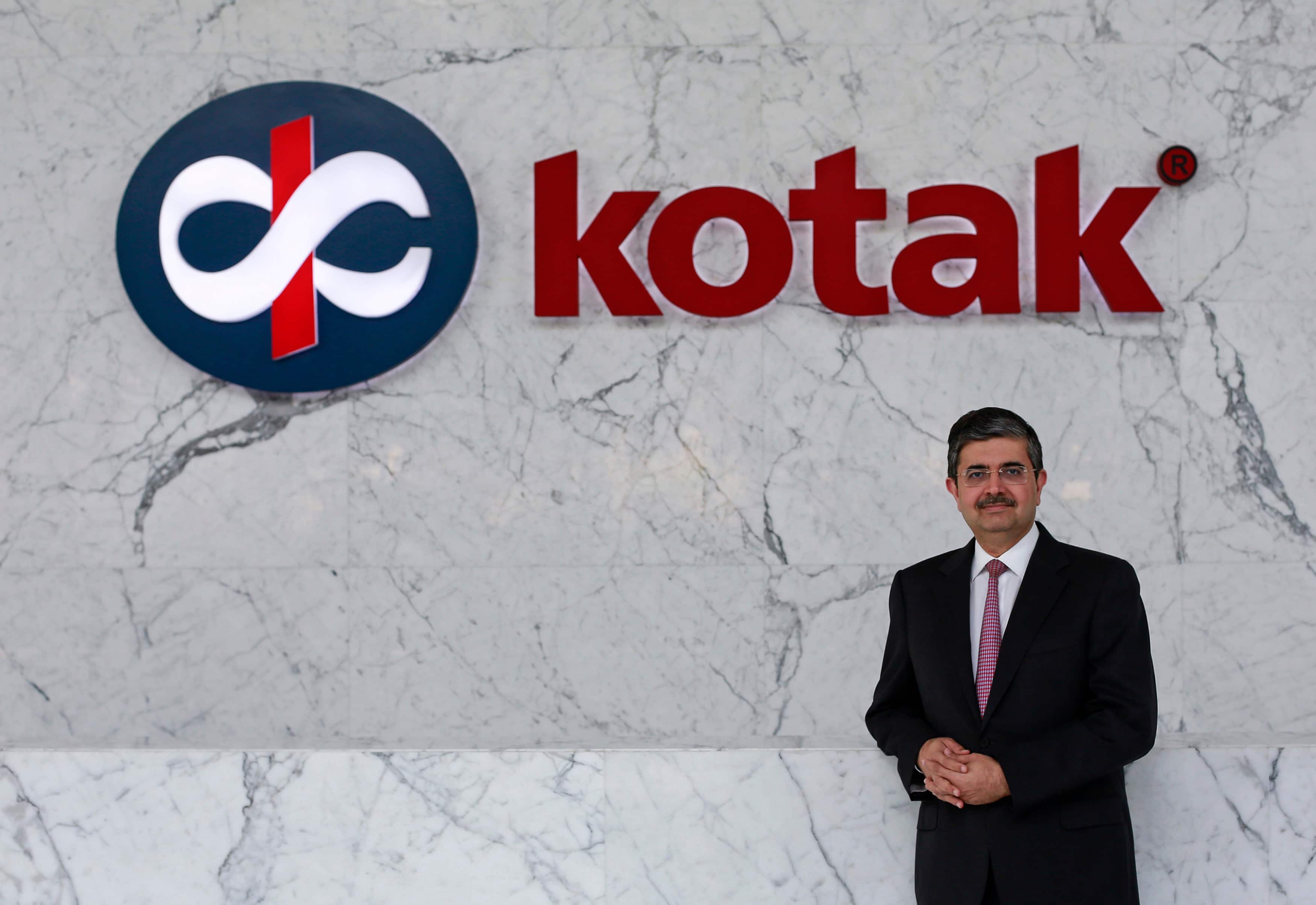
Uday Kotak, Managing Director of Kotak Mahindra Bank poses for a picture
Kotak Mahindra Bank unbelievably announced on September 1 that its founder and CEO – Uday Kotak, the visionary who built one of India’s leading banks from scratch, is stepping down from his position as CEO and appointing a new leadership, months before his contract was set to legally expire.
As this transition begins, we take a look back at Kotak’s journey to fame and the path taken by the bank that bears his name.
Uday Kotak’s early life

Born in Mumbai on March 15, 1959, Uday Kotak hails from an upper-middle-class Gujarati Lohana joint family that engaged in cotton trading. After Partition, his father left Karachi and came back to India. He grew up in Babulnath in a large joint family in a home with 60 people living under one roof.
Uday was always passionate about cricket and wanted to build a career as a cricketer. He was a talented player who captained his college team while pursuing his MBA at Jamnalal Bajaj Institute. He was struck in the head by a ball during a Kanga League game; it took him several months to recover and he missed a year of college.
The launch of Kotak Mahindra Finance
&im=FitAndFill=(700,400)&imwidth=180&imheight=135&format=webp&quality=medium)
What is the real meaning behind Pete Hegseth's tattoos?
&imwidth=180&imheight=135&format=webp&quality=medium)
Kim Jong Un death rumours: State media shares photos to prove dictator is alive amid reports of brain haemorrhage
&imwidth=180&imheight=135&format=webp&quality=medium)
Two Indians among 28 arrested in California over alleged voter registration fraud, DOJ says
&imwidth=180&imheight=135&format=webp&quality=medium)
‘Nuclear-use decision should be taken by humans’: India flags AI risks at UN
&imwidth=180&imheight=135&format=webp&quality=medium)
Flying car race: Alef Aeronautics welcomes Tesla Roadster '11 years' later, but are the two models the same?
&imwidth=180&imheight=135&format=webp&quality=medium)
Dussehra 2025: Why is Ravana not burnt but worshipped in these places of India?
&imwidth=180&imheight=135&format=webp&quality=medium)
Shastri backs Shami comeback; lauds Bhuvi and warns Bumrah on format workload ahead of World Cup
&imwidth=180&imheight=135&format=webp&quality=medium)
Netanyahu rival Benny Gantz quits Israel election race, vows to push for unity government
&imwidth=180&imheight=135&format=webp&quality=medium)
US Midterm 2026: What do opinion polls and prediction markets say less than two weeks before voting
&imwidth=180&imheight=135&format=webp&quality=medium)
WATCH | Albania protesters set Supreme Court on fire as anti-Rama riots escalate
&imwidth=180&imheight=135&format=webp&quality=medium)
Trump Commerce Secretary Howard Lutnick’s family fortune more than doubles to $7.3 billion, outpacing his boss
&imwidth=180&imheight=135&format=webp&quality=medium)
Pete Hegseth meets Benjamin Netanyahu during unannounced visit to Israel ahead of election
&im=FitAndFill=(700,400)&imwidth=180&imheight=135&format=webp&quality=medium)
Ghaziabad is world's fastest-growing city; Surat, Patna, Rajkot also feature on list
&imwidth=180&imheight=135&format=webp&quality=medium)
'It's a joy to see the makers bring it on such a grand scale': SS Rajamouli on Ramayana
&imwidth=180&imheight=135&format=webp&quality=medium)
‘Spare India from anarchy’: Over 400 Indian-origin academics from MIT, Oxford condemn anti-CEC protests
&imwidth=180&imheight=135&format=webp&quality=medium)
WATCH | Japan launches historic mission to collect samples from Mars' moon Phobos
&imwidth=180&imheight=135&format=webp&quality=medium)
PCB omits Atherton, Hussain from tri-series commentary panel over Imran Khan interview row
&imwidth=180&imheight=135&format=webp&quality=medium)
Trump calls on New Mexico to become 'New America', claims 'home values and incomes would rise'
&imwidth=180&imheight=135&format=webp&quality=medium)
US Congressman Raja Krishnamoorthi describes foiled temple attack as ‘divine intervention’, criticises Vance and MAGA rhetoric
&imwidth=180&imheight=135&format=webp&quality=medium)
Girl 'dead' for 8 hours wakes up at her own funeral, dad insists she wasn't breathing
&imwidth=180&imheight=135&format=webp&quality=medium)
Pujara says 'Samson and Vaibhav cannot be in Playing XI' for India on NZ tour
&imwidth=180&imheight=135&format=webp&quality=medium)
US midterms 2026: From Pooja Sethi to Vivek Ramaswamy, here are Indian-origin candidates to watch out for
&im=FitAndFill=(700,400)&imwidth=180&imheight=135&format=webp&quality=medium)
New OTT releases this week (October 19-25, 2026): Gajab Raat to Chaar Yaar-8 titles to watch during Dussehra week on Netflix, Prime Video and more
&imwidth=180&imheight=135&format=webp&quality=medium)
Baby orangutan rescued in India returns to Indonesia
&imwidth=180&imheight=135&format=webp&quality=medium)
India moves to buy 10,000 more AI chips for a national compute pool open to startups
&imwidth=180&imheight=135&format=webp&quality=medium)
'Not going to let it happen here': From Kansas, Trump ramps up US midterm campaign, points to ‘what’s happening in France’
&imwidth=180&imheight=135&format=webp&quality=medium)
Prince Harry, Meghan Markle never accepted Queen Elizabeth’s terms for royal exit: Report
&imwidth=180&imheight=135&format=webp&quality=medium)
'Whatever I can do to end this war': Trump floats China Summit with Putin and Xi, questions Zelensky's role in peace talks
&imwidth=180&imheight=135&format=webp&quality=medium)
'Paris is going to be a Muslim city very soon': Trump blames immigration for France unrest, urges Macron to tighten border policies
&imwidth=180&imheight=135&format=webp&quality=medium)
'We feel like Mr India': Gujarat’s undercover SHE team guard garba nights at Navratri
&imwidth=180&imheight=135&format=webp&quality=medium)
Cattle-feed bran in biscuits, detergent in milk: FSSAI acts against 3 companies
&imwidth=180&imheight=135&format=webp&quality=medium)
Feds obtain DNA evidence that could prove Ilhan Omar married her brother: Report
&imwidth=180&imheight=135&format=webp&quality=medium)
Ramayana advance booking: Ranbir Kapoor, Yash's film cross $500K ahead of Diwali release
&imwidth=180&imheight=135&format=webp&quality=medium)
Priest dies after crucifix falls on his head during livestreamed Mass in Ecuador | VIDEO
&imwidth=180&imheight=135&format=webp&quality=medium)
AUS vs SA: Boland grabs opportunity with both ends to help Australia dominate
After abandoning his dreams to become a cricketer and completing his MBA, Uday chose to launch his own little financial agency at the Navsari building premises using a 300-square-foot office space that his father had provided him.
Uday obtained a small loan from his family and friends to launch his finance and bill discounting firm. His closest friend, Anand Mahindra, is responsible for the majority of the investment. It was because of his assistance that the financial institution was given the name ‘Kotak Mahindra.’
Uday offered low-interest financial help to commercial organisations like Tata subsidiary Nelco. Compared to other banks and financial institutions, he charged business organisations reduced interest rates. Finally, under the name Kotak Mahindra Finance, he founded the Kotak Mahindra group in 1985.
The path towards banking
The business had diversified into investment banking, bill discounting, stockbroking, life insurance, auto financing, and mutual funds by 1995 after expanding into distribution and brokerage. Then, in an important milestone, Uday obtained a banking licence from the central bank in 2003.
Under Uday’s direction, Kotak Mahindra Bank witnessed a remarkable change in the years that followed, growing from a young organisation into India’s third-largest private sector bank. Along with the bank, Uday’s group also established an asset management firm and an alternative asset business worth $18 billion.
Kotak’s mantra to success
The three core principles and values
When speaking to the Financial Express, Uday highlighted two critical qualities that have propelled his career: common sense and middle-class values. He believes these values are fundamental for all individuals.
In shaping the banks of the future, Uday emphasised three core principles. First, he stressed the importance of prudence, cautioning against excessive leverage in banking, drawing from lessons learned during the global financial crisis. Second, he advocated for simplicity, advising banks to avoid complex financial products that can lead to confusion and risk. Lastly, Kotak underscored the need for humility among bankers, recognising their role as custodians of public funds.
In the evolving Indian business landscape, Uday observed a shift towards “survival of the fittest,” with policies favouring financial prudence over bailouts for struggling businesses.
The five Cs
Apart from the three principles, Uday shared his success mantras with IIM Bangalore students during the institute’s 42nd annual convocation. Kotak’s advice revolved around five key principles: character, conviction, commitment, creativity, and capability.
Character was the cornerstone, with Kotak emphasising the importance of aligning decisions with personal values, even when tempted by shortcuts.
Conviction was about courageously pursuing beliefs, distinguished from foolhardiness through self-reflection.
Commitment was linked to passion and enjoyment in work, fostering genuine dedication and progress.
Kotak championed creativity, urging students to think beyond convention and embrace failure as a learning opportunity.
Lastly, he highlighted that capability isn’t enough; execution is key. He encouraged students to stretch their limits while maintaining their values.
Kotak concluded by advising graduates to be bold, creative, and resilient, defending their values as they enter the professional world, remains full of opportunities and challenges.
Kotak after Kotak
Kotak chose to share the news of his resignation on the microblogging platform 'X' (formerly Twitter), where he reflected on his remarkable journey with the institution.
Kotak Mahindra Bank, which began with just three employees in Fort, Mumbai, has now evolved into a financial powerhouse with a substantial presence across India and in five other countries, boasting a workforce of over 100,000 employees. Kotak described this transformation in his heartfelt note, stating, “It has been 38 long years since this institution was created.”
What makes this development particularly noteworthy is that Kotak’s departure comes ahead of schedule. He mentioned that both the joint Managing Director and Chairman of the bank are also expected to step down by December. The transition awaits approval from the Reserve Bank of India (RBI).
As Kotak steps down, the responsibility temporarily falls on his colleague, Dipak Gupta, who currently serves as the Joint MD. In his post, Kotak noted, “In the interim, my dear colleague Dipak Gupta... will function as MD & CEO, subject to approvals.”
The banking community and stakeholders will undoubtedly watch closely as the bank awaits the RBI’s approval of the proposed successor, marking the end of an era in the Indian banking sector.
WATCH WION LIVE HERE