Chinese firms poised to dominate global markets with ethnic Chinese diaspora advantage

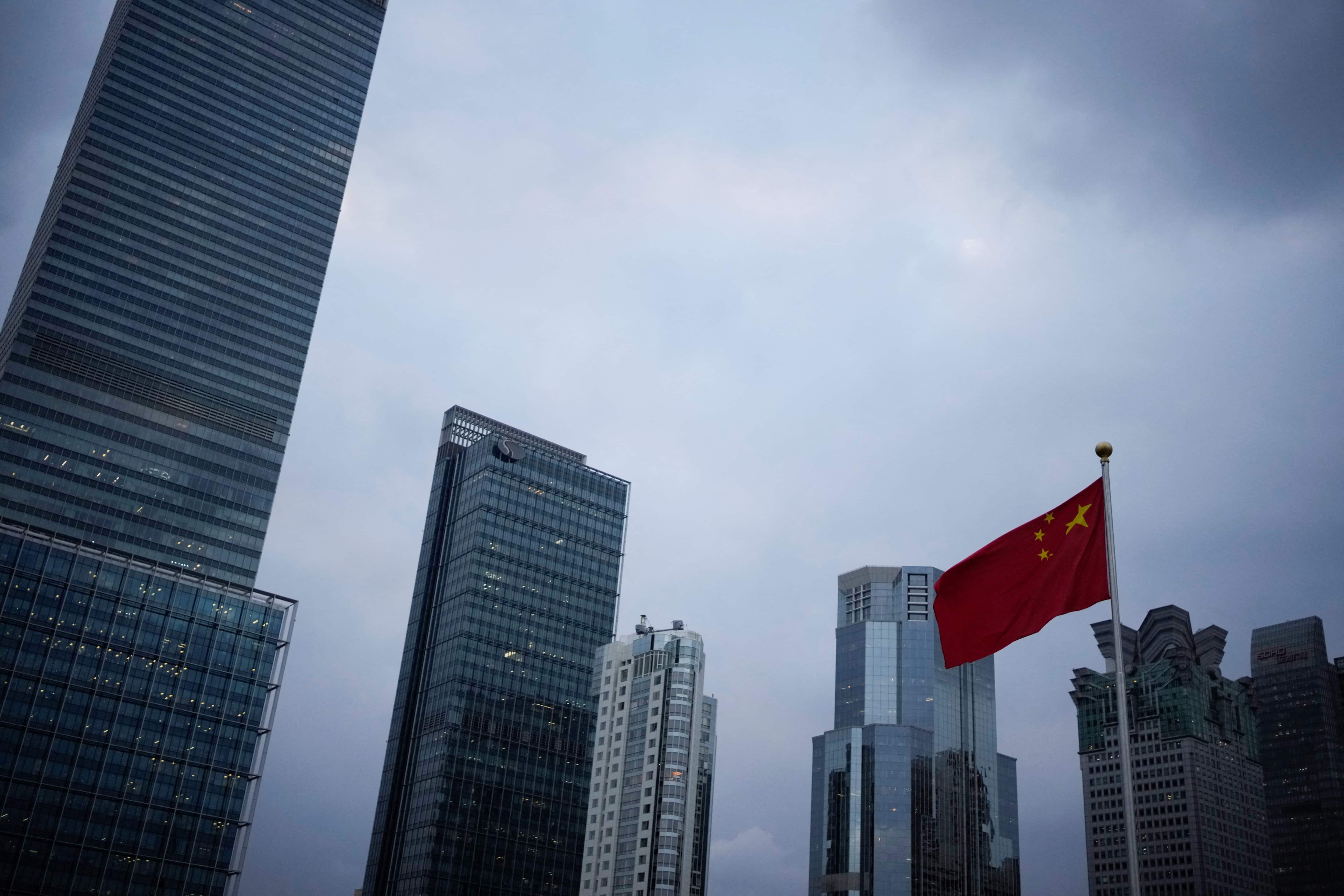
A Chinese national flag is pictured in Shanghai
In a noticeable report released by Bain & Company, a U.S.-based consulting firm, it has been revealed that Chinese enterprises venturing into international markets for growth possess a substantial advantage compared to the initial wave of Asian firms that pursued globalization. This advantage stems from the vast ethnic Chinese diaspora, a fact that has been largely overlooked until now.
The study, which primarily analysed data from 2023 concerning 150 publicly traded consumer goods companies headquartered in the Asia-Pacific region, provides a fascinating insight into the future of global commerce. David Zehner, a senior partner at Bain, shared with CNBC that the overseas ethnic Chinese community is substantial in numerous markets, presenting a unique opportunity for Chinese firms to cater to these populations.
As domestic growth begins to decelerate, these companies are observing successful strategies implemented by their Japanese and South Korean counterparts and are eager to replicate that success. Zehner highlighted that many Chinese companies are initiating their global ventures by concentrating on the Asian market before branching out to Europe and North America.

According to United Nations estimates, approximately 60 million ethnic Chinese reside outside of mainland China. In the United States, the Chinese population, although a minority, reached around 5.2 million by 2023, as reported by the U.S. Census Bureau. Meanwhile, in Singapore, where the total population is 5.92 million, ethnic Chinese individuals comprised 74 per cent of the population as of June 2023.
Zehner emphasized that a number of Chinese firms possess an ambitious global outlook, leveraging the entrepreneurial spirit and rapid innovation they have cultivated domestically to establish new footholds abroad. He believes that while South Korean and Japanese companies may contemplate similar strategies, Chinese firms have a distinct advantage in many respects.
Bain's analysis revealed that, relative to their South Korean and Japanese counterparts, Chinese consumer businesses have not yet tapped into overseas markets for revenue to the same extent. The research focused on four sectors: consumer electronics, consumer health, apparel, and fast-moving consumer goods (FMCG), which are typically sold quickly and at lower prices.
)
Did India risk its US trade deal despite softer stance at BRICS?
)
Pakistan puts Pak Rs 70 lakh bounty on UN terrorist Masood Azhar; move draws skepticism in Delhi
)
First naval drone battle? Ukraine says Sargan 3000 sank Russian unmanned boat
)
Practical Magic 2 breaks Spidey spell over North American box office
)
'Huge destructive power': North Korea calls its latest missile launches 'live-fire drill' even as US dismisses 'immediate threat'
)
‘Let’s go’: Newly declassified videos show dramatic rescue of US Air Force officers downed in Iran
)
Delhi’s balancing act: BRICS serves as a stage for West Asia diplomacy
&im=FitAndFill=(700,400))
Why European Meteor missiles use ramjet engines compared to standard US solid rockets
)
‘India did extremely well’: South African President Cyril Ramaphosa praises BRICS leadership
)
Iran, India agree to deepen humanitarian and political ties, President Pezeshkian says
)
‘Want to reset ties with India, have engagement based on mutual interests,’ says Bangladesh minister
)
Trump says Canada eager to reach a deal, it could come ‘fairly soon’ if Ottawa treats US farmers better
)
Turkish Airlines plane flies through a storm three times, triggering severe turbulence
&im=FitAndFill=(700,400))
Why Chinese PL-15 air-to-air missiles use dual-pulse motors compared to European interceptors
)
China thinned Himalayan troop presence in 2025, India defence report says; terms border situation 'stable'
)
800 million years old - Scientists discover 'fingerprints' of supercontinent Gondwana in ancient rocks
)
Russia proposes to build 360 kmph Ivolga FG trains in India: What happened on sidelines of BRICS
)
Israeli minister calls to strip Gaza film directors of citizenship
)
China discovers vast gold and silver 'mine' in the Pacific with unheard-of deposits
)
Russian drone hits Warsaw-bound train near Polish border, Zelensky accuses Moscow of ‘deliberate’ targeting
)
War is making Russia stronger? How Ukraine is shaping Moscow’s next generation of weapons
)
Plane carrying prominent figure crashes at Libya’s Misrata airport: Report
)
Veteran Bollywood actress Nafisa Ali shares health update as Stage 4 cancer progresses, starts targeted therapy
)
NEET-UG to move to computer-based test soon, NTA DG says ‘CBT is the future’
)
Woman removes all her clothes on American Airlines flight, performs 'indecent acts'; arrested
)
Liam Neeson sparks romance rumours after holding hands with Stella Stocker at TIFF 2026
&im=FitAndFill=(700,400))
New OTT releases this week (September 14-20, 2026): Lust Stories 3, Waiting Hai, Irumudi- 5 new titles coming on Netflix, Prime Video and more
)
Indian importers urge Bangladesh to lift export ban on 'Hilsa' fish ahead of Durga Puja
)
Video of Pakistani lawmaker struggling to read English tribute to Jinnah goes viral - WATCH
)
Did China give Iran intel before US base strike that killed 3 troops? Trump says, 'You’re right...'
)
Meghan Markle shares first glimpse of family life with Prince Harry and children in UK
)
Crude oil prices jump more than $107 per barrel following Houthi attacks on Saudi
)
Women's Asia Cup 2026: India denied trophy once again despite winning the title
)
Humans may lose control of AI: Anthropic CEO calls for slowdown, Altman, Musk back him
Among Japanese companies in the FMCG sector, all 16 generated at least 10 per cent of their revenue from international markets, with five achieving over half of their sales from abroad. In the case of the four South Korean companies in the same segment, their overseas revenue ranged from 10 per cent to 50 per cent. Conversely, within Greater China, 16 companies were part of the FMCG sector; however, five concentrated solely on the domestic market. For nine of these companies up to 10 per cent of their revenue international sales, while only two managed to achieve between 10 and 50 per cent in comparison with peers.
Zehner remains optimistic, suggesting that Chinese companies are beginning to gain momentum. He foresees numerous opportunities for these firms to establish product categories in various regions where they are still underdeveloped. He also pointed out the increasing impact of Asian culture and brands in many Western markets.
Recent developments justifying the moves to expand overseas are say, Chinese retailer Miniso on August 31 opened its largest store to date in Jakarta, Indonesia, and claimed record first-day sales of 1.18 million yuan ($166,000). The company, which sells household and daily use consumer products, said it opened its 200th store in the U.S. on August 24.
Despite the promising prospects, the journey to success is fraught with challenges. After five years attempting to enter the Singapore market through a local partnership, the Chinese tea brand Chagee opted this summer to overhaul its approach by directly owning its stores. Other Chinese brands are utilizing Singapore as a cultural testing ground to better connect with Western consumers.
Zehner remarked that success will favor companies that can learn and adapt swiftly, rather than assuming that strategies that work domestically will translate seamlessly to international markets. He advised a long-term perspective on international growth, cautioning against a 'get-rich-quick' mentality and emphasizing that companies should not expect immediate returns on their marketing investments from the outset.
