
&imwidth=800&imheight=600&format=webp&quality=medium "China’s manufacturing drops to lowest since April amid sluggish demand and exports")
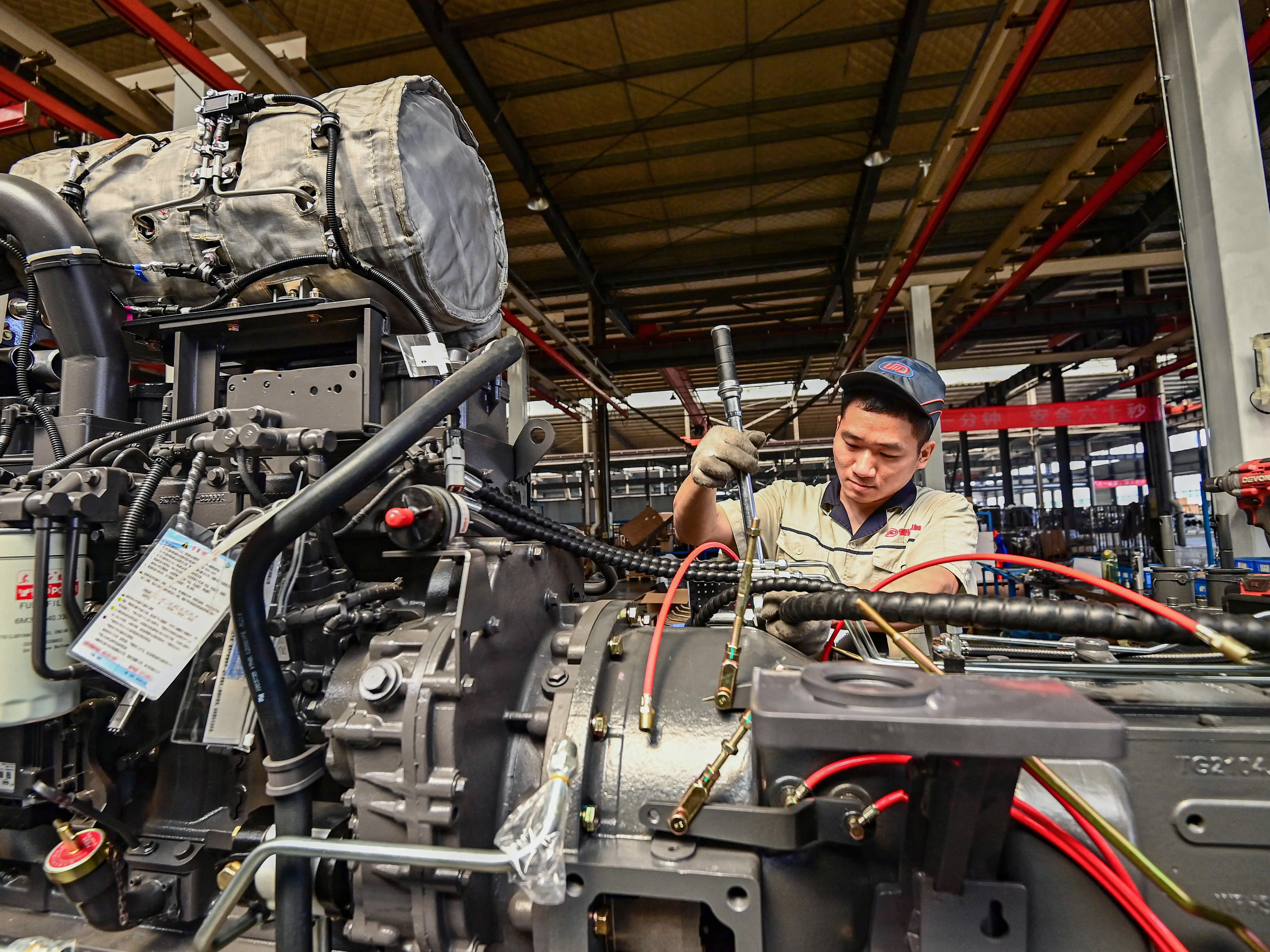
China’s manufacturing activity continued its downward trend in July, showing signs of economic deceleration despite the easing of US tariffs. According to data released by China’s National Bureau of Statistics (NBS), the country’s official Purchasing Managers' Index (PMI) fell to 49.3, down from 49.7 in June. A reading below 50 indicates contraction in manufacturing activity, and July's figure marked the lowest level since April. This data came in below market expectations, which had forecasted the PMI would hold steady at 49.7. The contraction in manufacturing comes amid persistent domestic and external challenges. Notably, a series of adverse weather events, including heavy rains, high temperatures, and flooding in several regions, have strained production. Additionally, the seasonal off-peak period for manufacturing has contributed to lower output.
Experts also highlighted that while US-China trade relations have cooled following a truce, uncertainties regarding tariffs and weaker domestic consumption continue to weigh on China’s economy. The data suggests that the boost from the trade truce is fading. While the US and China agreed in May to extend a 90-day tariff suspension, the looming expiration of the truce in mid-August, coupled with shifting production to lower-tariff countries like Vietnam, poses challenges. US tariffs on Chinese goods, which had been temporarily paused, could escalate once again, dampening export momentum for the second half of the year.
Export orders and domestic demand continue to weaken

New export orders were a key concern in the July data. The sub-index for new export orders remained in contraction for the 15th consecutive month, dipping to 47.1 from 47.7 in June. This decline points to the fading strength of China’s export sector, which had surged in the first half of the year in anticipation of tariff hikes. As the front-loaded shipments slow, a longer-term decline in export demand appears inevitable.
On the domestic front, manufacturing demand was equally tepid. The new order index, which measures domestic demand for manufactured goods, also contracted, falling to 49.4 from 50.2 in June. This suggests that despite a modest recovery in the second quarter, the Chinese economy continues to struggle with sluggish household consumption, low private sector investment, and a real estate market weighed down by excess inventory and overcapacity in key industries.
Mixed signals from services and economic support measures
Trending Stories
)
Xi Jinping's new AI bloc: China launches 'World AI Body' with Pakistan and Russia in, India out
&im=FitAndFill=(700,400))
FIFA World Cup 2026: 5 football stars who went viral on social media during the tournament
)
Karoline Leavitt to be US Vice President when Usha Vance gives birth? JD Vance says...
)
Sonam Wangchuk's connection with George Soros and Ford Foundation explained!
)
'There is no need for...': PM Modi takes a veiled dig at Rahul Gandhi, sends big message amid Parliament March
)
'Could be bombed at any moment': What Iran's Araghchi told Trump envoy Witkoff during negotiations
)
Salman Khan breaks silence on health concerns after viral Mumbai appearance
)
'George Soros playbook': Understanding the foreign funding network around Sonam Wangchuk
&im=FitAndFill=(700,400))
New OTT releases this week (July 20-26, 2026): Musafir Cafe, Adarsh Baal Vidyalaya, 72 Hours- 5 new titles coming on Netflix, Prime Video and more
)
Maha CM Wife Amruta Fadnavis' Yoga Day appearance sparks social media debate over attire | Watch
&im=FitAndFill=(700,400))
2026 FIFA World Cup awards: Full list of Golden Boot, Golden Ball, Golden Glove and every major winner
)
JD and Usha Vance welcome fourth child: Who serves as acting US vice president during Vance's paternity leave?
)
Older than Himalayas: 85mn-year-old Kewra plant reached India 24mn years ago, fossil discovery in Assam shows
)
Did Iran secretly ship 70 million barrels of oil to China? Report claims $6 billion crude exported before blockade restored
)
Homer's Iliad written before The Odyssey found inside an Egyptian mummy
&im=FitAndFill=(700,400))
FIFA World Cup 2026 awards race: Who are Golden Boot, Golden Ball and Golden Glove contenders ahead of the final
&im=FitAndFill=(700,400))
Global air power ranking 2026: India surpasses China
)
Truck loaded with stones, metro stations closed: What's happening at Jantar Mantar now
&im=FitAndFill=(700,400))
Why US fighter jets use seamless bubble canopies compared to Russian jets
&im=FitAndFill=(700,400))
Why the F-22’s cockpit glass is thicker than a standard fighter jet
)
Student union leaders call off hunger strike at Jantar Mantar after civil society appeal, but protest continues
)
Tulsi Gabbard's brother Batarti accused of luring children to hotel room in Hawaii
)
'Chalo Sansad' march today: Section 163 in force, Delhi Police remove barricades; unfazed Dharmendra Pradhan meets NEET topper
&im=FitAndFill=(700,400))
Why the F-22’s tail fins are canted to minimize its radar footprint
)
Imran Khan's sister links India-Pakistan 2025 conflict to Israel recognition plans
)
US strikes Iran, sirens heard in Kuwait, one American soldier killed in Iraq: What's happening in West Asia
)
Argentina's racism problem: How football chants reflect a deeper historical legacy
)
'What is wrong...': Anna Hazare breaks silence on Sonam Wangchuk's protest, makes an appeal to Centre
Adding to the concerns, the official non-manufacturing PMI, which includes services and construction, also saw a decline in July. The services PMI fell to 50.1, down from 50.5 in June, signalling that growth in the sector is slowing down. Despite the summer travel season boosting certain sectors like air transport and postal services, the overall services sector, including real estate and residential services, has seen weakening demand.
Even though the PMI data paints a picture of a sluggish economy, China is not without policy support. In a move aimed at rebalancing the economy, Beijing has announced childcare subsidies to boost consumption and address the country’s demographic challenges. The scheme will offer 3,600 yuan ($501) annually until a child reaches the age of three, hoping to ease the burden on young families and encourage higher birth rates. This could eventually lead to a rebalancing of China’s economy, shifting from an export-driven model to one that relies more on domestic consumption.
Economic slowdown is a real concern
Despite the efforts made by the Chinese government, concerns about the future trajectory of China’s economy persist. Goldman Sachs analysts highlighted that weak manufacturing, along with an ongoing property market slowdown, suggests that economic stimulus might be needed to prevent further deceleration. While China’s GDP grew 5.2 per cent in the second quarter, well above expectations, analysts now forecast a significant slowdown in the second half of the year, especially if the tariffs are re-imposed.
While some industries, such as high-tech manufacturing and high-end equipment production, showed signs of resilience, the broader outlook remains uncertain. Analysts suggest that the ongoing trade tensions and lacklustre domestic demand may stifle recovery efforts. As for the equities market, Hong Kong and mainland Chinese stocks took a hit, reflecting concerns about the country’s economic prospects.
The PMI data is a strong indicator of an economic slowdown. With key indicators—such as manufacturing activity, new export orders, and domestic demand—contracting, China faces mounting challenges in sustaining its recovery. The fading impact of the trade truce, compounded by weak domestic consumption and industrial deflation, suggests that the economy is at a critical juncture.
(With inputs fron agencies)