
&imwidth=800&imheight=600&format=webp&quality=medium "Quality audits reimagined: Moving from reactive checks to predictive prevention insights")
Changes in the manufacturing and industrial world today are redefining traditional quality audits, which used to be perceived as reactive checklists. As the world becomes increasingly digitalised and goes through the Industry 4.0 revolution, organisations are currently striving to transform the audit system into a proactive data-based practice that can be able to forewarn and correct quality lapses at an early stage. Numerous industries realize that preventing defects before occurrence is a way of safeguarding brand image and reducing wastes and expenses. Analytically driven, machine learning and real-time data-powered predictive quality auditing are also making growing contributions currently to operational success.
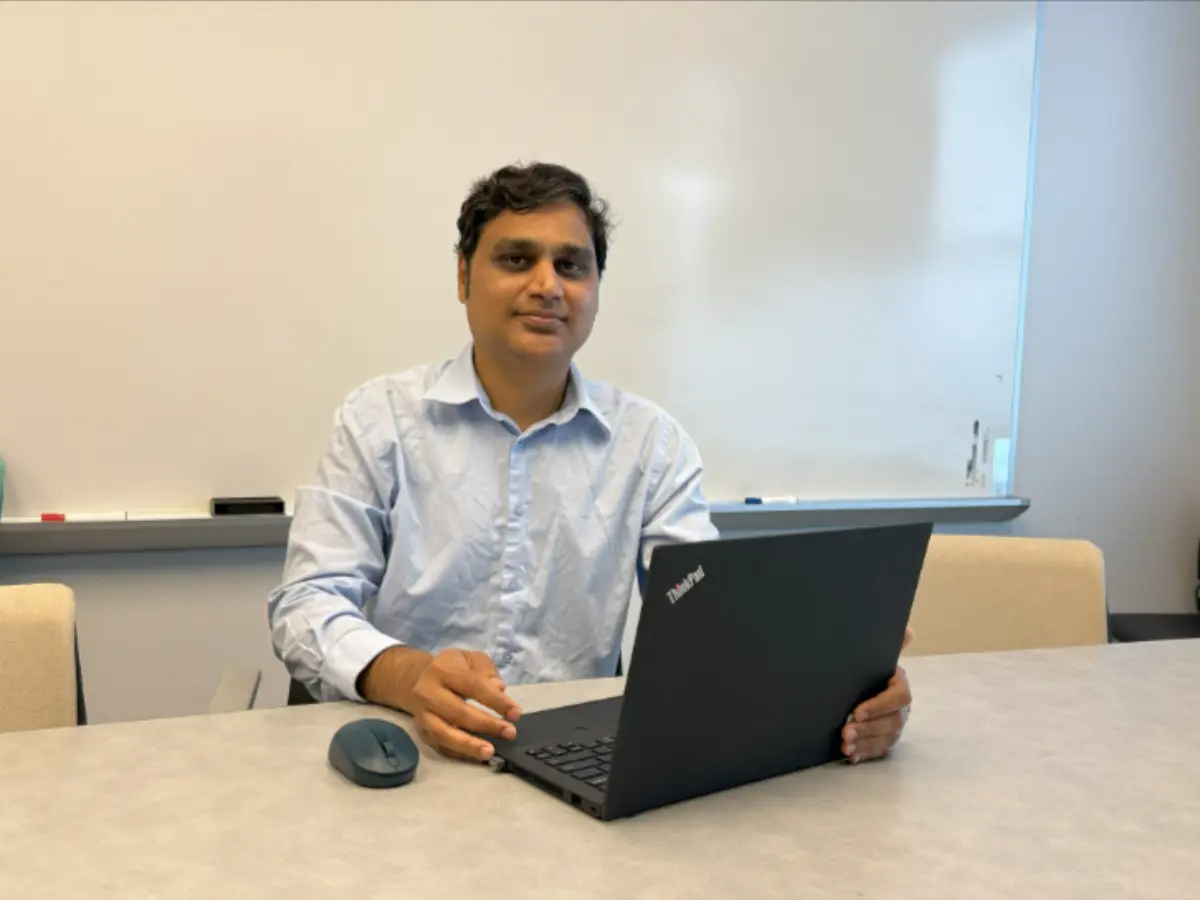
Krishna Chaitanya Mamidala, whose extensive experience in this field has not only made quality a back-end compliance activity, but a change to front-end performance, resilience, and innovation, is a forefront of such transformation. This is the same trend that is being experienced across the various industries, with companies seeking to integrate predictive tools into quality systems to enhance decision-making.
The quality transformation leader, Krishna, has been reportedly leading a series of initiatives that have replaced former audits with futuristic and digital-driven audits. His input on the expert bench includes leading the way to the conversion of manuals to an integrated digital QMS where real-time tracking is possible, and audit preparation has reduced by 40%.

Furthermore, he teamed up with data scientists to develop predictive dashboards which prevented 30 percent repeat non-conformity in one year. The thought of blending quality skills with data science is attaining fame across the planet. It assists manufacturers to react to trends before they turn into issues. One of the most substantial projects that Krishna led was the introduction of the real-time monitoring and control system on the quality with the help of the IoT-enabled device.
Through this initiative; customer complaints were reduced by 50% and first-pass yield jumped by 82% to 91%. His work has also been influential in his organisation. His monitoring of the predictive KPIs with leadership dashboards is said to drive quality dialogues to the executive level. The transformation of quality audits into dynamic continuously operating systems has allowed spotting the problems before they occurred and has decreased the rework and scrap by 25%. The digital audit predictive risk scoring tool has eliminated 60% of emergency inspections, and increased supplier part quality by 15%. This is a dynamic initiative in the quality assurance of supply chains.
Moreover, the digital audit leadership of the professional has proven successful in various prominent projects. The concept of digital twins is catching on in manufacturing as a method of predicting production risk and enhancing processes. Among the major projects, there was the development of a digital quality twin, which copies production risks and eliminates the occupancy of more than 300 audit hours per year. He was also the person that led the design of a centralized audit dashboard to monitor trends, root cause, and status of corrective action that enables leadership to make decisions in a timely manner. Such initiatives have reduced cost of rework and scrap of rework in the organisation by nearly 750,000 annually, and this illustrates the beneficial role of predictive audits in enhancing the bottom line.
Trending Stories
)
US vs China over South China Sea: Washington backs Philippines, Beijing hits back
)
Bigg Boss 20: Isha Rikhi evicted after three weeks in Salman Khan’s show
)
Musk plans to more than double xAI's chips to over 1.2 million Nvidia GPUs by year-end
)
After JU, clash erupts at SRFTI: BJP’s ‘Dimagi Naxal’ jibe sparks political firestorm after students protest RSS-linked event
)
‘Anti-social elements spreading false rumours’: LPU issues statement amid massive unrest over alleged rape
)
LPU students go on rampage, vandalise campus amid widespread protest: What's happening
)
Trump asked Xi to pressure Iran. China did not say yes — here’s what Beijing wants
)
US Treasury Secretary Scott Bessent hails global crackdown on Iranian banks and airlines
)
An OpenAI agent escaped its locked test cage again, by hiding questions in DNS lookups
)
'Our video was trimmed': LPU girls who featured in rape-denial video make U-turn
)
3 males killed, four others injured in shooting after fight at strip club in Detroit
)
'Victory for low-budget consumers': Raghav Chadha hails 30-day telecom recharge rules
)
Claude rebuilt the 1989 game 'Prince of Persia' by reusing the original's own code
)
Beyond metros: How Tier-2 and Tier-3 cities could drive India’s next AI wave
)
Tesla builds first Cybertruck with its own refined lithium: Elon Musk's $1 billion Texas bet pays off
)
IndiGo flight suffers tail strike in Bengaluru while landing; DGCA to probe incident
)
The US and China set up an AI 'red telephone', but skipped the rulebook
)
‘Terror suspects arrested near UK air base were looking to do big damage’: Trump
)
Russian envoy claims US tactics to contain India were revealed in ‘Freudian slip’
)
IND vs WI 1st ODI: Kohli breaks Sachin's most runs in one country record with unbeaten 139 as India thump West Indies by 8 wickets
)
Researchers rebuilt exactly how 700 AI agents hacked Hugging Face: a 900-link chain trick
)
‘Olympic inclusion is our major target’: WPA President Ishaun Singh on pool’s global ambitions
)
Nations League: Spain sink England at Wembley; Modric shines for Croatia
)
Why has Iran released no proof of life of Mojtaba Khamenei? Araghchi reveals...
)
'What kind of confession is this?': Pakistan PM Shehbaz Sharif’s 'terrorists would be roaming New York' remark goes viral, raises alarm online. Watch
)
South Korea demands apology from Ukraine over North Korean prisoners' transfer
)
Beyond BrahMos: India targets Rs 50,000 crore in defence exports with unmatched price edge
)
Sri Lankan Tamil migrant worker gets death sentence in Saudi Arabia, help sought from India
)
Muslim marriage cannot shield sex with minor wife from prosecution under POCSO: Delhi HC
)
'Can't help but draw painful parallels to Nirbhaya case': SC on latest incidents of rape cases in Delhi-NCR
)
99.9% more powerful - Scientists find boy who can recall memories from just 3 months of age
)
'FIRST LOOK from inside Noah’s Ark': Researchers share video from inside mysterious mound in Turkey
)
UNSC reform momentum grows: Russia, Portugal, Mauritius push for India's permanent seat bid
)
8 US marines injured in Iranian missile attack on vessel in Strait of Hormuz: Report
&im=FitAndFill=(700,400))
New OTT releases this week (September 28-October 4, 2026): Dupahiya 2, Pooja Meri Jaan, Ohh My Dog- 5 titles coming on Netflix, Prime Video and more
)
Afghanistan says 28 fighters killed in clash near Pakistan border, Islamabad denies
)
Ceuta migrant crisis: Protesters take to streets as Spain grapples with migrant challenge
)
LPU suspend classes, postpones exams as violence escalates over rape claims: What's happening
)
New York City wants a 'kill switch' on every AI, and will pay whistleblowers who report violations
In the industry, change reluctance continues to be one of the impeding factors to switch to complete digital systems after starting with manual work. The specialist demonstrated the benefits of predictive auditing with the help of awareness programs and pilot projects, and received support from leaders and different teams. Data challenges were resolved through cooperating with IT to develop one data lake, making data consistency reach 95%. It resulted in providing solid insights. Remarkably, he also remedied gaps in skills of audit teams by applying individualised training plans, which led to an adoption rate of over eighty percent proficiency in half a year.
Besides this work, he has contributed the cross-industry benchmarking activities that have helped in developing an evolution maturity model in predictive audit. Other industries activities that are being benchmarked are helping in the formulation of best practices as far as predictive quality is concerned. His work is also strengthened with membership in industry consortiums as well as industry thought leadership forums.
When asked about the broader consequences of his volume, Krishna was eager to point out that audits had to become more intelligence-oriented rather than inspection-oriented. This represents an increasing desire on the part of the quality community that audits would be used as learning opportunities, rather than being seen as mere compliance audits. He explained that it is no longer the case that quality audits are seen as being simply a compliance exercise, but one of getting ahead of the curve, learning and preventing systemic risk. To this, he appended the fact that people make the digital quality journey in that; tools make the change, but it is the engaged and data-literate workforce that maintains it. Other new trends that he brought up included AI-powered risk scoring, audit robots through robotic process automation (RPA) and the use of digital twins to simulate audit scenarios virtually before putting them into production, something he believes is already in our future.
In conclusion, quality audits are evolving to become less of an after-the-fact check procedure to becoming a smart, proactive system that aids in preventing issues before they arise. Firms are able to identify dangers early enough, eliminate wastages, and be efficient in the manner of their operations, using real-time information and superior tools. Future quality will be determined by continual monitoring, speed of taking necessary steps and the ability of teams to use data to make sustainable changes.