MG Windsor: First Ride Review

MG Windsor
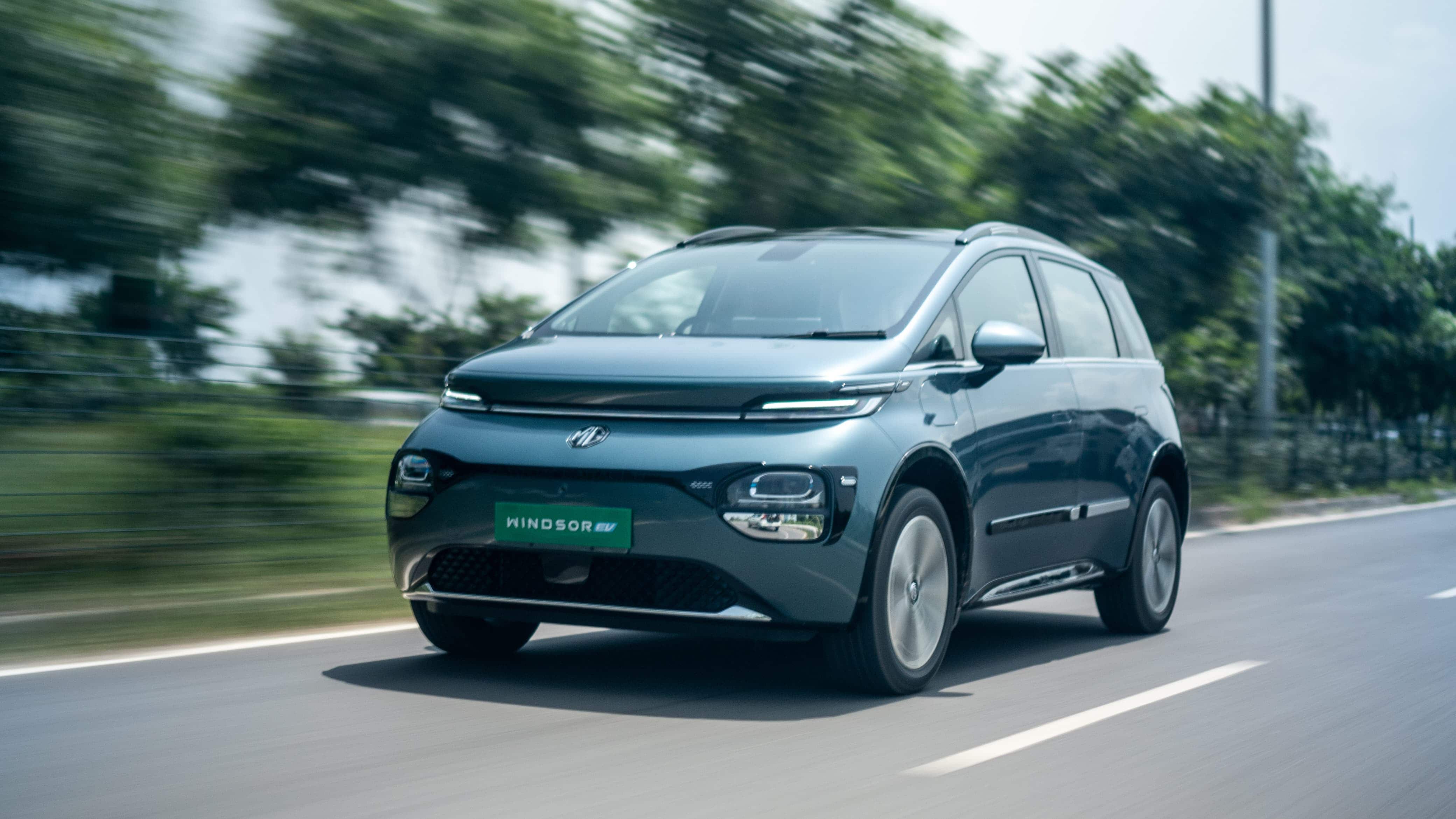
After the success of the ZS EV and COMET, MG Motor India is making waves again with its latest electric offering, the MG Windsor. A seemingly unassuming crossover utility vehicle (CUV), the Windsor marks MG’s third electric vehicle for the Indian market, following its recent partnership with JSW Group. Marked at a deceptively economical price of INR 9.99 lakh (ex-showroom), this model offers good performance, futuristic aesthetics and ample space that is generously punctuated with features that far exceed the category expectations. What you don’t get is – a battery pack!
Instead, MG has introduced the "Battery as a Service" (BaaS) program, positioning the Windsor as a compelling option for those looking to jump on the EV bandwagon.
Bold or Boxy?


At first glance, the Windsor is not exactly a head-turner—albeit one that may invite polarising opinions that has Honda Jazz on one extreme, and the poorly received Fiat Multipla on the other. While the exterior design is nothing to write home about, there’s something unique about its minimalistic boxy stance that makes it pleasant on the eye.
Running on 18-inch diamond-cut alloy wheels, the CUV has a ground clearance of 186mm, allowing it to tackle urban roads with ease. The car’s exterior is embellished with sharp, eyeliner-like garnish around the LED headlamps and tail lamps, which stretch across the width of the car, adding a futuristic touch.
)
'Lot of things to learn from experienced players': Jayasuriya backs Rohit, Virat for 2027 ODI World Cup
&im=FitAndFill=(700,400))
Kareena Kapoor birthday special: Inside her net worth, best movies, luxurious lifestyle and love story with Saif Ali Khan
)
Trump says he'll build an 'AI Force' and appoint a czar, for 'high IQ' people only
)
Punjab man consumes poison outside DC office; Congress, BJP target AAP government
)
SNL UK takes aim at Ed Sheeran with AI Princess Diana sketch
)
Iran sets 7 conditions to end war with US: What are Tehran’s demands?
)
AI actress Tilly Norwood glitches mid-interview, switches from English to Chinese | Watch
)
Mahabharat actor Saurav Gurjar arrested in Hyderabad, sent to 14-day judicial custody in sexual exploitation case
)
Chancellor Friedrich Merz vows to stay on as exit polls signal major poll setback
)
J&K Assembly Session begins amid chaos: BJP, ruling alliance clash as statehood demand dominates
)
Taylor Swift has a 'proud wife' moment as Travis Kelce scores first touchdown of season: 'That’s my husband!'
)
'Were you here to sell chickpeas?': Wasim Akram criticises Babar Azam's captaincy
&im=FitAndFill=(700,400))
New OTT releases this week (September 21-27, 2026): Shaque: Trust No One, Hunkkaar, Don’t Be Shy- 5 new titles coming to Netflix, Prime Video and more
)
Noel Tata challenges Chandrasekaran’s reappointment as Tata Sons chairman. What happened at the board meeting
)
Italy moves to ban face veils in schools as Meloni pushes new integration measures
)
TIFF 2026: Theja Rio’s Angh wins Platform Prize, puts Nagaland story on global stage
)
Delhi: Flagged voters remain on the draft roll but face hearings
)
Saudi Arabia exits China-led mBridge digital currency platform amid Saudi-Houthi conflict
)
40-foot waves crash into cruise ship in dangerous stretch near Antarctica. Watch
)
Jailer 2: Vidya Balan joins Rajinikanth's upcoming film as Kantha | Watch
)
‘0% chance’: Nvidia CEO Jensen Huang dismisses AI extinction fears by 2030
)
Samsung raises Galaxy S26 prices by Rs 20,000: Here’s what each model now costs
)
Bessent meets China’s He Lifeng to prepare for Trump-Xi summit
)
CDU suffers historic defeat in eastern Germany as AfD surges, Merz vows to stay on
)
China now makes advanced memory chips without the machines it was banned from buying
)
Arvind Kejriwal, family members, Delhi CM Rekha Gupta get SIR notices
)
Trump-Xi summit: US Treasury Secretary holds meeting with Chinese Vice Premier
)
Fleming's aspirations as England Test coach include WTC, top ranking and Ashes
)
Saudi vs Houthis: Houthis claim missiles & drones used in attack on key Saudi sites
)
Delhi Air pollution: Strict crackdown on waste burning
)
Apple reportedly building AI server with M8 Ultra chips, may use Nvidia technology
&im=FitAndFill=(700,400))
What TSMC's 2nm technology means for Apple
)
Glitch in the matrix caught on camera: Woman vanishes after talking to reporter
)
Several petrol pumps, other businesses to refuse UPI payments above Rs 2,000 from Oct 16: Is it legal?
)
AI kill switch explained: Why shutting down a dangerous AI may not be as simple as pressing a button
)
Microsoft executive called AI training the ‘largest theft of labour in human history’
)
Pilot recreates Mona Lisa in sky over Oklahoma and Arkansas in four-hour flight: VIDEO
)
US ships in Indian Ocean ‘will be attacked’ if war resumes, warns Iran
)
Samay Raina-Mukesh Chhabra controversy explained: What happened over girlfriend joke on India's Got Latent?
)
Putin's United Russia party wins 355 seats in Duma election; 4 other parties cross threshold to enter parliament
)
S Jaishankar, former Army chief among high-profile names issued Delhi SIR notices
From the side profile, you’ll notice an aerodynamic, pod-like shape with flush door handles and large windows, adding to its modern aesthetic. At the rear, the Windsor offers an impressive 604 litres of boot space, complete with a bonus compartment under the floor, making it one of the most practical CUVs in its class. Plus, the split-folding rear seats expand storage further, providing enough space to fit more than just your weekend luggage.
The Windsor may not be the most aggressive-looking car on the road, but its clean, futuristic design language certainly catches the eye.
Comfort of Business Class at the Cost of Economy?

Step inside the Windsor, and you’re greeted by an imposing 15.6-inch touchscreen infotainment system, powered by Jio, alongside an 8.8-inch digital instrument panel. This all-encompassing control hub manages everything from Android Auto and Apple CarPlay to over 80 connected car features.
However, some may find the shift to digital controls overwhelming, as even basic functions like adjusting the mirrors or operating the headlamps require navigating multiple menus on the touchscreen. However, the downside of combining so many features into one screen is slower response times and lag, which we experienced during our test ride. The only manual controls one can spot are for air conditioning and a few associated controls on the steering wheel.
Beyond the tech, the Windsor offers ample storage spaces, including a sweet unit underneath the floating centre console equipped with two USB ports; a wireless charging unit, an armrest with more storage and enough cup holders to keep a small party hydrated—seven, to be exact! Apart from that, you also get Infinity-sourced nine speakers, customisable ambient lighting, a telescopic steering wheel, and six airbags.
Coming to the second most raved-about feature of the car - the seats. The front seats are handsomely cushioned and upholstered with a striking argyle pattern almost reminiscent of outdated markers of grandeur. But again it’s hard to deny the fact that nostalgia is fresh capital. Ventilated and power-adjusted (for the driver), they offer fairly decent thigh support and comfort akin to that of sinking into oversized lounge chairs.
In the rear, the Windsor continues to impress with plenty of legroom and reclining seats split in a 60-40 ratio that tilts up to 135 degrees, how about that? You get a USB charging port, rear AC vents and a flat floor along with your standard armrest in the back.
Now, coming to the most talked about feature – the expansive glass roof that makes the interior feels bright and airy, adding to the overall sense of space and comfort. It's perfect for both city drives and long, chauffeur-driven journeys.
How Does the Windsor Drive?

Powering the MG Windsor is a 38kWh battery pack, delivering 136bhp and 200 Nm of torque to the front wheels. Though not as powerful as its competitors—the Tata Nexon EV and Mahindra XUV400—it’s more than sufficient for city driving.
The Windsor comes with four driving modes: Eco+, Eco, Normal, and Sport, as well as three regenerative braking modes. MG claims a driving range of 331 km on a full charge, though real-world numbers are expected to hover around 250 km depending on driving conditions.
The Windsor’s ride quality is a mixed bag. It absorbs city bumps quite well, making it a comfortable choice for urban commutes. However, at higher speeds on highways, the suspension tends to feel relatively unsettled, leading to a slight bobbing effect accompanied by harsh road noises that penetrate the car with unarming ease. Handling is also not the Windsor’s strongest suit. Though it’s far from sluggish, the steering feels uninspiring, making it less engaging than some of its competitors. That said, for city driving and long highway cruises, the Windsor delivers a smooth and relaxed ride, which will likely appeal to its intended target audience.
Rent the Battery or Buy It?

One of the Windsor’s most disruptive features is MG’s Battery as a Service (BaaS) program, which allows customers to purchase the car without a battery and rent one on a subscription basis (INR 3.5/km). While this approach significantly lowers the upfront cost of the vehicle, it’s not the mandate but only an option provided by MG to boost EV adoption in India.
Additionally, MG offers free public charging for the first year (if booked before December 31), a lifetime battery warranty for initial customers (with the purchase of an INR 29,000 maintenance pack for 3 years), and a buyback offer at 60% of the battery's value after 3 years (with the maintenance pack).
However, if you choose to buy the battery instead of renting, it will cost around INR 3.5 lakh extra upfront. This amount is equal to around 5.5 years of battery rental payments (INR 63,000 per year).
How Does the Windsor Stack Up Against Rivals?

The MG Windsor’s starting price of INR 9.99 lakh (without the battery) is one of its strongest selling points. Buyers who opt out of the BaaS program and purchase the battery outright will see the price rise to between INR 13.50 to INR 15.50 lakh (ex-showroom), depending on the variant.
In this price range, the Windsor faces stiff competition from midsize SUVs like the Hyundai Creta, Maruti Suzuki Grand Vitara, and compact electric SUVs such as the Tata Nexon EV and Mahindra XUV400. While it may not match the outright performance of its EV rivals, the Windsor outshines them in terms of comfort, features, and practicality.
The MG Windsor is a bold attempt by MG Motor to cater to the growing electric vehicle market in India. Its futuristic design, feature-packed interior, and innovative BaaS model make it a compelling option for those looking to switch to electric without breaking the bank. While it may not appeal to performance enthusiasts, its comfortable ride and impressive interior space will resonate with families and urban commuters alike. At INR 9.99 lakh, it offers great value for money, provided you’re open to the idea of renting a battery.

