Zambia challenger wins presidency in landslide

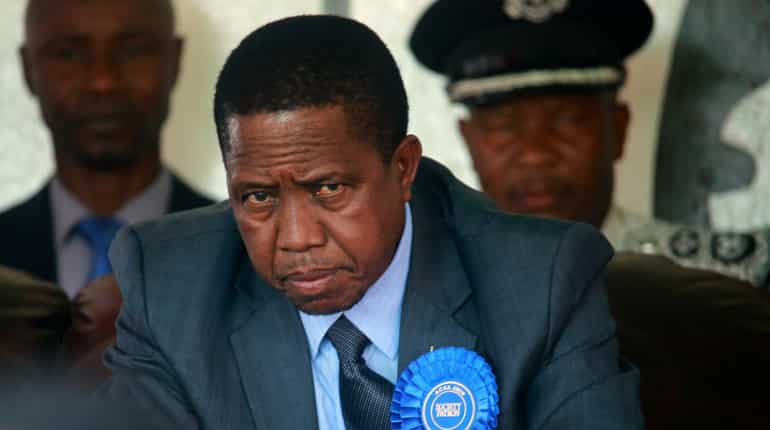
Zambia president
Zambian business tycoon and veteranoppositionleaderHakaindeHichilemascored a landslide victory on Monday in bitterly-contestedpresidentialelections.
After a campaign dominated by the country's economic woes and marked by sporadic violence,Hichilemagarnered 2,810,757 votes against 1,814,201 for President Edgar Lungu, according to nearly final results.
Lungu conceded defeat, saying he congratulated "my brother...Hichilemafor becoming the seventh republican president."

In a nationally televised address, he added: "I want to thank you Zambian people for giving me a great opportunity to be your president. I will forever cherish and appreciate the authority you invested in me."
The electoral commission proclaimedHichilemapresident-elect in the early hours of Monday, bringing the curtain down on Lungu's nearly six-year reign.
As his victory became clear,Hichilemaon Sunday called for peace.
&imwidth=180&imheight=135&format=webp&quality=medium)
Pakistan to head IMF, World Bank boards after 74 years amid persistent economic crisis
&imwidth=180&imheight=135&format=webp&quality=medium)
IND-W vs ZIM-W, 1st T20I: Deepti Sharma, Niki Prasad shine as India beat Zimbabwe by four wickets
&imwidth=180&imheight=135&format=webp&quality=medium)
Group's fibre-optic drones pose new challenge for Israel
&imwidth=180&imheight=135&format=webp&quality=medium)
CJP's Tiranga march: People hit streets of Delhi again, reiterate call for Gyanesh Kumar's resignation
&imwidth=180&imheight=135&format=webp&quality=medium)
US midterms 2026: Ken Paxton may have Elon Musk to thank if he wins the Texas Senate race. Here's why
&imwidth=180&imheight=135&format=webp&quality=medium)
Trump invokes national interest to waive new Russia sanctions, tariffs; India gets relief from 100% tariff threat
&imwidth=180&imheight=135&format=webp&quality=medium)
Ankita Bhandari murder case: Parents meet CBI, seek impartial investigation
&imwidth=180&imheight=135&format=webp&quality=medium)
Lizard people? Ex-US Army sniper claims soldier killed by 'reptilian beings' in battle near Area 51
&imwidth=180&imheight=135&format=webp&quality=medium)
Gravitas | Iran threatens to hit key bridges in 7 countries if US resumes strikes
&imwidth=180&imheight=135&format=webp&quality=medium)
Ukraine drone strike disrupts 22 Russian airports, over 200 flights

Not Khan but Pal: Why did Imran Khan choose his mother's surname over his father's? Family tree explained
&imwidth=180&imheight=135&format=webp&quality=medium)
A secret code, a midnight escape and 300 deaths: The Russian officer who turned on Putin
&imwidth=180&imheight=135&format=webp&quality=medium)
'Reason UN has lost credibility': Amid SIR protests India hits out at report alleging 'youth repression'
&imwidth=180&imheight=135&format=webp&quality=medium)
Oregon school shooting: 16-year-old shooter identified, used shotgun bought by mother; Trump praises bystander who shot gunman as 'great hero'
&imwidth=180&imheight=135&format=webp&quality=medium)
China tells Israel to stop West Bank settlements, calls Palestine issue ‘historic injustice’
&imwidth=180&imheight=135&format=webp&quality=medium)
‘My president, I mean my husband’: Trump's new press secretary Katie Zacharia's first briefing goes off the rails in 14 minutes
&imwidth=180&imheight=135&format=webp&quality=medium)
China responds to Trump's Press Secretary Katie Zacharia after toilet remark: 'Visit China more often'
&im=FitAndFill=(700,400)&imwidth=180&imheight=135&format=webp&quality=medium)
Who left the White House podium the fastest? Press secretaries with the shortest stints
&imwidth=180&imheight=135&format=webp&quality=medium)
Vijay Deverakonda and Rashmika Mandanna's Ranabaali X Review: Netizens call it history-rich but overstuffed
&imwidth=180&imheight=135&format=webp&quality=medium)
Israel examines Russia's Shahed-type drones sent by Ukraine to combat Iran | Gravitas
&imwidth=180&imheight=135&format=webp&quality=medium)
US midterms 2026: Alexandria Ocasio-Cortez donates $1 million to Abdul El-Sayed’s as Michigan race heats up
&imwidth=180&imheight=135&format=webp&quality=medium)
Here’s who is eyeing the White House press secretary role after Katie Zacharia’s exit
&imwidth=180&imheight=135&format=webp&quality=medium)
Infiltration bid foiled in Kupwara’s Keran sector, search operation underway
&imwidth=180&imheight=135&format=webp&quality=medium)
BCCI names India’s ODI squad for New Zealand tour, Gill and Iyer to share captaincy
&imwidth=180&imheight=135&format=webp&quality=medium)
Abhishek Sharma sets all-time record for most T20I sixes in a year
&imwidth=180&imheight=135&format=webp&quality=medium)
US midterms 2026: Dan Sullivan’s ‘gotcha’ attempt backfires against Mary Peltola in fiery Alaska Senate debate
&im=FitAndFill=(700,400)&imwidth=180&imheight=135&format=webp&quality=medium)
Inside Tesla's Roadster: 10 features of Elon Musk's 'flying car' that push the limits of electric vehicles | In Pics
&imwidth=180&imheight=135&format=webp&quality=medium)
India’s naval priorities: Ex-Navy Chief calls for third aircraft carrier, more warships and submarines
&imwidth=180&imheight=135&format=webp&quality=medium)
Starlink says 'ready to connect India with high-speed internet' amid Reliance row
&imwidth=180&imheight=135&format=webp&quality=medium)
One species, two lineages: Why Sri Lanka’s spectacled cobra differs genetically from Indian variant
&imwidth=180&imheight=135&format=webp&quality=medium)
Oil tanker carrying over 2M barrels of crude hits mine in Strait of Hormuz, catches fire, says Iran
&imwidth=180&imheight=135&format=webp&quality=medium)
Selma Blair’s team responds to flight incident, says actress ‘did not intend to harm anyone’
&imwidth=180&imheight=135&format=webp&quality=medium)
India's Gen Z rebellion: Can the 'Lehra Do Tiranga' movement reshape the political order? | The Verdict

US ends automatic work permit extensions; Indian workers lose 540-day safety net: What it means
&im=FitAndFill=(700,400)&imwidth=180&imheight=135&format=webp&quality=medium)
New Friday OTT releases (October 16, 2026): DC, Sacrifice, Aasha- 6 new movies and TV shows coming on Netflix, Zee 5, Prime Video and more
"Let us be the change we voted for and embrace the spirit of Ubuntu (humanity) to love and live together harmoniously," he tweeted.
It was the 59-year-old'ssixthbidfor the top job and his third challenge to his bitter rival Lungu, 64.
After losing against Lungu by a wafer-thin 100,000-votemargin in 2016,Hichilemawon Thursday'svoteby nearly a million ballots.
'Finally, he has done it!'
Thousands ofHichilemasupporters flocked onto the streets of Lusaka, erupting into song and dance, cheering and waving party flags.
The celebrations continued into dawn, as hundreds of people congregated outsideHichilema'shouse in a leafy suburb of the capital.
"I am so excited, finally he has done it! Tonight we are celebrating Bally’s victory," said 21-year-old Rosemary Malunga, referring toHichilemaby his nickname, which is slang for "father".
Hundreds also took their victory lap to the entrance of thepresidentialresidence, where soldiers and police kept guard.
On Saturday, as ballots were being counted, Lungu claimed thevotewas neither free nor fair, but his objections gained little traction.
Internationalelectionobservers have commended the polls' transparent and peaceful organisation, which saw a turnout of around 70.9 percent -- a huge jump from 57.7 posted in the 2016 polls.
But they also criticised restrictions on freedom of assembly and movement during campaigning.
Security forces blockedHichilemafrom campaigning in several areas, including the strategic Copperbelt Province, citing breaches of coronavirus measures and a public order act.
Lungu deployed the military following pre-electionclashes and reinforced the army presence in three provinces after two deaths were reported onelectionday.
Social media access was restricted in the capital Lusaka just asHichilemacast hisvotebut was restored on Saturday following a court order.
Democracy boost?
Observers saw theelectionas a referendum on Lungu's rule, which saw plummeting living standards and deepening repression in the country of more than 17 million.
Hichilemaenjoyed the backing of 10oppositionparties, which threw their weight behind his United Party for National Development (UPND).
Legislative and localelectionswere held alongside thepresidentialballot on Thursday.
Kenya's former prime minister Raila Odinga congratulatedHichilemafor a "decisive victory".
"Amidst an unprecedented public health challenge, the Zambian people have made Africa proud for conducting a successfulelection," Odinga tweeted.
Theelection, he hoped, strengthensZambia's democracy "and reminds fellow Africans elsewhere that nothing is impossible".
Despite occasional episodes of political violence,Zambiahas earned a reputation for stability. Every transition of power has been peaceful since the former British colony adopted its multi-party system in 1990.
"Zambians have lived up to be true democrats. It's a different African story," Ringisai Chikohomero, researcher at the Pretoria-based Institute for Security Studies, told AFP.
Hichilema's prime task on taking office will be to tackle an economy wracked by high debt, inflation and unemployment.
Last year, the copper-rich southern African nation became the first country on the continent to default on its debt in the coronavirus era.